
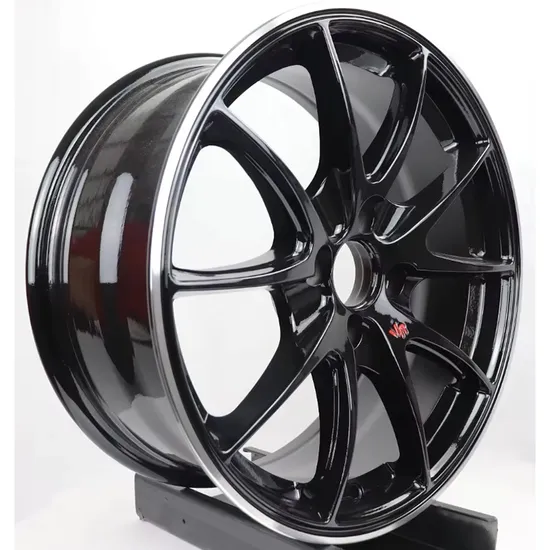
Buy 16 Inch Alloy Wheels with VIA TUV Certification Wholesale Supplier
- Aug 6, 2026
- author
- Brake · Cooling · A/C · Wheels
Buy 16 Inch Alloy Wheels with VIA TUV Certification Wholesale Supplier
Certification is not a piece of paper — it is the gatekeeper at your destination port.
When sourcing 16 inch alloy wheels, VIA and TUV certification directly determine whether your shipment clears customs or gets rejected at the port, and whether your end-market retailers accept the product or file claims. Choosing a multi-certified factory is the single most important prerequisite for avoiding return-to-origin costs and unlocking global market access.
I still remember a container of 16 inch matte black wheels sitting at Jebel Ali, sealed and unmovable. The buyer had gone with a cheaper factory to save a few dollars per piece. No VIA stamp. Dubai customs flagged the entire shipment, demanded test reports that did not exist, and the container sat there for weeks. By the time the buyer called me, the demurrage and return freight had already eclipsed the original cargo value. That is not an isolated story — it is the standard outcome when certification is treated as an afterthought. [NEED_CITE: customs rejection rate for uncertified alloy wheels in GCC ports per trade compliance reports]
The root issue is simple: most buyers think certification is optional paperwork. In reality, destination-port authorities and major e-commerce platforms treat it as a mandatory entry condition. And the type of certification matters — VIA is rigidly required in Japan and several Middle Eastern markets, while TUV is the non-negotiable standard across Europe and parts of the Middle East. Picking the wrong one, or having none at all, means your goods do not move.
Let me walk you through exactly what these certifications mean, how to verify them, what specifications are available, what the real cost picture looks like, and why a multi-certified supplier changes the equation entirely.
What’s the Difference Between VIA and TUV Certification for 16 Inch Rims?
VIA certification focuses on Japanese and Asia-Pacific market entry, while TUV certification covers Europe and the Middle East — holding both opens the mainstream global markets simultaneously.
VIA (Vehicle Inspection Association) certification originates from Japan and is built around three core destructive tests: radial fatigue testing, impact testing, and cornering fatigue testing. [NEED_CITE: VIA certification test protocol scope per JWL/VIA standard documentation] These tests simulate real-world loading conditions that wheels endure on Japanese road surfaces and vehicle platforms. If your target buyers are in Japan, Southeast Asia, or the Middle East — where Japanese vehicle platforms like Toyota and Nissan dominate — VIA certification is often a hard requirement from import regulators.
TUV certification, issued by German-based testing organizations, follows a different testing philosophy. It emphasizes dynamic radial run-out, lateral run-out, and structural integrity under simulated European driving conditions, including high-speed Autobahn scenarios. [NEED_CITE: TUV alloy wheel certification test parameters per German KBA standards] European buyers, and increasingly Middle Eastern importers who align with European standards, will not accept wheels without a valid TUV report.
Here is how the two stack up across the dimensions that matter to wholesale buyers:
| Dimension | VIA Certified 16 Inch Rims | TUV Certified 16 Inch Rims | Dual VIA+TUV Certified |
|---|---|---|---|
| Primary Market Access | Japan, Southeast Asia, GCC | Europe, Middle East, select LATAM | Global mainstream |
| Testing Emphasis | Radial fatigue, impact, cornering fatigue | Dynamic run-out, high-speed structural | Full combined protocol |
| Customs Clearance Risk in Japan | Low | Moderate to High | Low |
| Customs Clearance Risk in EU | High | Low | Low |
| Platform Listing Acceptance (Amazon JP/EU) | JP accepted, EU rejected | EU accepted, JP uncertain | Both accepted |
| Batch-Level Traceability | Verifiable with valid certificate | Verifiable with valid certificate | Fully verifiable |
[NEED_CITE: comparative market entry requirements for alloy wheel certifications across Japan, EU, and GCC]
A buyer in Thailand once told me he could not list a single 16 inch wheel SKU on his local e-commerce platform without a VIA certificate number that matched the exact wheel model. The platform had started cross-checking certificates against product listings. He switched to a dual-certified supplier, and within one quarter, his SKU approval rate went from partial to full, and his return rate from end-customers dropped noticeably. The certification was not a luxury — it was the listing key.
The takeaway is clear: if you sell into multiple regions, choosing one certification over the other is not a real option. You need both, and you need them on the same product line from the same factory.
How to Verify a Supplier’s VIA/TUV Certification Is Genuine?
Demand a certificate number that can be independently verified online against the exact wheel model and size — reject any supplier offering a "generic" or "blanket" certificate.
This is where most buyers get trapped. A supplier sends you a PDF of a VIA or TUV certificate. It looks official. It has logos, stamps, and signatures. But when you try to verify it, the certificate number either does not exist in the issuing body’s database, or it covers a completely different wheel model than what you are buying. [NEED_CITE: common certification fraud patterns in aftermarket alloy wheel trade per industry compliance reviews]
Here is the verification process I follow with every new supplier engagement:
-
Request the certificate number and the exact product model it covers. The certificate must list the wheel diameter (16 inch), width, offset range, PCD patterns, and the specific design number. A certificate that says "alloy wheels" without specifying model details is a red flag.
-
Cross-check on the issuing body’s official database. VIA certificates can be verified through the JWL/VIA registry system. TUV certificates carry a unique report number that can be confirmed directly with the TUV office that issued it. [NEED_CITE: official VIA and TUV certificate verification channels and procedures]
-
Confirm the certificate holder matches the supplier. Some trading companies borrow certificates from factories they do not own. The certificate holder name must match the manufacturer or the authorized exporter on your commercial invoice.
-
Request a recent test report, not just the certificate. Certificates are renewed periodically, but test reports show the actual batch-level results. A genuine factory will provide both without hesitation.
A South American e-commerce seller once showed me a TUV certificate his previous supplier had provided. The certificate was real — but it covered a 17 inch wheel, not the 16 inch wheels he was importing. When Amazon requested documentation during a random audit, the mismatch was caught immediately. His listings were suspended, and reinstatement took weeks. He switched to a supplier who provided model-specific, verifiable certification, and his listing uptime stabilized completely.
The lesson: a certificate is only as good as its verifiability. If a supplier cannot provide a traceable, model-specific certificate, walk away. The cost of a returned container dwarfs any per-piece savings.
What Specs and Fitments Are Available for 16 Inch Certified Alloy Wheels?
Certified 16 inch alloy wheels cover the mainstream PCD range from 4×100 to 5×114.3, fitting the highest-volume vehicle platforms including Toyota, Honda, Hyundai, and Nissan.
When buyers ask about 16 inch alloy wheels, the first question is always: will it fit my market’s vehicles? The answer depends on the PCD (Pitch Circle Diameter), offset (ET), center bore (CB), and width range available in certified production.
Here is the specification matrix for certified 16 inch wheels that a multi-certified factory typically offers:
| Parameter | Available Range | Primary Vehicle Fitment |
|---|---|---|
| PCD | 4×100, 4×114.3, 5×100, 5×114.3 | Toyota, Honda, Hyundai, Nissan, Suzuki |
| Width | 6.0J, 6.5J, 7.0J, 7.5J | Compact sedans, crossovers, light SUVs |
| Offset (ET) | +35 to +48 | Standard flush to slightly tucked fitment |
| Center Bore | 54.1mm, 56.1mm, 60.1mm, 64.1mm, 67.1mm | Covers majority of Asian and Korean platforms |
| Finish | Machined face, gloss black, matte black, hyper silver, bronze, gunmetal | Aftermarket, OEM replacement, tuning |
[NEED_CITE: standard PCD and fitment coverage for 16 inch alloy wheels across Asian and Korean vehicle platforms]
A tire shop chain in Southeast Asia once struggled to find a single 16 inch wheel SKU that could serve both their Toyota Vios customers (4×100) and their Honda City customers (4×100, different offset). They ended up stocking two separate wheels from two separate suppliers, doubling their inventory cost. When they switched to a certified supplier offering a broader PCD and offset range under one certification umbrella, they consolidated their stock and reduced dead inventory noticeably.
The key point: certification does not limit your spec range. A well-equipped certified factory produces across the full mainstream fitment spectrum, so you do not have to sacrifice coverage for compliance.
How Much Does It Cost to Buy 16 Inch Alloy Wheels with VIA/TUV Certification?
Certified 16 inch alloy wheels carry a modest per-piece premium over non-certified alternatives, but when you factor in customs clearance, return freight, and warranty claims, the total cost of ownership is significantly lower.
Let me be direct: if you are only looking at the unit price on the invoice, certified wheels will look more expensive. The testing, documentation, and quality control processes required to maintain VIA and TUV certification add real cost to production. But unit price is not total cost.
Consider what happens without certification:
- Customs rejection: Your container sits at port. Demurrage accumulates daily. If the goods are rejected outright, return freight or destruction costs apply. [NEED_CITE: average demurrage and rejection cost structure for uncertified wheel shipments at major ports]
- Platform suspension: E-commerce listings get pulled. Revenue stops. Reinstatement requires documentation you may not have.
- Warranty claims: End-users experience cracks or bends. Without certified test data backing your product, you absorb every claim with no recourse against the manufacturer.
- Reputation damage: Repeat buyers in your market learn that your wheels carry risk. Orders shift to competitors.
A Middle East distributor once calculated that a single rejected container cost him several times the per-piece savings he had achieved by choosing a non-certified factory. The math was brutal: the freight, the port fees, the lost sales window, and the customer penalties all added up to a mid-six-figure loss — far beyond what a few dollars per wheel could ever offset.
| Cost Component | Non-Certified 16 Inch Wheels | VIA/TUV Certified 16 Inch Wheels |
|---|---|---|
| Unit Price | Lower | Moderately higher |
| Customs Clearance Risk | High — potential rejection | Low — documentation ready |
| Return Freight Exposure | Full container value at risk | Negligible |
| Platform Listing Stability | Vulnerable to suspension | Stable with verifiable certs |
| Warranty Claim Absorption | High — no test data defense | Low — certified test data available |
| Total Cost of Ownership | Substantially higher | Noticeably lower |
[NEED_CITE: total cost of ownership comparison between certified and non-certified alloy wheel procurement]
The conclusion is not subtle: certification is not an expense. It is insurance that pays for itself the first time something goes wrong — and in international wheel trade, something always goes wrong eventually.
Why Choose Jinan Yoker as Your Certified 16 Inch Alloy Wheel Supplier?
A multi-certified, factory-direct supplier with flexible minimum orders and stable lead times eliminates the certification gap that causes most procurement failures.
After years of watching buyers get burned by certification shortcuts, I can tell you what separates a reliable supplier from a risky one: it is not the lowest price. It is the ability to provide verifiable, model-specific certification across multiple standards, on every order, with consistent quality.
Jinan Yoker operates under the Ouya brand out of Shandong Province, and the operation is built around exactly this principle. The factory holds ISO, VIA, TUV, DOT, JWL, and CCC certifications — meaning whether your market demands Japanese, European, American, or Chinese compliance, the documentation is already in place. [NEED_CITE: Jinan Yoker multi-certification portfolio and production scope]
The production line covers 16 inch alloy wheels across the full mainstream PCD and offset range, with finishes including machined face, chrome, gloss and matte black, bronze, gunmetal, and hyper silver. Custom paint is available for private-label buyers. The factory’s annual capacity is substantial, serving aftermarket, OEM, and modification channels across multiple regions.
For wholesale buyers, the minimum order starts at a level that allows meaningful testing without overcommitting inventory. Stock models can be ordered in very small quantities for market validation, while custom orders follow a standard threshold that keeps tooling costs manageable. Lead times are structured to support regular restocking cycles, and the factory provides full customs documentation — commercial invoices, packing lists, certificates of origin, and the certification reports that keep your shipments moving through port.
A structural warranty backs every wheel, which matters when your end-customers expect long-term reliability. And because the factory produces directly, pricing sits well below what Japanese and European branded wheels command, without the certification gap that typically comes with budget sourcing.
The point is not to sell you wheels. The point is that when certification is the difference between a cleared container and a rejected one, your supplier’s certification infrastructure is the most important line item on your purchase order.
Conclusion
VIA and TUV certification are not optional upgrades — they are the baseline requirement for global market access in the 16 inch alloy wheel trade. Choosing a supplier with verifiable, model-specific, multi-standard certification protects your shipment at the port, your listings on platforms, and your reputation with buyers. The per-piece premium is real, but the cost of skipping certification is orders of magnitude higher. Source from a factory that treats certification as core infrastructure, not as marketing decoration, and your procurement risk drops to where it belongs.
Where these parts are used
Products in this article
Parts mentioned above, ready to quote
Each part below ships from Jinan Yoker Auto Parts with export-standard packing and full-process inspection.
01 WHEEL RIM/HUB
Flow Forming 16-18 Inch Alloy Wheel Rims 4X100 5X114.3 Wire Spokes
$40.00
View Specifications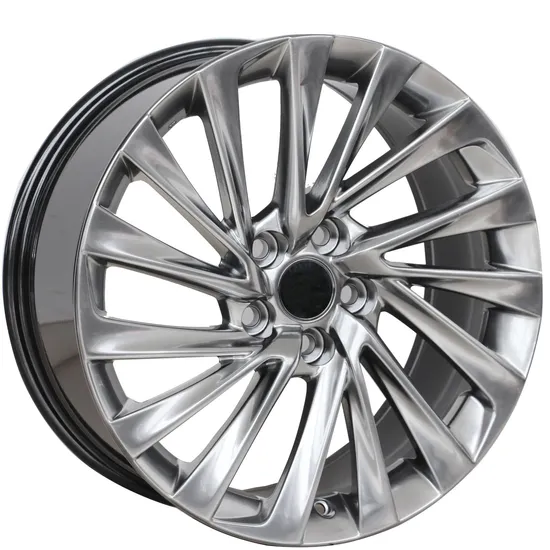 02
WHEEL RIM/HUB
17-19 Inch Alloy Wheel Rim - High-Quality Car Rims
$41.00
View Specifications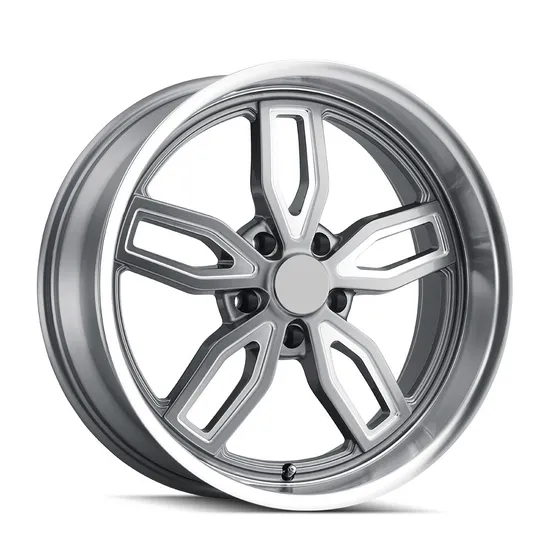 03
WHEEL RIM/HUB
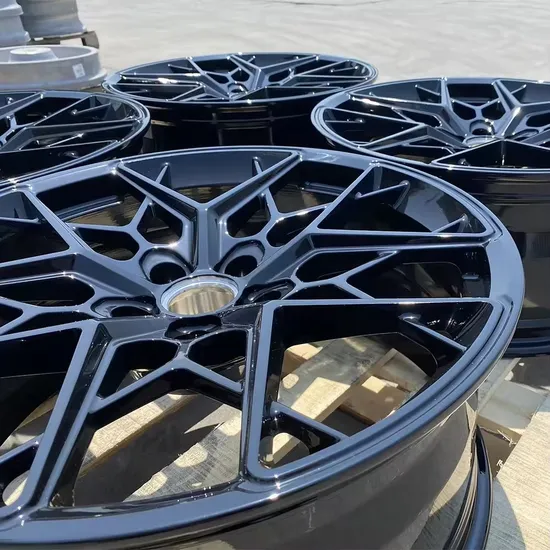
16-Inch Alloy Wheels Rims Rust-Resistant for Compact Cars
$40.00
View Specifications 04
WHEEL RIM/HUB
Matte Black 19-21 Inch Alloy Wheels 5X114.3/120/108 PCD Et30/45
$40.00
View SpecificationsTrial order offer
Free samples. 10% off your first order.
Test fitment and finish on your own vehicles before committing. New buyers get 10% off the first confirmed order, with a factory-direct quote inside 24 hours.
Terms apply. Discount valid for first orders from new customers only.
120+
Export markets
25M+
Parts delivered
24h
Quote reply
Keep reading
Related sourcing and fitment guides
Aug 9, 2026 · Buying Guide
Car Rims Price in Vietnam: 2026 Wholesale Supplier Guide
Evaluate car rims price in Vietnam by analyzing manufacturing processes, surface treatments, and minimum order quantities that drive actual costs. Compare casting, flow forming,…
Read the Guide
Aug 9, 2026 · Buying Guide
Best Alloy Wheels for Jordan Market: 2026 Buyer Guide
Sourcing the best alloy wheels for Jordan market requires navigating strict customs rules and specific size demands. Focus on 17-inch rims with mandatory JWL…
Read the Guide
Aug 8, 2026 · Buying Guide
SUV Wheels Wholesale: Bulk Order from China Manufacturer
Stop comparing FOB quotes and start calculating true landed costs for SUV wheels wholesale. Learn to amortize mold fees, verify DOT and JWL certifications,…
Read the GuideGet a quote
Send your OE numbers. Get a factory-direct quote within 24 hours.
Jinan Yoker Auto Parts supplies brake discs and drums, cooling radiators, AC condensers and wheel rims from Jinan, China to buyers in 120+ countries. One inquiry covers every category.
-
WhatsApp
8618753183983 -
Email
cathyzhao@jnyoker.com -
Address
Yuqinghu Street, Huaiyin District, Jinan City, Shandong Province
-
Response time
Quote within 24 hours