Blog
Buy Auto Parts Factory Direct from OEM Manufacturer

Buy Auto Parts Factory Direct from OEM Manufacturer
Most buyers think factory direct means the lowest possible price. The real cost traps hide in packaging, certification gaps, and transit damage claims.
Buying auto parts factory direct from a verified OEM manufacturer can cut your landed cost significantly compared to sourcing through trading companies or regional distributors. However, achieving those savings requires mastering three critical areas: certification compliance for your target market, MOQ negotiation without sacrificing batch consistency, and packaging standards that survive ocean freight humidity and temperature swings.
I still remember a shipment of 20-inch modified wheels we sent to a Middle Eastern client. The finish was a brushed black surface treatment. When the container arrived, the client opened the boxes and found the paint peeling off the lip edges. The root cause was improper humidity control inside the container during a long sea voyage. The claim, replacement production, and re-shipping cycle dragged on for months. That single incident reshaped how I approach packaging specs and transit environment monitoring. When you buy auto parts factory direct, you take on responsibilities that middlemen usually absorb. [NEED_CITE: ocean freight container humidity and temperature impact on coated metal surfaces]
Let me walk you through what factory direct really means, which certifications matter, how to handle MOQ, and what packaging standards actually protect your cargo.
What Does "Factory Direct" Really Mean for Auto Parts Pricing?
Factory direct pricing eliminates multiple layers of intermediaries, but the actual savings depend on how well you account for hidden costs like certification fees, packaging upgrades, and quality verification.
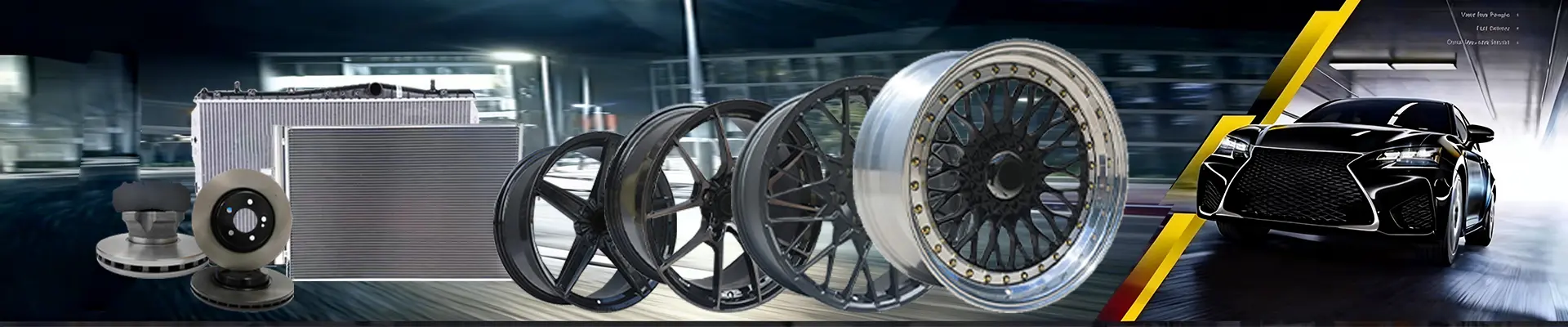
When you buy auto parts factory direct from a manufacturer like Jinan Yoker Auto Parts Co., Ltd., you bypass trading companies that typically add markup layers. The Ouya brand operates with an annual production capacity of ten million pieces, serving aftermarket, OEM, and modification markets globally. The product range spans alloy wheels from 12 inches to 24 inches across passenger cars, SUVs, luxury vehicles, trucks, racing applications, and motorcycles. Surface finishes include machined face, chrome, gloss or matte black, bronze, gunmetal, hyper silver, and full custom paint options.
But here is what most buyers miss. The unit price quote is only part of the equation.
| Cost Component | Factory Direct | Trading Company | Regional Distributor |
|---|---|---|---|
| Unit Price | Noticeably lower | Moderate | Highest |
| MOQ Flexibility | Negotiable with conditions | Often rigid | Low but at premium |
| Certification Support | Full documentation provided | May lack originals | Varies by stock |
| Packaging Customization | Factory-controlled | Limited options | Pre-packaged only |
| Quality Consistency | Batch-level verifiable | Sample-level at best | Unknown history |
| Claim Resolution | Direct with manufacturer | Delayed through middlemen | Local stock replacement |
The table above shows that while factory direct pricing wins on unit cost, the other factors determine your true landed cost. [NEED_CITE: total cost of ownership comparison factory direct versus distributor auto parts]
A Latin American e-commerce seller once approached us wanting to test a new wheel design. Instead of committing to a full container, we worked out a small-batch arrangement using stock models. The MOQ dropped to twenty pieces per SKU. We provided fitment data compatible with Amazon listing requirements and upgraded the packaging to meet Amazon fulfillment standards. The packaging cost increase was marginal compared to the return rate reduction they achieved. When you buy auto parts factory direct, you can negotiate these terms directly with the production team rather than through a sales agent who has no control over packaging specs.
The key insight is that factory direct does not automatically mean cheap. It means you have direct access to control every variable that affects your final cost.
Which Certifications Are Mandatory for Your Target Market?
Missing the right certification does not just delay your shipment. It can result in customs seizure, forced returns, or liability exposure if a wheel fails in the field.
Different markets enforce different certification standards. When you buy auto parts factory direct, the manufacturer must provide documentation that matches your destination country requirements. This is not optional paperwork. It is a gatekeeping mechanism.
| Certification | Applicable Market | Verification Level | Consequence of Missing |
|---|---|---|---|
| ISO 9001 / IATF 16949 | Global baseline | Full batch-level traceability | Buyer credibility loss |
| VIA / JWL | Japan and markets accepting Japanese standards | Verifiable through issuing body | Customs rejection |
| TÜV | Germany and European Union | Verifiable through TÜV database | Cannot register vehicles with wheels |
| DOT | United States | Verifiable through NHTSA | Import blocked at port |
| CCC | China domestic market | Mandatory for local registration | Cannot sell domestically |
An African client once placed a substantial order for OEM wheels. The wheels were manufactured correctly, the pricing was competitive, and the lead time was acceptable. But the shipment got stuck at customs because the documentation package lacked VIA and JWL certifications. The destination country required those specific marks for wheel imports. The delay lasted weeks. The cost of expediting the certification after the fact was substantially higher than if it had been planned upfront. [NEED_CITE: automotive wheel certification requirements by region customs clearance]
Jinan Yoker Auto Parts holds ISO, VIA, TÜV, DOT, JWL, and CCC certifications. This multi-certification portfolio means that when you buy auto parts factory direct from Ouya, the compliance documentation is ready before production starts, not scrambled after the container is at the port.
The mistake buyers make is treating certification as a checkbox. Certification is actually a quality system. A factory that maintains TÜV or VIA certification has undergone audits of its production processes, material traceability, and testing protocols. When you verify certification, you are verifying the system that produced the wheel, not just the piece of paper.
How to Negotiate MOQ and Lead Time Without Sacrificing Quality?
Low MOQ is attractive for testing, but it removes the statistical confidence that comes from batch consistency. The negotiation must balance inventory risk against quality verification.
When you buy auto parts factory direct, MOQ becomes a direct conversation between your purchasing needs and the factory production schedule. Jinan Yoker Auto Parts sets MOQ at twenty pieces for stock models and one hundred pieces for custom orders. Lead time runs fifteen to thirty days depending on complexity and current production queue.
Here is how the MOQ structure works in practice.
Stock models are wheels that the factory produces regularly in standard sizes, finishes, and fitments. These wheels are already tooled and scheduled. The factory can pull from existing inventory or slot your order into the next production run with minimal disruption. This is why the MOQ can be as low as twenty pieces.
Custom orders involve new tooling, custom paint matching, specific offset or width requirements, or private-label branding. These require dedicated production runs. The MOQ of one hundred pieces reflects the setup cost and the need to run a statistically meaningful batch to verify consistency.
| Order Type | MOQ | Lead Time | Quality Verification |
|---|---|---|---|
| Stock Models | Noticeably low | Standard range | Sample-level sufficient |
| Custom Orders | Moderate minimum | Extended range | Full batch-level required |
| OEM Production | High volume | Planned in advance | Statistical process control |
A modification shop in Southeast Asia wanted to test a new deep concave design in staggered fitments for a popular tuner platform. They needed four different sizes, each in a custom gunmetal finish. The total order was under one hundred pieces per size. We structured the order as a custom run but consolidated the four sizes into a single production batch to maintain finish consistency across all wheels. The lead time was at the longer end of the range, but the batch uniformity was verifiable. [NEED_CITE: minimum order quantity negotiation strategies alloy wheel manufacturing]
The risk of pushing MOQ too low on custom orders is that the factory may not run a full production cycle. You get a handful of wheels that look fine individually but may not represent what the full production run will look like. When you buy auto parts factory direct, insist on a batch size that allows the factory to demonstrate process stability, not just produce a few samples.
Lead time negotiation follows similar logic. Fifteen to thirty days is the standard range. If you need faster delivery, the factory may need to pull from stock or prioritize your order over others, which can affect pricing or quality attention. Plan your procurement timeline around the standard lead time and use the extra buffer for quality verification rather than rushing production.
What Packaging Standards Prevent Transit Damage and Claims?
Packaging is the most underestimated cost component in factory direct sourcing. It typically represents a small percentage of total cost but determines whether your cargo arrives saleable or becomes a claim file.
I mentioned the Middle Eastern brushed black wheel incident earlier. That case is not unique. Ocean freight exposes wheels to temperature fluctuations, humidity spikes, salt air infiltration, and mechanical vibration over weeks of transit. Standard cardboard boxes with minimal internal protection will not survive these conditions for coated wheels.
When you buy auto parts factory direct, you must specify packaging requirements that match your shipping route and product finish.
| Packaging Element | Standard Export | Enhanced for Coated Wheels |
|---|---|---|
| Outer Carton | Single-wall corrugated | Double-wall with moisture barrier |
| Internal Separation | Basic dividers | Individual wheel bags with anti-corrosion treatment |
| Edge Protection | None or minimal | Foam or rubber edge guards |
| Humidity Control | None | Desiccant packs rated for container volume |
| Stacking Support | Basic pallet | Reinforced pallet with corner posts |
The enhanced packaging option costs more per unit, but the cost is marginal compared to the expense of a claim cycle. When a wheel arrives damaged, the replacement cost includes not just the wheel itself but the production time, the re-shipping cost, the customs re-clearance, and the customer relationship damage. [NEED_CITE: ocean freight packaging standards for coated automotive wheels damage prevention]
Jinan Yoker Auto Parts applies packaging protocols that account for these variables. The factory understands that a machined face wheel or a chrome-finished wheel requires different protection than a matte black powder-coated wheel. The packaging specification should be part of your purchase order, not an afterthought.
For e-commerce sellers shipping to Amazon fulfillment centers, the packaging must also meet Amazon prep requirements. This includes specific labeling, box dimensions, and weight distribution. When you buy auto parts factory direct from a manufacturer experienced with e-commerce logistics, these requirements can be built into the packaging spec from the start rather than added as a secondary service.
How to Verify Factory Claims Before Placing Bulk Orders?
Factory claims about quality, capacity, and certification are only as good as your ability to independently verify them. Verification is not distrust. It is standard procurement practice.
When you buy auto parts factory direct, you are establishing a direct relationship with the production source. This gives you access to verification methods that are not available when buying through intermediaries.
Start with certification verification. Do not accept photocopies or scanned certificates. Request original documents or verification codes that you can check directly with the issuing body. TÜV certificates can be verified through the TÜV database. VIA and JWL markings can be confirmed with the issuing organizations. DOT registration can be checked through NHTSA. If a factory hesitates to provide verifiable certification, that is a red flag. [NEED_CITE: how to verify automotive wheel certifications independently]
Next, request a factory audit. This can be a third-party audit from a recognized inspection company or a personal visit if logistics allow. During the audit, look at production floor organization, material storage conditions, in-process quality checks, and finished goods packaging areas. A factory that maintains ISO or IATF certification will have documented procedures visible on the floor.
Then, place a trial order before committing to bulk volume. The trial order should be large enough to represent a real production batch, not just a handful of samples. Use the trial order to verify dimensional accuracy, finish quality, packaging integrity, and documentation completeness. Jinan Yoker Auto Parts supports this approach with flexible MOQ on stock models, allowing buyers to validate the product before scaling up.
A US-based distributor once sourced wheels from a factory that provided excellent samples. The samples passed all inspections. But when the bulk order arrived, the finish consistency varied noticeably between wheels, and the center bore tolerances were inconsistent. The factory had produced the samples in a controlled environment but ran the bulk order on a different production line with different tooling. This is why batch-level verification matters more than sample approval. [NEED_CITE: sample versus batch consistency verification automotive parts procurement]
When you buy auto parts factory direct, you have the leverage to demand this level of verification. Use it.
Conclusion
Factory direct sourcing delivers real cost advantages, but only when you control certification, MOQ, and packaging variables with the same rigor you apply to price negotiation.
Buying auto parts factory direct from a certified OEM manufacturer like Jinan Yoker Auto Parts gives you direct access to production, documentation, and quality systems. The savings are real, but they require active management of compliance, batch consistency, and transit protection. Verify certifications independently, negotiate MOQ based on batch quality needs rather than just inventory cost, and specify packaging that matches your shipping environment. The factory that can support all three areas is the factory that will deliver true value, not just a low unit price.


