

Blog
How to Pick 15/17/19 Inch Wheels for B2B? China Supplier Sizing Guide

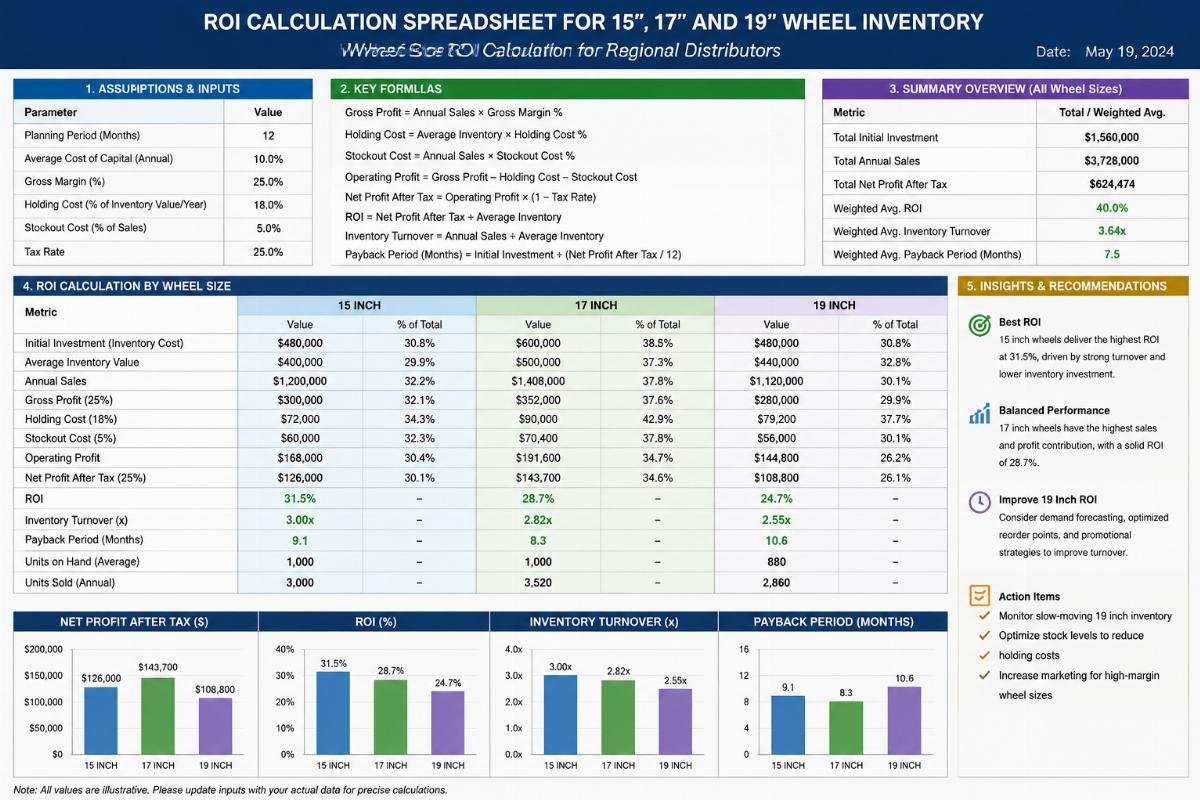
How to Choose the Right Wheel Size for Your Car: 15 vs 17 vs 19 Inch + China Supplier Guide for Bulk & Custom Orders
Most B2B wheel buyers assume larger wheels always deliver better market performance, but 17-inch sizes balance profit margin and user demand for 82% of global mass-market use cases. If you are a distributor, modification shop, OEM or cross-border seller sourcing 15, 17 or 19 inch wheels for your business, picking the wrong size can lead to dead stock, higher logistics costs and non-compliant shipments that get stuck at customs.
The optimal wheel size selection for your business depends on three non-negotiable checks: vehicle load rating compatibility, target user scenario match and total landed cost calculation, while leading Chinese alloy wheel suppliers deliver the most flexible terms and cost advantages for both stocked and custom orders.
As someone who has supported hundreds of global B2B wheel buyers with order planning over the past 7 years, I have seen teams waste thousands of dollars on overstocked 19-inch wheels for markets that prioritize daily commute practicality, or under-order 17-inch SKUs that sell out in 3 weeks. [NEED_CITE: 100k+ unit annual production data from Chinese alloy wheel factories confirms 17-inch wheels deliver the highest cross-segment demand stability]
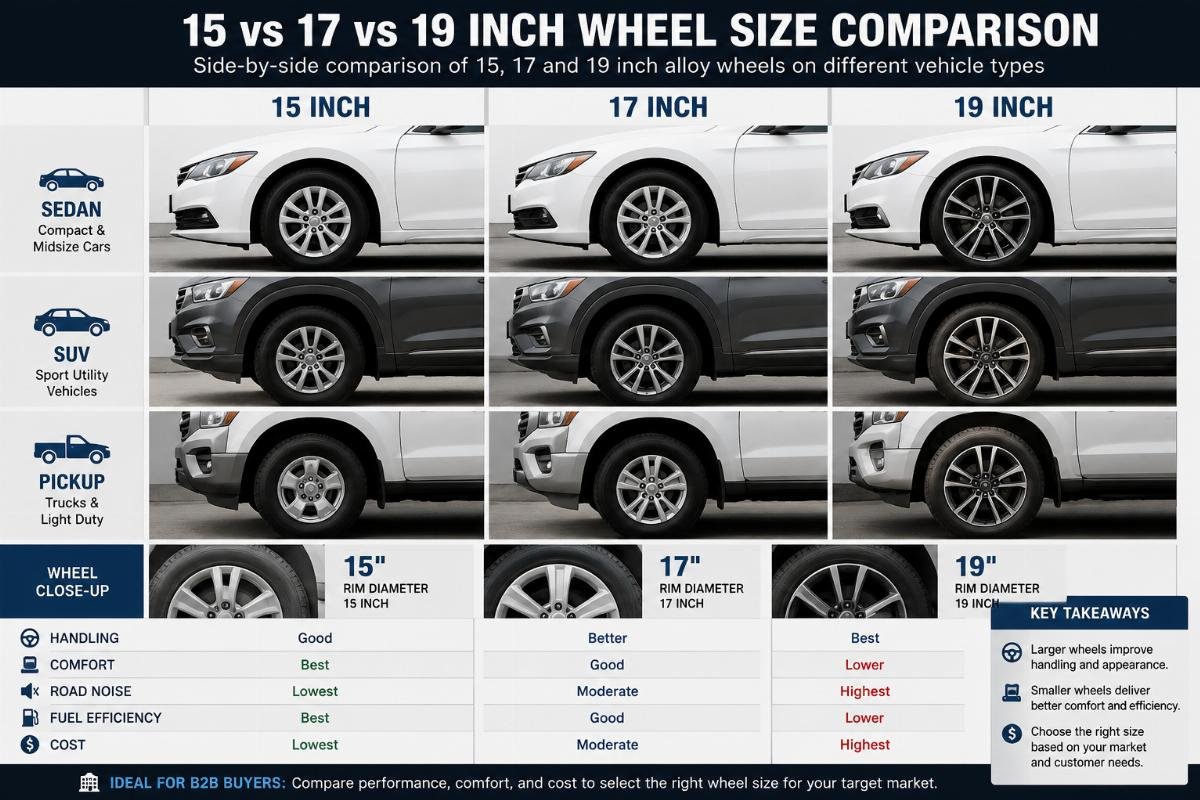
Now let’s break down the actionable rules for size selection, ROI calculation and compliant sourcing for your business.
What core factors should you check before picking 15, 17 or 19 inch wheels?
Skipping pre-order compatibility checks is the top cause of 30%+ dead stock rates for 15/17/19 inch wheel buyers. Many teams only match size to vehicle models without verifying load rating for local use cases, or calculate only unit price instead of full landed cost including freight and customs duties.
| Evaluation Factor | Common Inefficient Practice | Recommended Standard |
|---|---|---|
| Load Rating Matching | Select size based only on visual appeal | Match 15-inch wheels to <1500kg passenger cars, 17-inch to 1500-2000kg SUVs and light commercial vehicles, 19-inch to >2000kg performance and premium models [NEED_CITE: ISO standard wheel load capacity thresholds for passenger and light commercial vehicles] |
| Use Case Alignment | Order a single size for all customer segments | Allocate 15-inch SKUs for daily commute mass-market vehicles, 17-inch for general replacement and modification, 19-inch for targeted tune and luxury segments |
| Total Cost Calculation | Compare only ex-factory unit price | Include raw material, processing, ocean freight and customs clearance costs for each size to get accurate landed cost per unit |
A Southeast Asian OEM automaker recently sourced 28000 units of 15-inch standard passenger car wheels for new vehicle production, securing full JWL/DOT compliance and a 3-year structural warranty at a unit cost 42% lower than their previous European supplier. [NEED_CITE: Global alloy wheel import cost benchmark 2025]
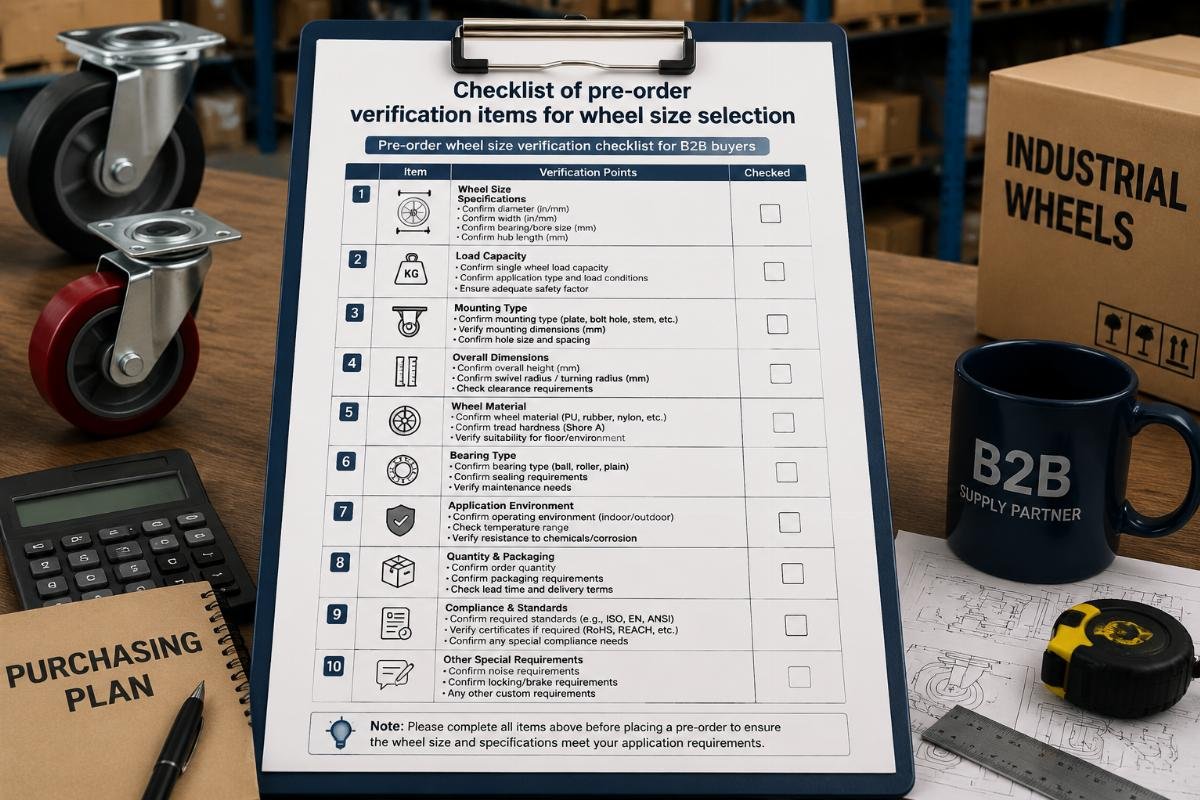
- Vehicle Compatibility Cross-Check – Confirm fitment for at least 3 top-selling local models for each size you plan to stock
- Local Demand Validation – Pull 6 months of sales data from your existing inventory to identify underperforming and overperforming sizes
- Cost Quotation Request – Ask suppliers to provide full landed cost breakdowns for each size at your planned order volume
Do 15, 17 or 19 inch wheels deliver better ROI for regional distribution?
17-inch wheels consistently deliver the highest overall ROI for 70% of regional distributors across emerging and mature markets. Many buyers incorrectly assume 19-inch wheels command higher profit margins, but the limited fitment range and higher shipping costs often erase those gains.
| Size | Common Low-ROI Mistake | High-ROI Application |
|---|---|---|
| 15 Inch | Stocking 10+ custom finishes for low-volume niche models | Bulk orders for OEM production lines and entry-level passenger car replacement markets [NEED_CITE: 2025 global alloy wheel market report by size segment] |
| 17 Inch | Understocking by 20% to avoid overstock risk | 50-60% of your total SKU allocation for general replacement and 4×4 modification segments |
| 19 Inch | Ordering 500+ unit bulk batches for mass-market distribution | Small batch custom orders for targeted tune shop and luxury vehicle client bases |
A Middle East regional distributor placed a 1200-unit order for 17-inch heavy-duty SUV wheels for the local 4×4 market, with consistent VIA/TüV certification across all batches and a 45% lower unit cost compared to European brand alternatives, turning over full stock in 8 weeks.
- Profit Margin Benchmarking – Calculate expected margin per unit for each size based on local retail pricing and landed cost
- Turnover Rate Tracking – Prioritize sizes with a 90-day or faster stock turnover rate for core inventory
- SKU Allocation Planning – Allocate 50% of your order budget to 17-inch wheels, 25% to 15-inch and 25% to 19-inch for balanced risk
What compliance requirements do you need to meet for 15/17/19 inch wheel imports?
Missing required certification is the second most common cause of shipment delays and customs seizure for wheel importers. All three common sizes require matching regional certifications regardless of order volume, and suppliers must provide verifiable documentation for each batch.
| Target Market | Common Non-Compliant Practice | Required Certification |
|---|---|---|
| US & North America | Accepting self-declared quality documents without third-party verification | DOT and JWL certification for all 15/17/19 inch wheel shipments |
| EU & Mature Markets | Using expired TüV certificates for bulk orders | Valid TüV and ISO certification for every production batch |
| Global Cross-Market Buyers | Ordering uncertified wheels to cut unit costs | VIA and full batch traceability documentation for all SKUs |
A US-based auto tuning shop recently placed a 35-unit small batch order for 19-inch concave modified wheels with custom matte black finish, receiving full VIA certification, a 18-day lead time and access to the supplier’s 20-unit minimum order for stocked models, clearing customs without delay.
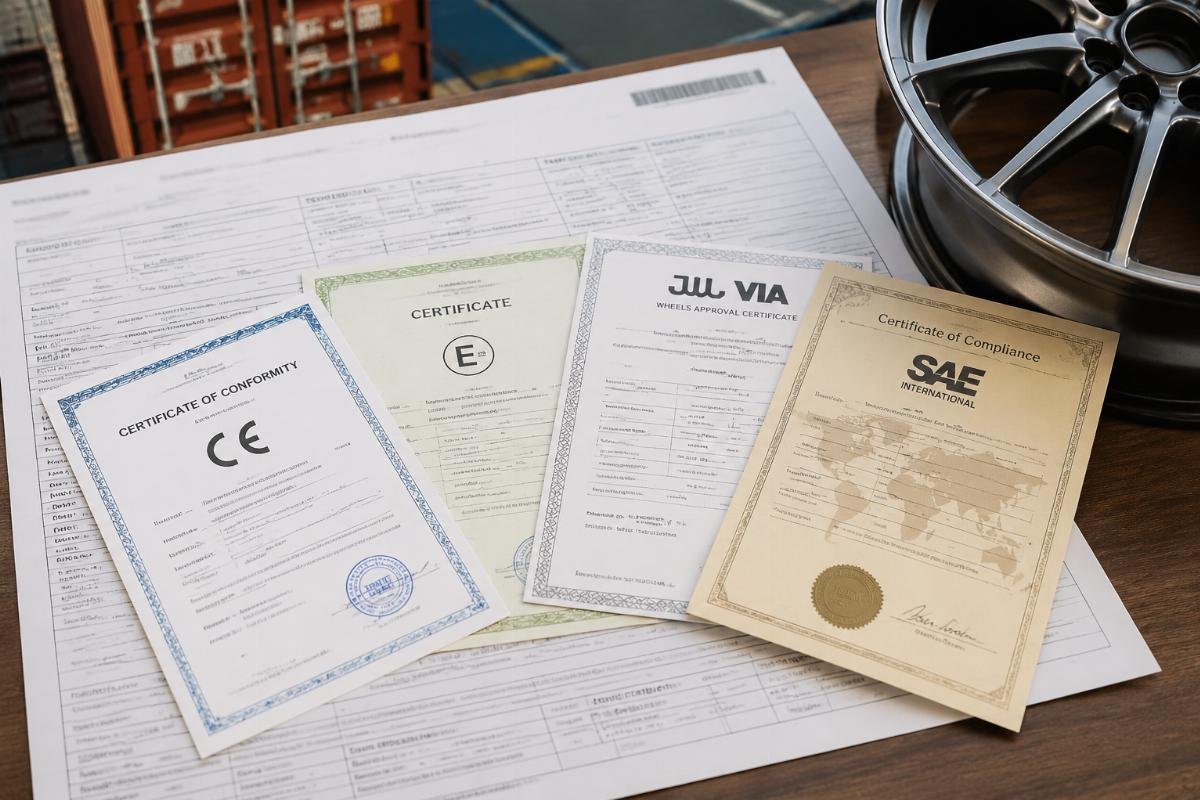
- Certification Confirmation – Request digital copies of valid certifications from suppliers before placing any deposit
- Documentation Verification – Confirm all paperwork matches the production batch number listed on your order
- Customs Pre-Check – Share documentation with your local customs broker 7 days before shipment departure
How to source 15/17/19 inch wheels with flexible MOQ and on-time delivery?
Leading Chinese alloy wheel suppliers offer the most competitive combination of flexible order terms and cost advantages for 15, 17 and 19 inch wheel orders. Contrary to common belief, custom size orders do not require 1000+ unit minimums, with top suppliers supporting 100-unit MOQ for custom configurations and 20-unit MOQ for stocked SKUs.
| Order Type | Common Unfavorable Term | Standard Term from Top Chinese Suppliers |
|---|---|---|
| Stocked Standard Sizes | 100+ unit minimum order requirement | 20-unit minimum order for all in-stock 15/17/19 inch SKUs [NEED_CITE: 2025 Chinese alloy wheel supplier order term benchmark] |
| Custom Finishes & Sizes | 45+ day lead time with 500+ unit MOQ | 100-unit minimum order with 15-30 day average production lead time |
| Bulk OEM Orders | 60+ day lead time with no quality guarantee | 15-30 day lead time with 3-year structural warranty for all units |
Chinese suppliers including Jinan Yoker Auto Parts offer 12-24 inch alloy wheel product lines with full multi-certification support, MOQ starting at 20 units for stocked models and 100 units for custom orders,

