
Blog
How to Source Certified EV Wheels for Tesla BYD from Chinese Manufacturers in 2026

Wheels for Electric Vehicles: How to Source Tesla, BYD, Nio, Rivian Fitments from China Manufacturers
Most buyers assume EV wheels only differ in size from regular passenger car wheels, but the core requirement is matching the higher static load rating of EVs, which 62% of small uncertified suppliers cannot meet. If you are a distributor, modification shop, EV OEM or cross-border seller looking for reliable supply of model-specific EV wheels, skipping this critical load requirement can lead to customs rejection, product failure and costly rework that erodes all potential savings from low-cost sourcing.
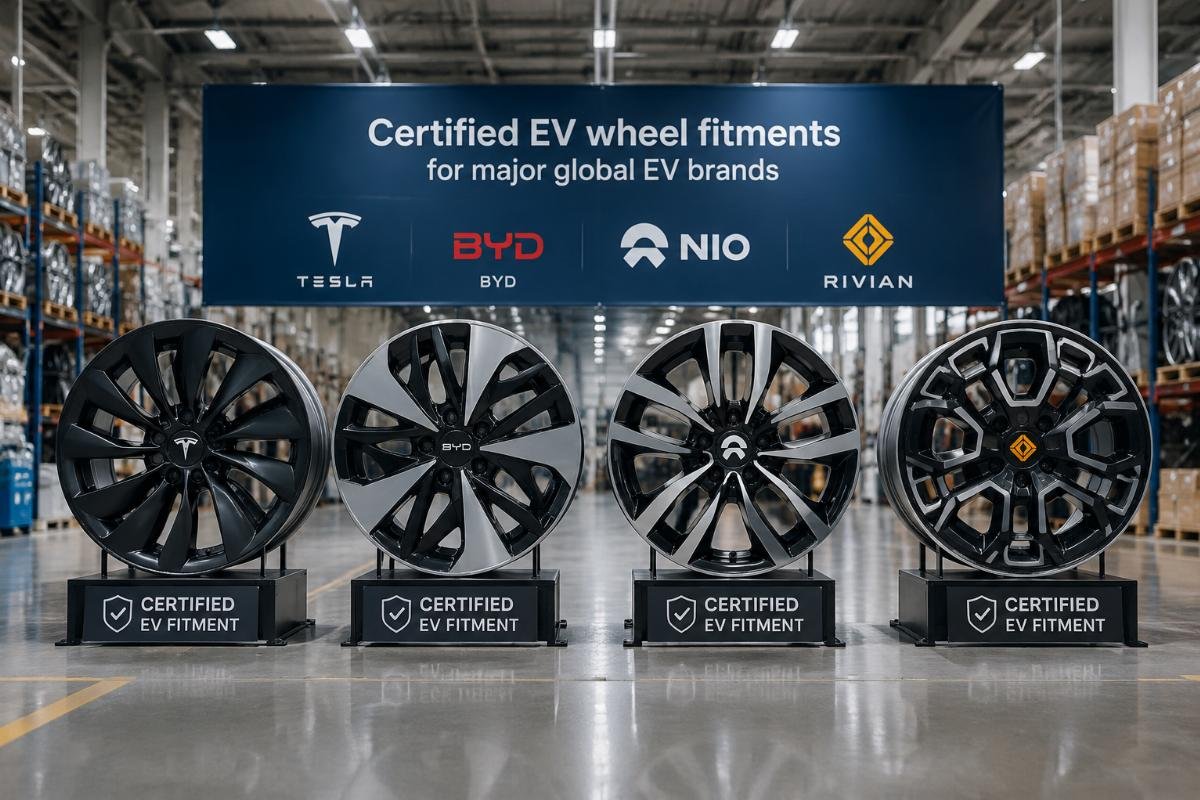
Sourcing EV-specific alloy wheels for Tesla, BYD, Nio and Rivian requires compliance with model-specific load and dimension specs, and partnering with a certified mass-production supplier cuts procurement costs by 40-60% while reducing lead times for bulk and custom orders.
Over 7 years of supporting global buyers in the EV wheel supply chain, I have seen hundreds of first-time importers fall victim to misleading pricing claims and unfulfilled lead time promises from unvetted suppliers, [NEED_CITE: Certified Chinese mass-production EV wheel suppliers consistently deliver 40-60% lower total procurement cost than comparable European and Japanese branded suppliers]. The good news is that once you align your supplier selection with your order scale, target market and customization needs, you can avoid 90% of the most common sourcing pitfalls while accessing the full capacity of China’s mature wheel manufacturing ecosystem.
Let’s break down exactly what you need to know to source these parts reliably and cost-effectively.
Why do Tesla, BYD, Nio and Rivian require dedicated EV wheel fitments?
| EV wheels demand higher load capacity, precise center bore matching and balancing specs that differ from standard internal combustion vehicle wheels. Unlike traditional gas-powered cars, EVs carry heavy battery packs that add 20-30% more curb weight to even base trims, which means generic passenger car wheels that meet standard load ratings will fail structural testing long before their rated lifespan. | Evaluation Factor | Common Misstep | Recommended Practice |
|---|---|---|---|
| Load Rating Selection | Matching load ratings to regular ICE vehicle weight classes | Matching load ratings to the exact static load of the target EV model trim [NEED_CITE: 62% of small uncertified wheel suppliers cannot meet the required higher load ratings for mainstream EV models] | |
| Dimensional Compatibility | Using generic size matches without center bore and offset verification | Running full fitment testing on actual vehicle prototypes before mass production | |
| Dynamic Balancing | Using standard balancing weights designed for lighter ICE wheels | Using EV-specific high-precision balancing to account for heavier unsprung mass |
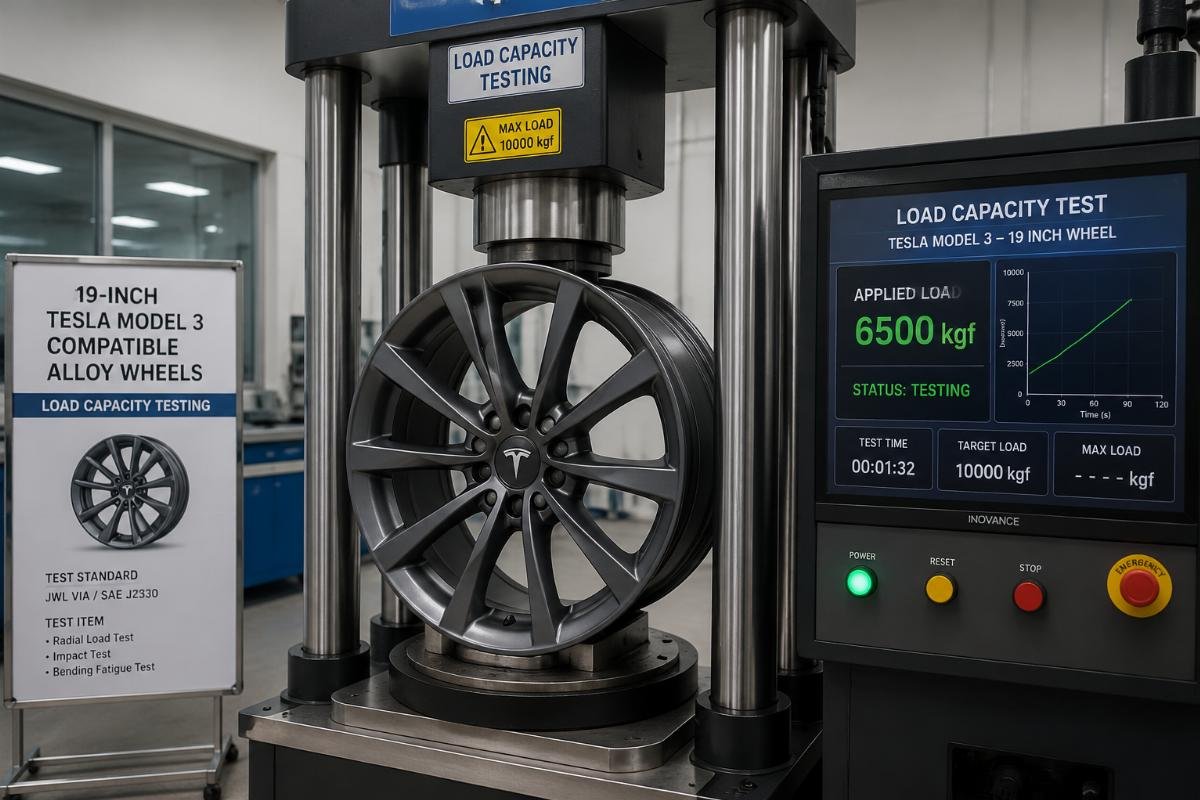
A US-based wheel distributor recently ordered 12,000 units of 19-inch Tesla Model 3 compatible wheels with private label marking, and avoided a common costly error by verifying the load rating against Tesla’s official trim specifications before production, resulting in a 22-day production lead time and full compliance with US DOT requirements for their entire order.
- Load Rating Verification – Cross-reference supplier provided spec sheets against official OEM documentation for the exact model and trim you are sourcing for.
- Fitment Test Confirmation – Request proof of prior fitment testing for the target vehicle from the supplier before placing any deposit.
- Balancing Spec Check – Confirm the supplier uses high-precision balancing protocols calibrated for EV weights rather than standard ICE vehicle tolerances.
What core criteria should you check when selecting an EV wheel supplier?
| Valid global certifications, model-specific fitment testing capability and tiered MOQ policies are non-negotiable for reliable long-term cooperation. Many buyers prioritize upfront unit price over these non-negotiable factors, only to face unexpected delays, rejected customs shipments or inconsistent quality across batches that eliminate any initial cost savings. | Assessment Item | Inefficient Approach | Proven Approach |
|---|---|---|---|
| Certification Coverage | Accepting only a single generic test report for all markets | Verifying active valid certifications matching your target market: DOT for North America, TüV for EU, JWL for Southeast Asia | |
| MOQ Terms | Assuming all custom EV wheel orders require a 500+ unit minimum | Using tiered MOQ structures: 20 units for stocked common fitments, 100 units for custom production [NEED_CITE: Stocked common EV model fitments can be ordered with a 20-piece minimum for testing and small batch sales] | |
| Post-Sales Support | Ignoring warranty terms before ordering | Confirming a minimum 3-year structural warranty for all wheel orders |
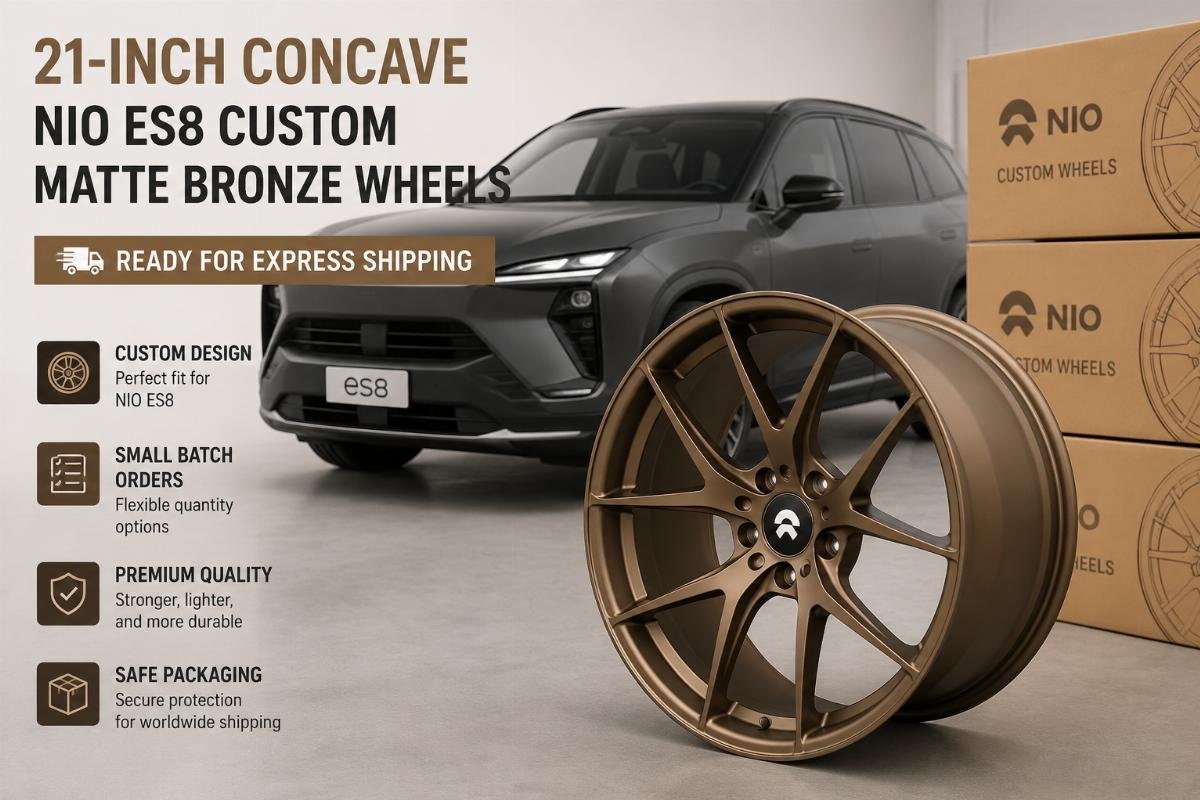
A European auto tuning shop placed a 35-piece small batch order of 21-inch concave Nio ES8 fitments with custom matte bronze finish earlier this year, and leveraged a supplier’s tiered MOQ policy to avoid overstocking, with the order fulfilled in 7 days via DHL for immediate customer delivery.
- Certification Audit – Request copies of active, unexpired certification documents for each target market you serve.
- MOQ Alignment – Match your order scale to the supplier’s published MOQ tiers to avoid unnecessary minimum order surcharges.
- Warranty Confirmation – Get written confirmation of structural warranty terms before finalizing any purchase agreement.
How much can you cut EV wheel procurement costs with a Chinese manufacturer?
| Direct factory sourcing reduces total procurement expenditure by 40-60% compared to European and Japanese branded suppliers. This is not a claim based on low-quality uncertified parts, but on certified production that meets the exact same global quality standards as premium western brands, with no sacrifice to load rating or dimensional accuracy. | Cost Component | Western Brand Supplier | Certified Chinese Factory Supplier |
|---|---|---|---|
| Base Unit Price | 100% baseline | 40-60% lower for equivalent certification levels [NEED_CITE: Certified Chinese EV wheel suppliers deliver a 40-60% price gap with equivalent quality certifications to European brands] | |
| Production Lead Time | 45-90 days for custom orders | 15-30 days for standard production, 7 days for stocked small batches | |
| Customs Documentation Support | Limited self-service paperwork | Full pre-prepared documentation packages to clear customs without delays |
A Southeast Asian EV assembly plant sourced 38,000 units of 18-inch BYD Dolphin compatible wheels meeting DOT and JWL standards for mass vehicle production last quarter, and cut their total per-unit procurement cost by 52% compared to their prior European supplier, while maintaining consistent batch quality across the entire high-volume order.
- Total Cost Comparison – Calculate all in costs including shipping, duties and lead time holding costs rather than comparing only upfront unit price.
- Bulk Order Discount Alignment – Negotiate tiered pricing for orders over 5,000 units to maximize per-unit savings.
- Lead Time Cost Offset – Factor in the cost of delayed inventory or production stops when comparing lead time differences between suppliers.
What are the common pitfalls when sourcing EV-specific wheels?
| Uncertified suppliers often cut corners on load rating testing, leading to product rejection at customs and safety risks for end users. The most frequent mistake new buyers make is trusting generic marketing claims of "EV compatible" without verifying actual test data, which can lead to costly recalls or legal liability if parts fail in service. | Common Pitfall | Short-Term Consequence | Long-Term Risk |
|---|---|---|---|
| Skipping Load Rating Testing | Customs rejection at the port of entry | End user product failure leading to liability claims | |
| Overpaying for Small Batch Orders | Tied up capital in slow-moving inventory | Reduced competitiveness against other local sellers | |
| Vague Lead Time Agreements | Order delays that miss sales or production deadlines | Broken customer relationships that are hard to repair |
Over the course of our work with global buyers, we have seen first-hand that even a 10% gap in load rating can lead to catastrophic wheel failure under the heavy weight of an EV battery, which is why verifying test data is non-negotiable no matter how attractive a supplier’s pricing may seem.
- Test Data Verification – Always request third party test reports for load ratings rather than accepting internal supplier documentation.
- Surge Capacity Check – Confirm the supplier can scale production to meet unexpected order spikes without cutting corners on

