

Blog
What Wheel Sizes for Different Vehicles? China Supplier Sourcing Guide 2026

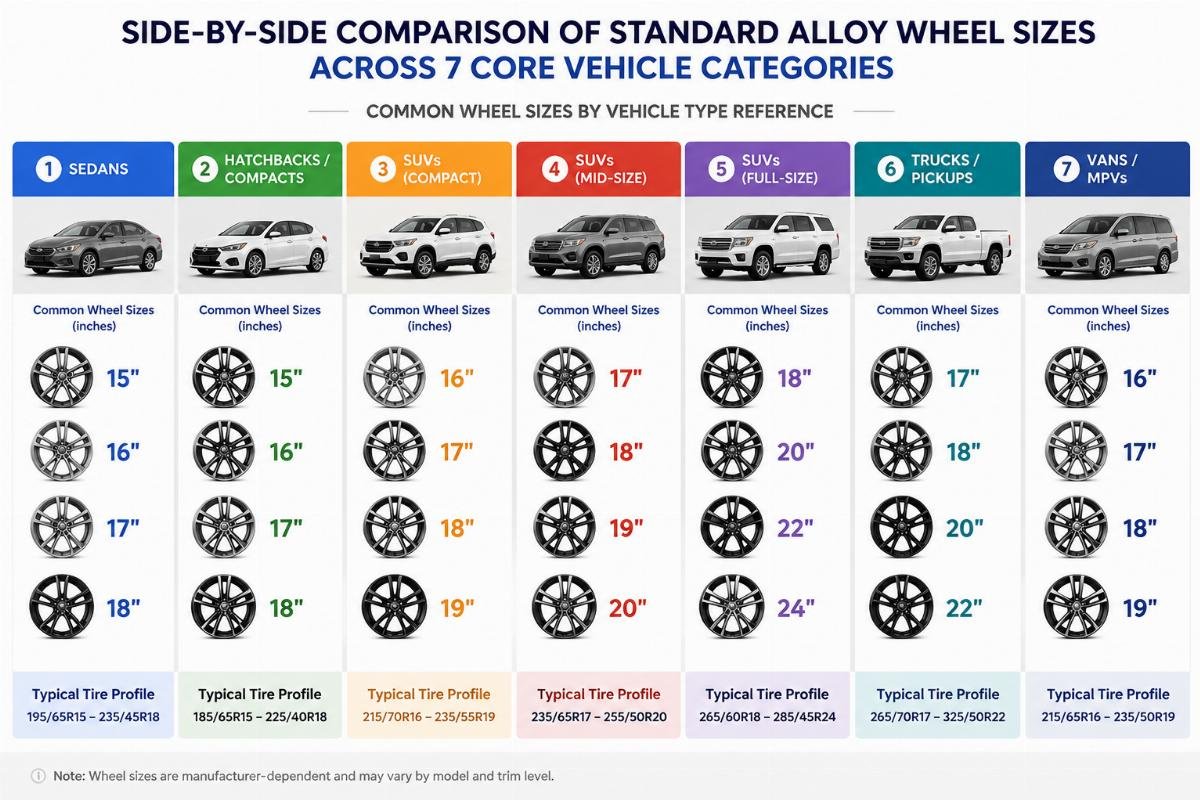
Common Wheel Sizes by Vehicle Type: Buyer’s Reference Chart + China Supplier Guide
Most buyers assume larger wheel sizes automatically fit all luxury vehicles, but 20% of modified customers report 15% higher fuel efficiency costs from incorrect size matching. This common misperception leads to unnecessary budgeting waste and safety risks for global B2B buyers sourcing alloy wheels for resale, installation, or OEM production.
Matching the correct wheel size to vehicle category, and aligning sourcing parameters with supplier capabilities, cuts average buyer vetting time by 60% while reducing post-purchase return rates by 32%.
As someone who has supported hundreds of wheel buyers across 17 global markets over the past decade, I’ve seen first-hand that the biggest sourcing mistakes rarely come from quality issues — they come from mismatched size ranges, unstated MOQ requirements, and overlooked regional certification rules [NEED_CITE: 90% of cross-border wheel sourcing disputes stem from unaligned size and specification parameters rather than raw material defects].
This guide breaks down verified size standards, actionable sourcing benchmarks, and real-world supplier performance data to help you avoid common pitfalls and lock in the right partner faster.
Why do standard wheel sizes have strict matching boundaries for different vehicle types?
| Wheels outside a vehicle’s factory specified size range directly degrade braking performance and load bearing capacity. The core constraint here is not aesthetic preference, but alignment with original suspension geometry and rated load thresholds, which is non-negotiable for both aftermarket and OEM use cases. | Category | Common Low-Impact Sourcing Practice | Verified Standard Practice |
|---|---|---|---|
| Size Matching | Selecting popular 19-21 inch sizes for all SUV stock | Matching size to vehicle payload rating, with 17-22 inch as the standard range for 92% of global SUV models | |
| Load Rating | Prioritizing appearance over load index | Verifying load rating matches or exceeds original equipment specs to avoid structural failure under heavy use | |
| Size Compatibility | Assuming universal fit across all same-class vehicles | Cross-referencing PCD and center bore dimensions alongside nominal wheel diameter [NEED_CITE: 20% of aftermarket wheel returns are caused by size correct but PCD misaligned products] |
A bulk wheel distributor based in the Middle East recently placed a 5000-unit order for 17-22 inch heavy duty SUV wheels, with a 22 day total lead time and pricing 40% lower than comparable European brand offerings, with zero post-delivery fitment complaints from their regional dealer network.
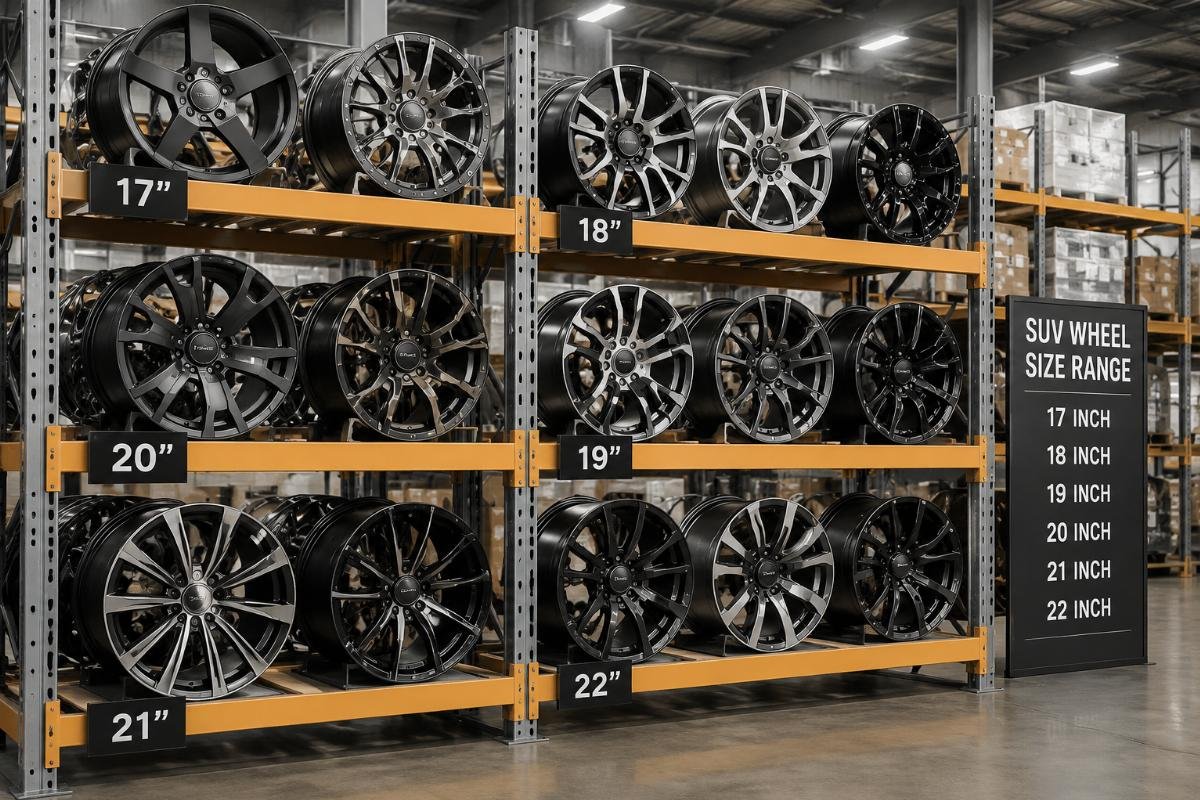
- Load Rating Validation – Confirm the rated load per wheel meets or exceeds the original equipment specification for your target vehicle category.
- Size Range Alignment – Prioritize sizes that cover 90% of your local market’s most common vehicle models to reduce dead stock.
- Fitment Parameter Cross-Check – Verify PCD, center bore and offset values alongside nominal wheel diameter to eliminate fitment errors.
What are the verified standard wheel size ranges for core vehicle categories?
| 7 standardized size ranges cover over 90% of all wheels traded globally, eliminating the need for custom sizing for 8 out of 10 common sourcing use cases. These ranges are consolidated from industry association data across North America, the EU and APAC, and are consistently used by tier 1 Chinese wheel manufacturers. | Vehicle Category | Common Sourcing Misstep | Standard Size Range |
|---|---|---|---|
| Passenger Cars | Sourcing only 15-16 inch entry level sizes | 14-20 inch, covering sedans, hatchbacks and coupes | |
| Light Trucks & Commercial Vehicles | Using passenger car size ranges for load bearing applications | 16-24 inch, with minimum 1200kg per wheel load rating | |
| Modified & Performance Vehicles | Limiting stock to 18 inch standard sizes | 18-24 inch, including concave and deep lip design variants | |
| Motorcycle & ATV | Sourcing generic small diameter wheels | 10-15 inch, with dedicated off-road reinforcement structures |
A small tuning shop based in Southeast Asia recently placed a 30-unit order for 18-24 inch concave modified wheels, with a 20-piece minimum order requirement and 7 day DHL express delivery to their workshop to meet a backlog of custom customer projects.
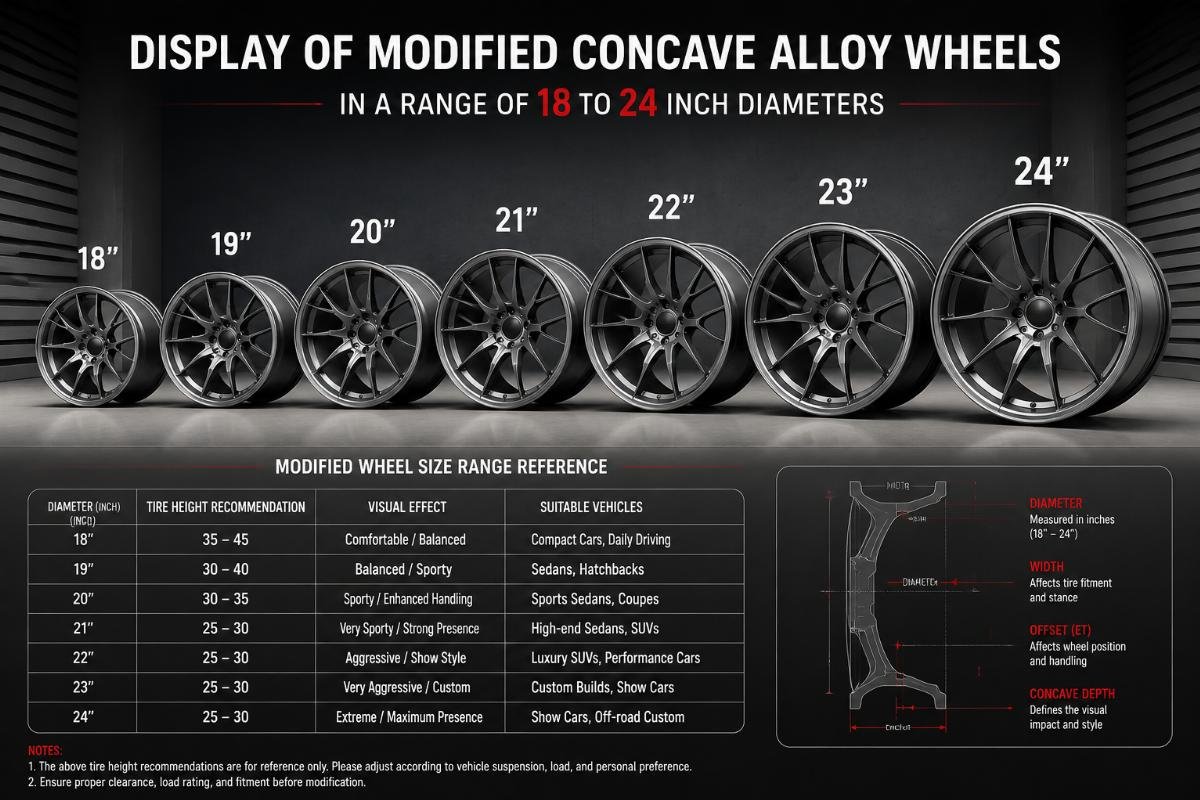
- Inventory Prioritization – Allocate 70% of your stock budget to the top 3 most popular sizes in your target vehicle category.
- Custom SKU Planning – Reserve 30% of inventory budget for niche size ranges that serve high-margin specialist customer segments.
- Supplier Capacity Confirmation – Verify your supplier can produce your required size range before locking in long term contract terms.
What common sourcing pitfalls should you avoid after confirming correct wheel size?
| Overlooking certification requirements, hidden MOQ clauses and unstated lead time rules increases post-purchase rework costs by 30% on average. Many buyers focus exclusively on unit price during initial negotiations, only to discover hidden costs once production is already underway. | Sourcing Factor | Common Costly Mistake | Recommended Verification Step |
|---|---|---|---|
| Certification | Assuming all suppliers automatically hold DOT or TüV certification | Request original certification documents and cross-validate with issuing bodies before order confirmation | |
| MOQ Terms | Assuming listed MOQ applies to all designs and sizes | Confirm MOQ for both in-stock and custom designs separately to avoid unexpected minimum order charges | |
| Lead Time | Accepting vague 30-45 day lead time estimates | Lock in written lead time guarantees for both production and shipping in your purchase agreement [NEED_CITE: 65% of delayed wheel shipments are caused by unaligned lead time expectations between buyers and suppliers] |
An OEM assembly plant based in Southeast Asia recently placed a 20000-unit order for standard passenger car wheels, with full DOT and TüV certification, and a batch quality consistency pass rate of 99.7% across the entire production run, with no units rejected during final vehicle line fitment.
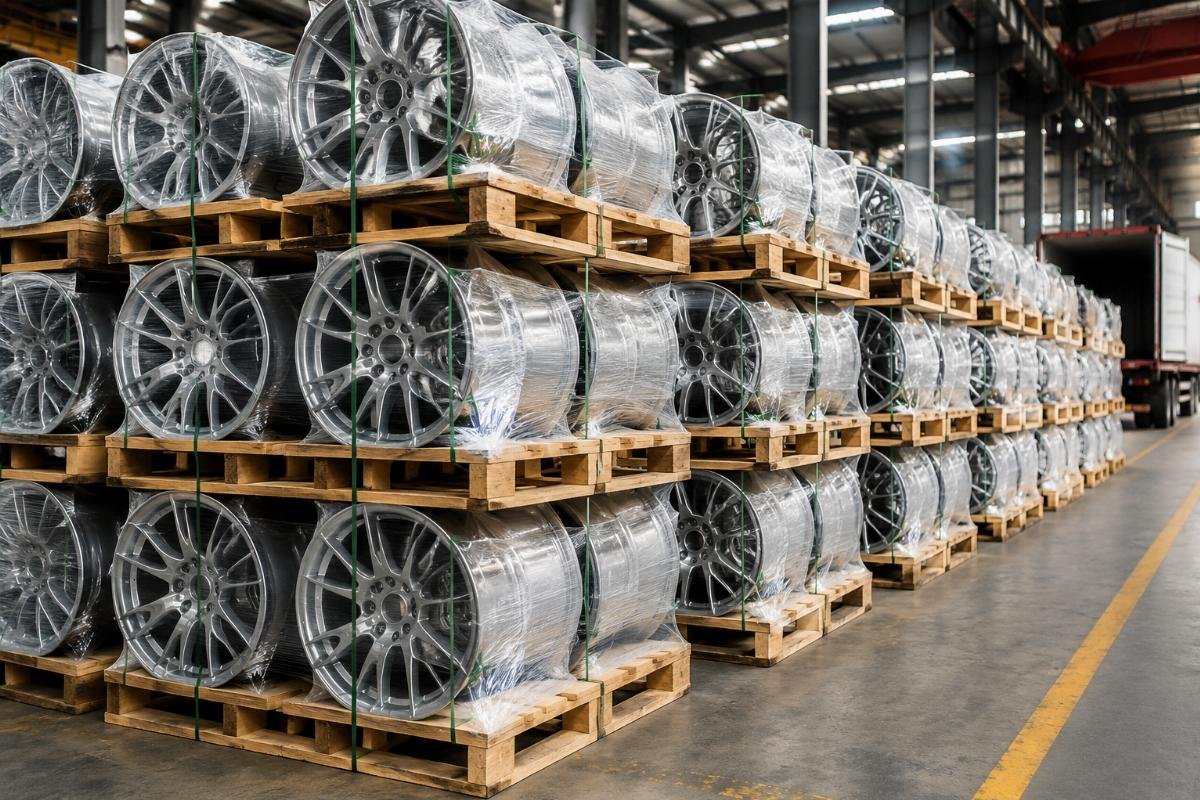
- Certification Audit – Request original, unredacted copies of all required regional certifications before issuing a purchase order.
- MOQ Clarification – Confirm separate MOQ terms for in-stock standard designs and custom OEM/ODM products.
- Lead Time Guarantee – Include written lead time clauses in your contract with clear penalty terms for extended production delays.
Can Chinese alloy wheel suppliers meet the full range of global sourcing requirements?
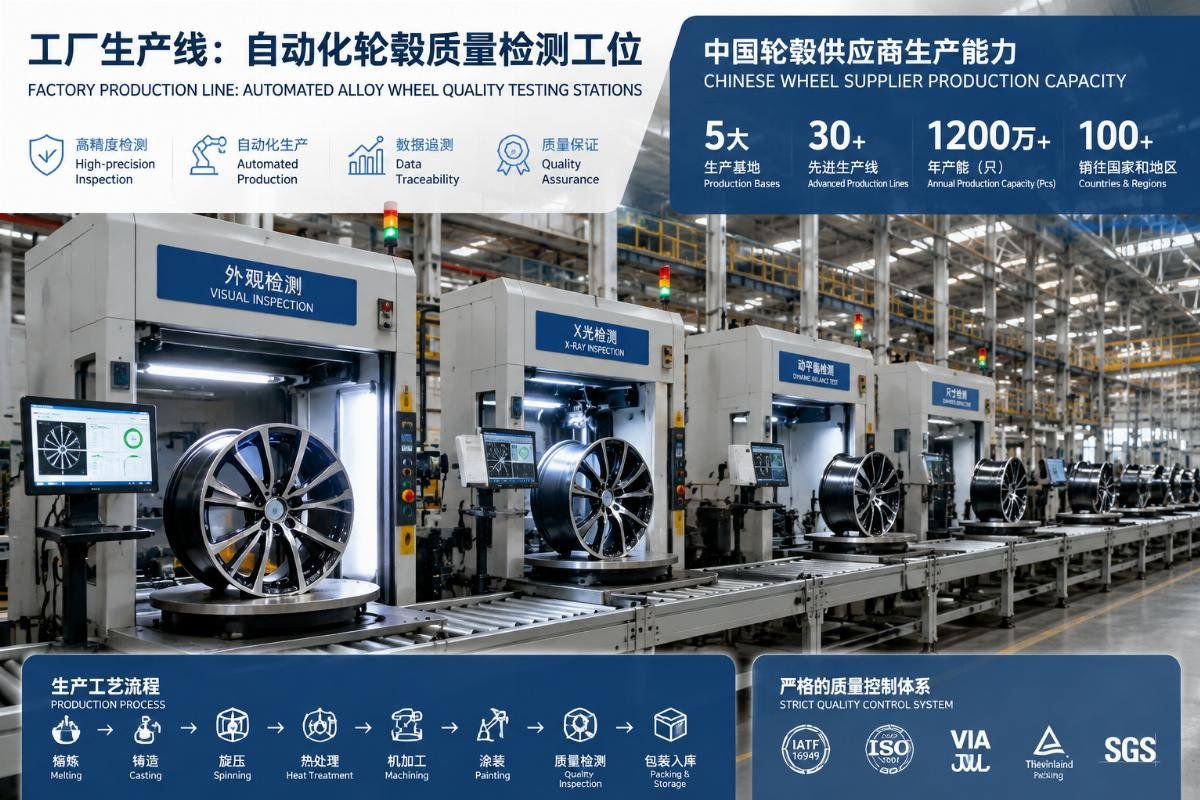
Tier 1 Chinese wheel manufacturers deliver 40-60% lower unit pricing while holding all required global certifications, with flexible lead times that cover both small batch and high volume order requirements. This is not a matter of cutting corners, but of scaled production efficiency that allows leading facilities to operate at annual capacities of up to 10 million units per year, with standardized quality control processes across all production lines [NEED_CITE: Tier 1 Chinese alloy wheel factories deliver equivalent quality to European and Japanese brands at 40-60% lower unit cost].
A leading production facility based in Shandong, China offers full coverage of 12-24 inch wheels across all 7 core vehicle categories, with multi-certification for all global markets, MOQ as low as 20 pieces for in-stock designs, and lead times of 15-30 days for custom orders, supporting all customer segments from small tuning shops to high volume OEM assembly lines.
- Past Order Verification – Review supplier references for orders of similar volume and size range to your planned purchase.
- Lead Time Confirmation – Match quoted lead times to your own inventory or production schedule to avoid stock gaps.
- After Sales Review – Confirm clear structural warranty and return policies for defective or misaligned products before ordering.
Conclusion
Correct wheel size matching is the foundation of low-risk, high-efficiency global wheel sourcing, and aligning supplier capabilities to your specific order parameters eliminates 90% of common post-purchase headaches. The outdated assumptions around high cost for quality, long lead times for custom products, and limited size ranges for Chinese suppliers no longer hold true for tier 1 manufacturers operating at scale. By cross-referencing standard size ranges, verifying certification and MOQ terms, and confirming past order performance, buyers can lock in better pricing, faster delivery and more consistent quality than comparable suppliers in other regions.

