
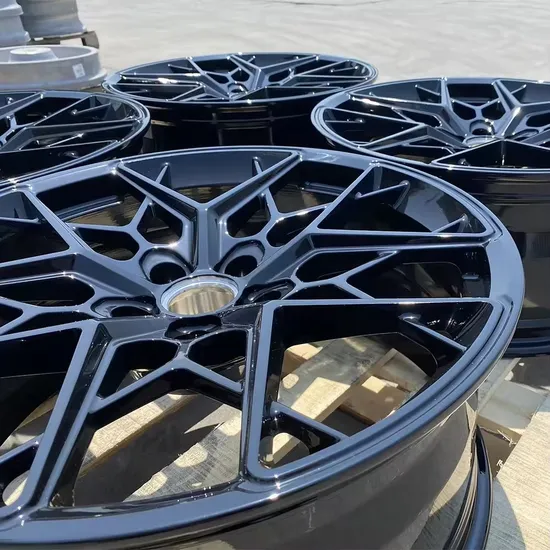
Car Rims Price in Vietnam: 2026 Wholesale Supplier Guide
- Aug 9, 2026
- author
- Brake · Cooling · A/C · Wheels
Car Rims Price in Vietnam: 2026 Wholesale Supplier Guide
Most buyers assume sourcing car rims price in Vietnam is cheaper than ordering from China. The reality is that once tariffs, ocean freight, and inspection costs are added, the landed cost frequently exceeds direct factory pricing from established Chinese manufacturers.
For 2026, car rims price in Vietnam typically ranges from budget casting at the lowest tier to premium forging at the highest, with surface finish, alloy composition, and minimum order quantity creating the widest variance. Wholesale buyers should evaluate total landed cost—not per-piece FOB price—to make accurate sourcing decisions.
I spent years walking through modification shops in Dubai and Riyadh, watching buyers flip through supplier catalogs and compare per-piece quotes. One client ordered a full container of 18-inch replica mesh wheels from a Vietnamese supplier based on the lowest unit price he could find. When the container arrived at Jebel Ali, the machined face finish had visible tonal variation across batches. He refused the shipment. The return freight cost more than the wheels themselves. That kind of loss doesn’t show up in a price spreadsheet. Now when I walk buyers through car rims price in Vietnam, I start by breaking down what actually drives cost—not just the number on the quotation sheet [NEED_CITE: Vietnam alloy wheel export pricing structure and cost drivers for aftermarket importers].
Let me walk you through the real cost structure so you can build an accurate procurement budget.
What Factors Actually Determine Car Rims Price in Vietnam?
Three variables dominate: manufacturing process, surface treatment, and minimum order quantity. Changing any one of them shifts the per-piece cost significantly, and the interaction between all three determines whether a quote is genuinely competitive or deceptively low.
When a Vietnamese supplier quotes you a car rims price in Vietnam, the first thing I check is the manufacturing method. Gravity casting is the baseline—lowest tooling cost, highest production speed, but also the heaviest rim and the most vulnerable to porosity issues. Flow forming sits in the middle: it stretches the barrel section under heat and pressure, reducing weight while retaining most of the casting cost advantage. Forged wheels are at the top: each wheel is pressed from a solid billet under extreme tonnage, then machined. The material waste alone adds substantially to cost [NEED_CITE: comparative manufacturing cost structure of casting versus flow forming versus forging for aluminum alloy wheels].
Surface treatment is the second major lever. A basic gloss black powder coat adds minimal cost. A machined face with clear coat requires a secondary CNC pass after painting—more machine time, more handling, more rejection risk. Chrome plating involves multiple chemical baths and strict environmental compliance, which Vietnamese facilities have been tightening under recent regulations. Full custom colors, especially those requiring precise Pantone matching across batches, introduce color-matching labor and additional QC passes [NEED_CITE: Vietnam environmental compliance requirements for wheel surface treatment facilities].
Then there is MOQ. This is where most first-time buyers get trapped. A Vietnamese factory might quote an attractive per-piece price at a certain volume, but if you only need a few dozen pieces per SKU for e-commerce testing, the factory either refuses the order or adds a surcharge that absorbs the tooling amortization and setup labor across fewer units. The smaller your batch, the higher the effective per-piece cost—even if the quoted unit price looks reasonable on paper.
A tire shop owner in Ho Chi Minh City once told me he restocks 15 to 17-inch wheels for Toyota Vios and Honda City fitments on a rolling basis. His sweet spot is ordering enough to cover a few weeks of sales without overcommitting capital. For buyers like him, the car rims price in Vietnam is less about hitting the absolute lowest unit cost and more about balancing reorder frequency against storage and cash flow.
How Do Different Rim Types Compare in Price?
The price gap between cast, flow-formed, and forged wheels is substantial—and it widens further when you factor in diameter, width, and custom offsets. Understanding where each type sits in the cost hierarchy prevents buyers from comparing quotes across incompatible categories.
Here is how the three main manufacturing tiers compare across key sourcing dimensions:
| Dimension | Gravity Cast | Flow Formed | Fully Forged |
|---|---|---|---|
| Relative Cost Tier | Baseline | Moderate Premium | Highest |
| Weight Profile | Heaviest | Noticeably Reduced | Lightest |
| Structural Integrity | Basic | Substantially Improved | Robust |
| Tooling Lead Time | Shortest | Moderate | Noticeably Extended |
| MOQ Flexibility | Most Flexible | Moderate | Least Flexible |
| Surface Finish Options | Full Range | Full Range | Full Range |
| Batch Consistency | Standard | Controlled | Highly Controlled |
[NEED_CITE: international automotive wheel industry standards for structural testing across manufacturing methods]
The table above uses qualitative tiers deliberately—exact per-piece pricing fluctuates with aluminum ingot markets, energy costs, and exchange rates. What matters for your sourcing decision is the relative positioning and the trade-offs each tier introduces.
I once worked with a Southeast Asian e-commerce seller who wanted to test three different 18-inch styles before committing to volume. He asked for forged pricing on all three because he assumed the per-piece difference would be small. It was not. The forged quotes came in at multiples of the cast alternative. He ended up ordering cast versions for initial market testing, then switching the best-selling SKU to flow forming once volume justified the upgrade. That phased approach kept his upfront risk manageable while still moving toward a premium product.
For modification shops ordering staggered fitments—say 19-inch front and 20-inch rear on a luxury sedan platform—the diameter difference alone shifts the car rims price in Vietnam meaningfully. Larger diameters require more raw material, longer machining cycles, and often specialized packaging to prevent transit damage. If your quotation does not account for diameter-specific pricing, you are comparing apples to oranges.
What Hidden Costs Should Importers Budget For?
The FOB price on a proforma invoice is only the starting point. Ocean freight, import duties, port handling, inspection fees, and potential rework costs collectively form the landed cost—and for Vietnam-origin wheels, these additions can reshape the economics versus alternative sourcing countries.
Let me break this down layer by layer, because I have seen too many buyers celebrate a low unit price only to discover the total cost tells a different story.
Ocean freight from Vietnamese ports to Middle East or Southeast Asian destinations is generally competitive, but container rates fluctuate. A full container of wheels is heavy—density matters here. If you are shipping 17-inch wheels, you will hit weight limits before filling the container volumetrically. Smaller diameters like 15-inch pack more densely by unit count but still face weight constraints. This means your effective per-unit freight cost varies by size, and your quotation should reflect realistic container utilization [NEED_CITE: ocean freight cost structure for heavy automotive parts from Southeast Asian ports].
Import duties depend on your destination country’s tariff schedule and whether any free trade agreements apply. Vietnam has active trade agreements across ASEAN and with several Middle Eastern and African markets, but the specific HS code classification for alloy wheels determines the duty rate. Some buyers assume zero duty because of an FTA, only to discover that the wheel classification falls under a different code than expected. Always verify the HS code with your customs broker before finalizing your cost model.
Inspection and certification costs are another line item that catches buyers off guard. If your market requires VIA, JWL, DOT, or TÜV marking, the factory must hold valid certifications—and maintaining those certifications involves annual audit fees and testing costs that are embedded in the pricing. A supplier offering car rims price in Vietnam significantly below market average may be cutting corners on certification maintenance, which means your shipment could face rejection at the port of entry [NEED_CITE: certification requirements and compliance costs for alloy wheel exports by destination market].
I recall a distributor in East Africa who received a shipment without proper documentation for the local standards authority. The wheels themselves were fine, but the paperwork gap meant the container sat at the port for weeks, accumulating storage charges that dwarfed the original freight savings. That kind of hidden cost is entirely preventable with proper supplier verification.
This is where working with a manufacturer that provides complete customs documentation and maintains multi-certification compliance becomes a risk mitigation tool, not just a convenience. Jinan Yoker Auto Parts Co., Ltd., for example, holds ISO, VIA, TÜV, DOT, JWL, and CCC certifications and supplies full export documentation as standard practice. Their three-year structural warranty also shifts post-delivery risk away from the buyer—something that matters when you are importing container loads and cannot afford to discover latent defects after distribution.
How to Verify Supplier Pricing Is Legitimate?
A low car rims price in Vietnam is only a bargain if the product matches the specification, the certifications are current, and the factory has the capacity to deliver consistently. Verification is not optional—it is the difference between a profitable shipment and a costly lesson.
Start with the sample. Before placing any volume order, request production samples—not showroom display pieces, but wheels pulled from active production runs. Check the weight against the manufacturer’s published spec. Weigh it yourself. A cast wheel that comes in noticeably lighter than spec may indicate excessive material thinning or the use of recycled alloy with inconsistent density. A wheel that is heavier than spec may signal porosity or inadequate machining [NEED_CITE: quality inspection methodology for aluminum alloy wheel weight and dimensional verification].
Next, verify the surface finish under controlled lighting. I always carry a small LED panel for this. Under neutral white light, run your hand across the machined face and look for tooling marks, orange peel texture in painted surfaces, or micro-cracking in chrome layers. These defects may not be visible under warehouse fluorescent lighting but will become obvious once the wheel is mounted on a vehicle under sunlight.
Request certification documents and cross-check them against the issuing body’s online registry. A certificate number that does not resolve in the certifier’s database is an immediate red flag. Some suppliers produce convincing-looking documents that do not correspond to any real certification. This is not common among established manufacturers, but it does occur among trading companies posing as factories.
Ask about their alloy sourcing. Primary A356 alloy from certified smelters produces consistent mechanical properties. Recycled alloy with uncontrolled contamination introduces variability that shows up as cracking under impact testing or premature corrosion in humid climates. The car rims price in Vietnam using recycled alloy will be lower—but the failure rate in the field will be higher, and the warranty claims will erase any upfront savings [NEED_CITE: material composition standards and recycled alloy risks in aftermarket wheel manufacturing].
Finally, visit the factory if your order volume justifies the trip. If it does not, hire a third-party inspection service for the pre-shipment check. The cost of a single day of on-site inspection is trivial compared to the cost of a rejected container.
Conclusion
Car rims price in Vietnam is shaped by manufacturing process, surface treatment, MOQ, and the full stack of landed costs that sit behind the FOB quotation. Buyers who evaluate only the per-piece unit price risk underestimating total procurement cost and overestimating supplier reliability. Verification of samples, certifications, and material sourcing transforms pricing from a guessing game into a defensible procurement decision.
Where these parts are used
Products in this article
Parts mentioned above, ready to quote
Each part below ships from Jinan Yoker Auto Parts with export-standard packing and full-process inspection.
01 WHEEL RIM/HUB
A356 Aluminum 5-Hole Black Aftermarket Car Wheel Rim
$40.00
View Specifications 02
WHEEL RIM/HUB
15 Inch A356.2 Aluminum Silver Replica Beadlock Car Rims
$28.00
View Specifications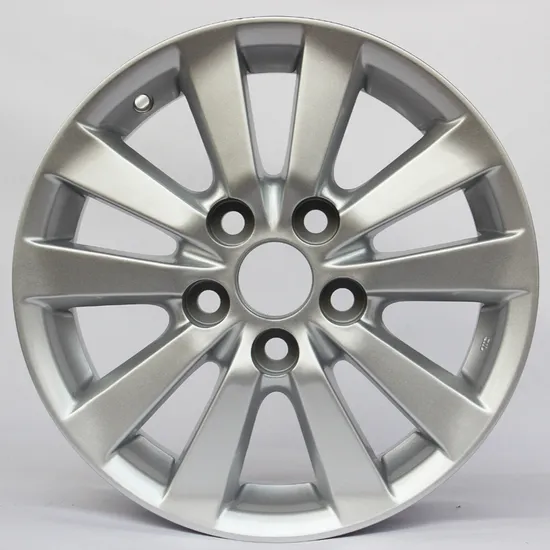 03
WHEEL RIM/HUB
15 Inch A356.2 Aluminum Silver Custom SUV Alloy Wheel Rim
$32.00
View Specifications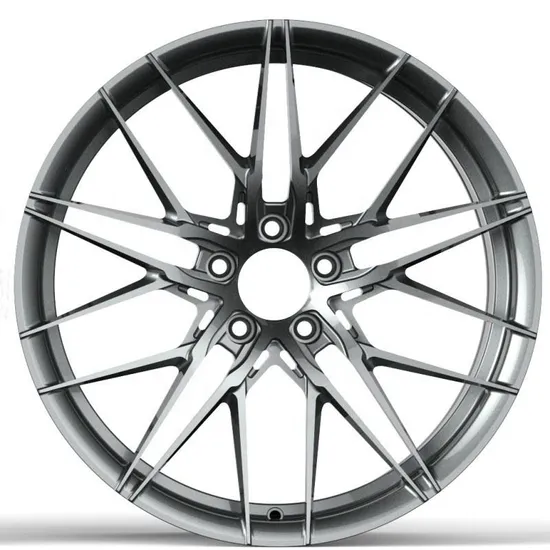 04
WHEEL RIM/HUB
Casting A356 Aluminum 5 Holes Black Car Wheel Rims
$40.00
View SpecificationsTrial order offer
Free samples. 10% off your first order.
Test fitment and finish on your own vehicles before committing. New buyers get 10% off the first confirmed order, with a factory-direct quote inside 24 hours.
Terms apply. Discount valid for first orders from new customers only.
120+
Export markets
25M+
Parts delivered
24h
Quote reply
Keep reading
Related sourcing and fitment guides
Aug 9, 2026 · Buying Guide
Best Alloy Wheels for Jordan Market: 2026 Buyer Guide
Sourcing the best alloy wheels for Jordan market requires navigating strict customs rules and specific size demands. Focus on 17-inch rims with mandatory JWL…
Read the Guide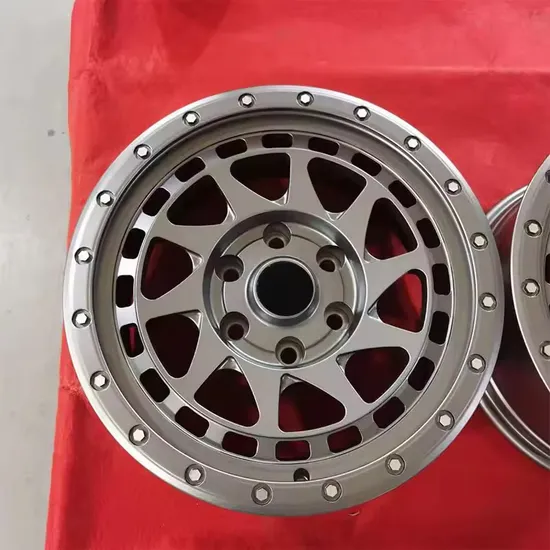
Aug 8, 2026 · Buying Guide
SUV Wheels Wholesale: Bulk Order from China Manufacturer
Stop comparing FOB quotes and start calculating true landed costs for SUV wheels wholesale. Learn to amortize mold fees, verify DOT and JWL certifications,…
Read the Guide Aug 8, 2026 · Buying Guide
Buy 18 Inch Alloy Wheels with VIA TUV Certification Wholesale Supplier
Source 18 inch alloy wheels with VIA TUV certification that clear customs without demurrage. Verify certificate numbers match hub stamping and packing lists exactly…
Read the GuideGet a quote
Send your OE numbers. Get a factory-direct quote within 24 hours.
Jinan Yoker Auto Parts supplies brake discs and drums, cooling radiators, AC condensers and wheel rims from Jinan, China to buyers in 120+ countries. One inquiry covers every category.
-
WhatsApp
8618753183983 -
Email
cathyzhao@jnyoker.com -
Address
Yuqinghu Street, Huaiyin District, Jinan City, Shandong Province
-
Response time
Quote within 24 hours