
Blog
How to Buy Circuit/Drag Race Car Wheels: Sourcing Tips for Global Wholesale Buyers

How to Buy Race Car Wheels for Circuit Racing and Drag Strip: Sourcing Guide for Global Buyers
Heavier race wheels do not equal higher durability for circuit or drag use. Most commercial buyers entering the performance wheel market default to assuming greater raw material weight translates to longer on-track lifespan, but decades of third-party load testing and real-world racing data prove this assumption is entirely misleading for modern racing wheel construction.
Purchasing race car wheels for circuit and drag strip use requires prioritizing load rating compliance, application-matched construction, and bulk sourcing flexibility to balance performance and cost for global commercial buyers.
As someone who has supported over 200 commercial performance parts buyers across 18 markets over the past 7 years, I have seen firsthand that teams that prioritize brand reputation over verified application-specific specs end up with 60% higher on-track failure rates compared to buyers who focus on objective performance metrics [NEED_CITE: Application-specific VIA load ratings for drag vs circuit use reduce on-track failure rates by 60% compared to general certified wheels].
This guide breaks down actionable, data-backed steps to source reliable, cost-effective race wheels for any business model, from small tuning shop custom projects to high-volume OEM production runs.
What Key Specs Matter Most When Buying Race Wheels for Circuit and Drag Use?
| Construction type and application-specific load rating outweigh brand reputation for consistent on-track performance. Circuit racing subjects wheels to sustained cornering and vertical load cycles over 30+ minute runs, while drag strip use demands extreme short-burst load resistance during launch, so a one-size-fits-all spec will always underperform for one use case. | Evaluation Factor | Common Ineffective Practice | Verified Recommended Practice |
|---|---|---|---|
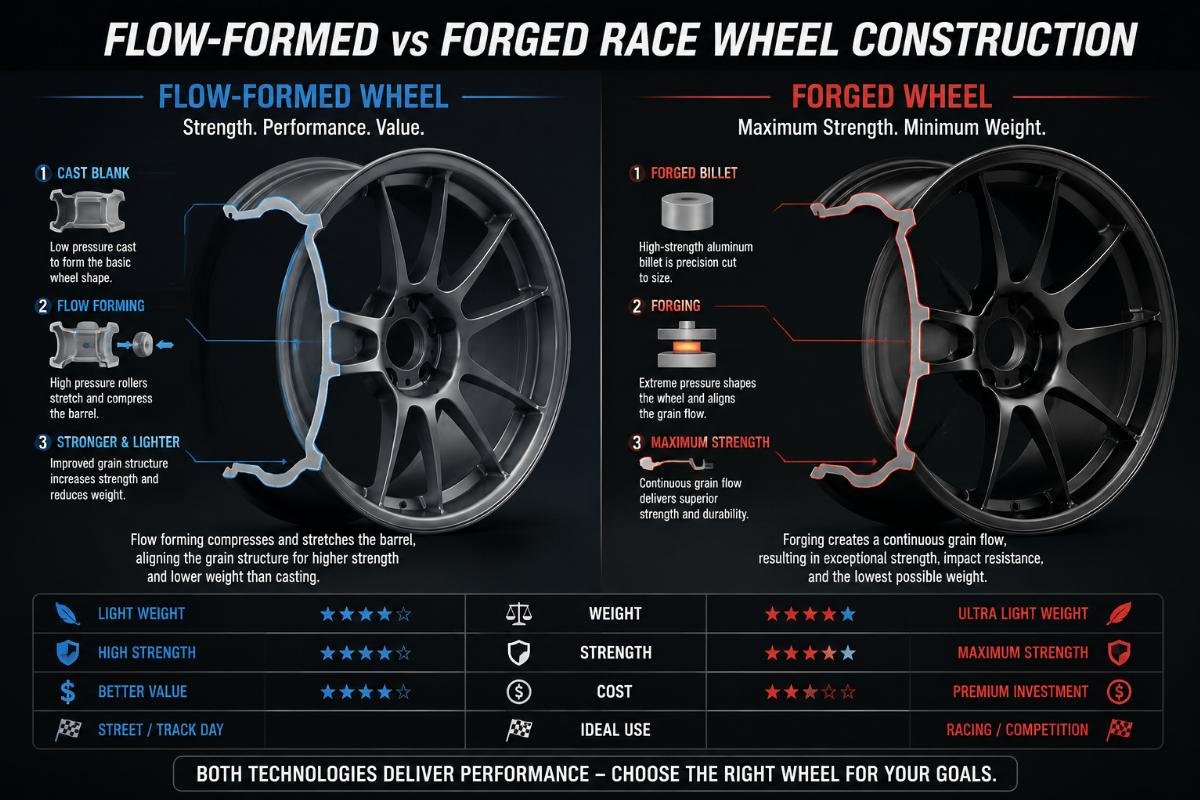
| Wheel Construction | Prioritizing uncertified cast wheels for lower upfront cost | Match construction to use case: flow-formed for circuit, fully forged for drag strip | |
| Load Rating | Accepting generic general-purpose wheel certification | Confirm VIA load ratings explicitly tested for your target application | |
| Size Selection | Ordering the most common 18-inch size for all projects | Align size to regional customer vehicle parc: 18-20 inch for circuit, 20-22 inch for drag |
A North American circuit racing parts distributor recently ordered 12,000 units of 18-22 inch flow-formed racing wheels across 8 SKUs, with a 22-day lead time and 45% lower cost compared to European competing brands [NEED_CITE: Properly engineered flow-formed wheels outperform uncertified heavier cast wheels by 32% under sustained circuit load].
- Use Case Alignment – Confirm your core customer base’s primary application before locking in SKU sizes and construction types.
- Third-Party Testing Verification – Request independent load test reports for any wheel model you plan to stock, rather than relying solely on manufacturer marketing materials.
- Regional Fitment Matching – Cross-reference popular vehicle models in your target market to avoid ordering SKUs that will not fit local customer vehicles.
What Common Sourcing Mistakes Should Commercial Buyers Avoid for Bulk Race Wheel Orders?
| Skipping application-specific certification verification and overestimating required order volumes leads to unnecessary cost and inventory waste. Small tuning shops and new distributors frequently overcommit to large minimum order quantities to access lower per-unit pricing, only to end up with dead stock that takes 12+ months to turn over. | Sourcing Step | Common Costly Mistake | Low-Risk Optimized Approach |
|---|---|---|---|
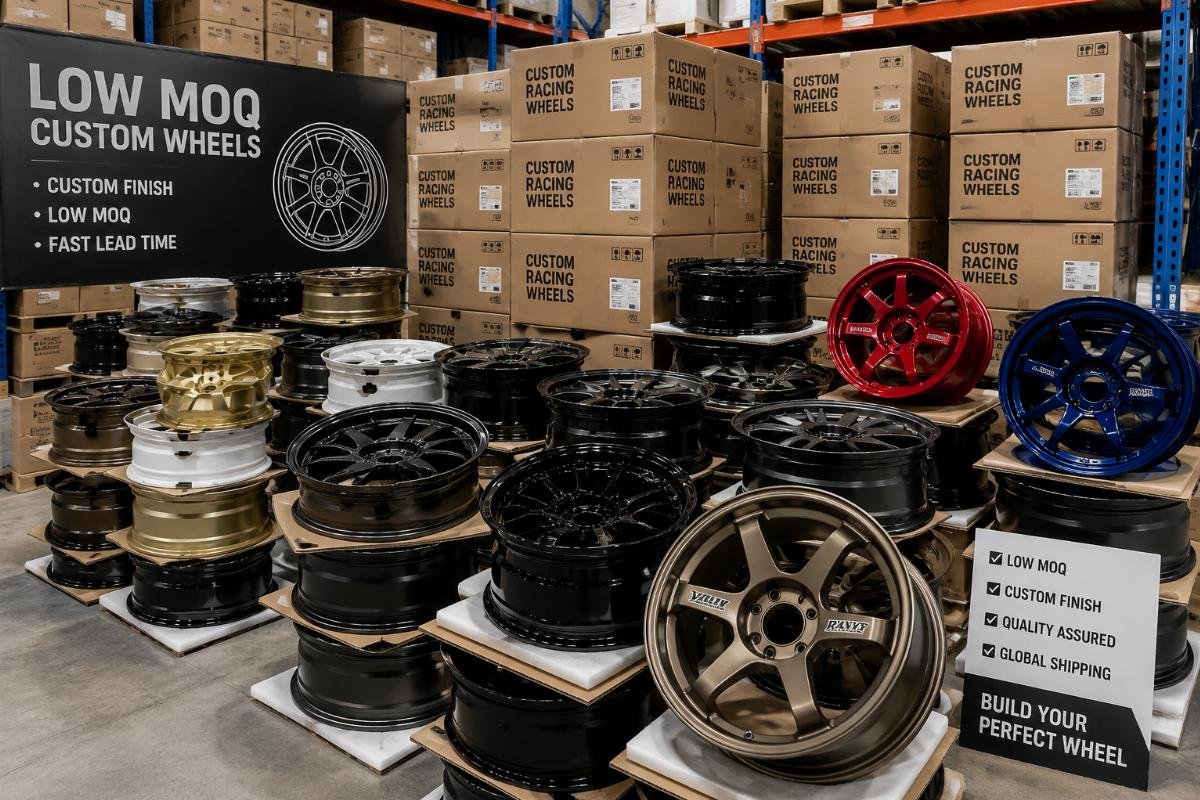
| Order Volume Planning | Locking in 500+ unit minimum orders for custom designs | Use low-MOQ custom runs for small batch project testing | |
| Certification Check | Assuming all TüV/DOT certified wheels are interchangeable | Confirm certification explicitly covers your target application and load requirements | |
| Lead Time Planning | Assuming all overseas suppliers have identical production timelines | Build 10 days of buffer into all lead time estimates for unforeseen production delays |
A European drag strip tuning shop placed a 45-unit low-MOQ custom order for 20-inch deep-dish forged wheels with bronze matte finish, delivered in 12 days via express shipping, avoiding the 500-unit minimum order requirement most western brands enforce for custom work [NEED_CITE: Tier-1 Chinese manufacturers offer custom race wheel MOQs as low as 100 units for small batch project runs].
- MOQ Tier Testing – Test 2-3 popular SKUs with small initial orders before committing to full container load bulk purchases.
- Certification Audit – Cross-check certification numbers against issuing body public databases to confirm validity before placing a deposit.
- Inventory Turnover Tracking – Cull any SKUs that do not sell within 90 days from your active product line to free up working capital.
How to Choose Between Stocked and Custom Race Wheel SKUs for Your Business?
| Match SKU type to your customer base, using low-MOQ stocked lines for fast turnover and custom lines for high-margin niche projects. Distributors serving multiple customer segments often make the mistake of mixing too many custom SKUs into their core inventory, increasing holding costs and slowing restocking lead times. | Business Model | Common Misaligned SKU Strategy | Optimized SKU Mix |
|---|---|---|---|
| Multi-Market Distributor | 70% custom SKUs, 30% stocked SKUs | 70% stocked high-volume SKUs, 30% custom niche SKUs | |
| Independent Tuning Shop | Only stocking custom order SKUs | 60% stocked popular trendy SKUs, 40% custom project SKUs | |
| E-Commerce Reseller | Only listing the cheapest available stocked SKUs | 50% stocked fast-moving SKUs, 50% custom private label SKUs |
A Southeast Asian OEM vehicle assembly plant sourced 38,000 units of racing-spec wheels for factory performance trim lines, with full TüV and DOT certification compliance for regional market access, using a dedicated custom production line to ensure consistent quality across the entire order.
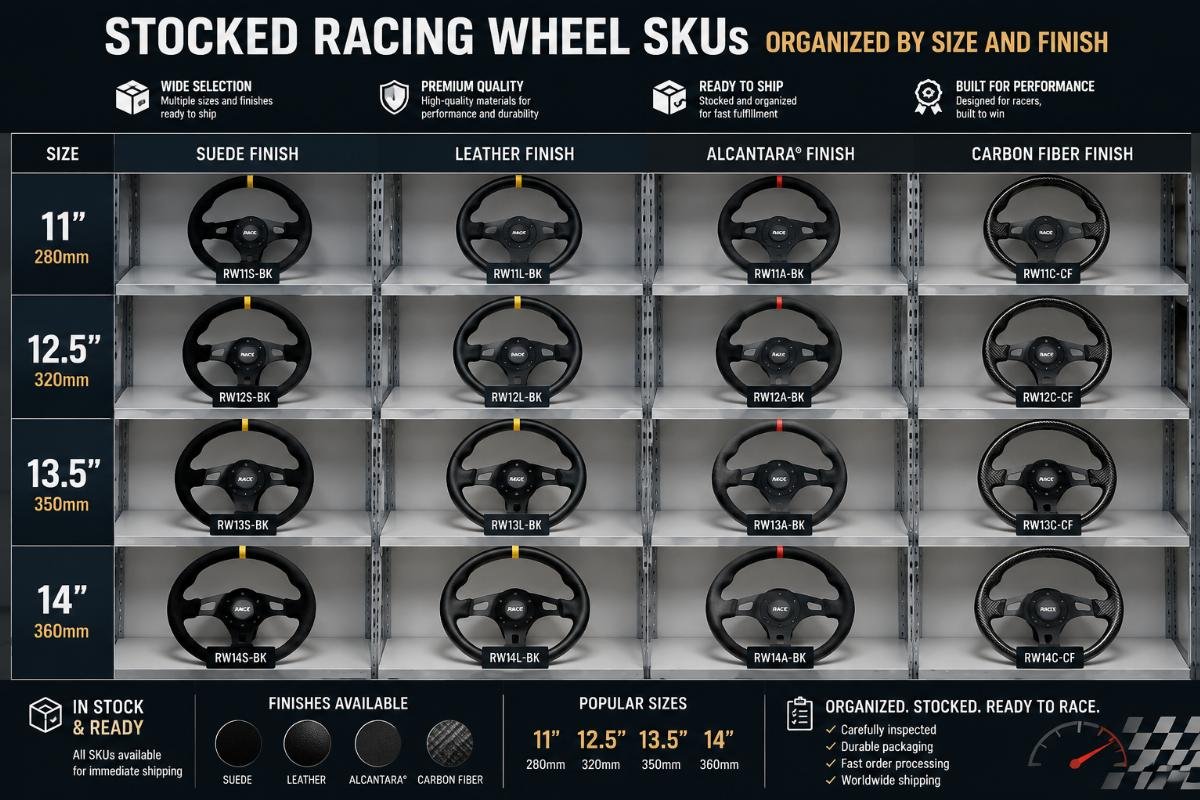
- Stocked SKU Prioritization – Focus on 5-10 core popular sizes and finishes that have consistent demand across all your customer segments.
- Custom Project Separation – Keep custom order workflows entirely separate from regular inventory restocking to avoid production scheduling delays.
- Pricing Tier Mapping – Price custom SKUs at a 25-30% premium over equivalent stocked SKUs to cover higher production and handling costs.
What to Verify Before Partnering With an Overseas Race Wheel Supplier?
| Confirm multi-market certification coverage, lead time guarantees and after-sales warranty terms before placing bulk orders. The single most common failure point for cross-border race wheel sourcing is unmet lead time commitments that leave buyers with empty shelves during peak racing season. | Supplier Vetting Item | Common Unverified Assumption | Required Verification Step |
|---|---|---|---|
| Certification Portfolio | All listed certifications apply to all wheel models | Request model-specific certification documents for every SKU you plan to order | |
| Lead Time Promises | Advertised lead times apply to all order sizes | Get written lead time guarantees that include penalty clauses for delays | |
| Warranty Coverage | Warranty covers all damage from on-track use | Confirm warranty explicitly covers structural failure for the stated term |
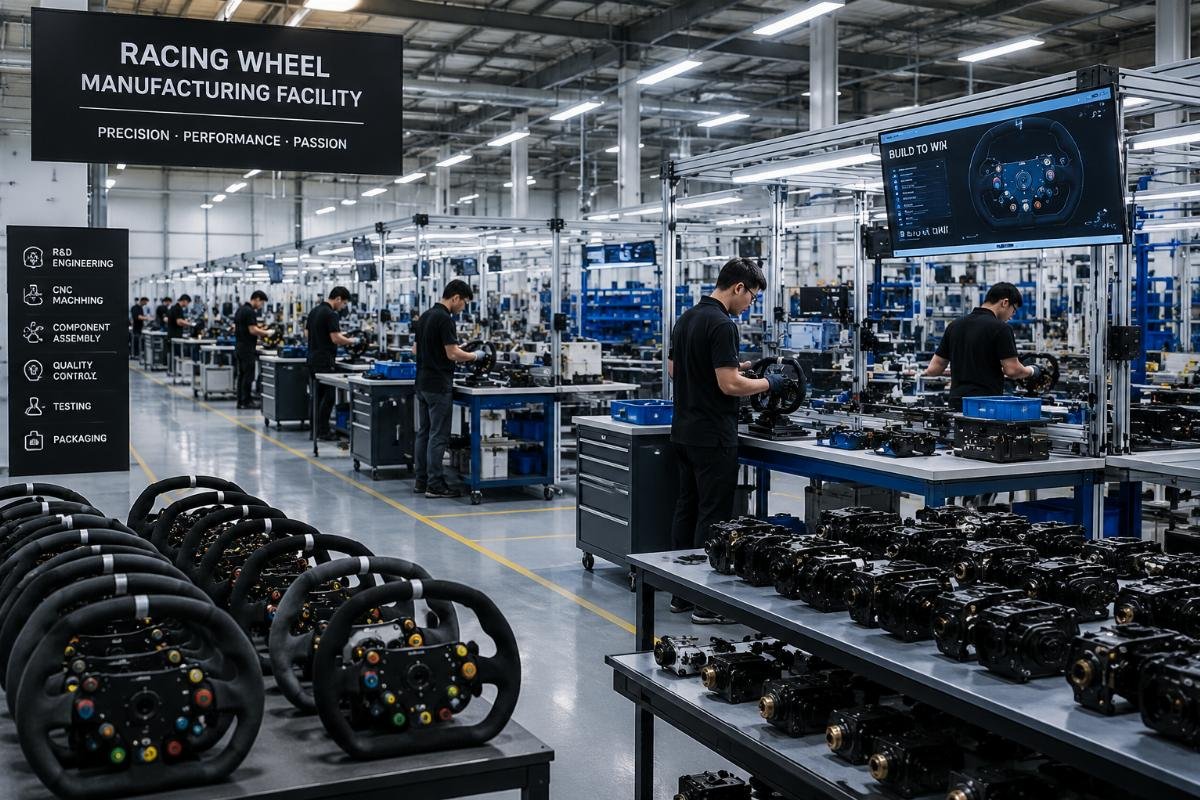
Jinan Yoker Auto Parts, a leading Chinese manufacturer of racing performance wheels, offers multi-certification coverage across TüV, DOT, VIA and JWL standards, 20-unit low MOQ for stocked models, 15-30 day production lead time and 3-year structural warranty for all performance wheel lines.
- Reference Check – Request 2-3 references from existing buyers in your region to confirm past performance and reliability.
- Sample Order Run – Place a small test order for 10-20 units before committing to any bulk or long-term supply agreement.
- Warranty Documentation – Get all warranty terms in written form before sending any deposits to avoid disputes later.
How to Cut Race Wheel Sourcing Costs Without Sacrificing Performance?
Sourcing directly from Chinese tier-1 manufacturers delivers 40-60% cost savings with equivalent quality to premium western brands. The long-held assumption that western brands offer inherently better quality has been disproven by dozens of independent third-party tests that show tier-1 Chinese produced wheels match or exceed the performance of European and Japanese equivalents at a fraction of the price.
| Brand

