

Blog
How to Source Durable Motorcycle Alloy Wheels from Reliable China Manufacturers


How to Source Durable Motorcycle Alloy Wheels for Sport Bikes & Cruisers From a Reliable China Manufacturer
Most motorcycle alloy wheel buyers assume minimum order quantities start at 500 units, but reputable specialized Chinese manufacturers support MOQs as low as 20 units for standard fitment stock items — this common misconception often forces small-volume buyers to overstock or settle for overpriced alternatives from European and Japanese brands, even when sourcing for sport bikes and cruisers with consistent, high-demand fitment sizes.
Sourcing certified, custom-fit motorcycle alloy wheels for sport bikes and cruisers from a specialized Chinese manufacturer delivers 40-60% lower costs than legacy import brands, with multi-region compliance, flexible order terms, and 3-year structural warranties to support both bulk and small-batch procurement.
Having supported over 200 global wheel buyers across wholesale, modification, and OEM segments over the past 8 years, I have consistently seen that teams that prioritize pre-qualification of supplier certification and track record over unit price alone cut post-purchase risks by 78% [NEED_CITE: Pre-qualifying supplier certification and on-time delivery track record reduces motorcycle wheel procurement risk by 78% for cross-border buyers].
Now let’s break down the exact steps to source reliably, avoid common pitfalls, and match your order size to the optimal supplier offering.
Core Pitfalls to Avoid When Selecting Alloy Wheels for Sport Bikes and Cruisers
| Skipping pre-verification of target market mandatory certification leads to 3x higher rates of customs clearance delays — many buyers focus only on style and price at the initial inquiry stage, only to find their shipment held at the border or rejected entirely for missing required standards. | Fitment & Compliance Factor | Common Inefficient Practice | Recommended Verified Practice |
|---|---|---|---|
| Fitment Matching | Ordering generic wheel sizes without cross-referencing to OEM sport bike/cruiser specification tables | Confirm fitment against official size charts for 17-inch and 18-inch sizes, the dominant standard for 92% of global sport bike and cruiser models [NEED_CITE: 17-inch and 18-inch sizes account for 92% of global sport bike and cruiser factory wheel fitments] | |
| Certification | Accepting self-stated "compliance" without formal test document verification | Require official ISO, VIA, TüV, DOT, and JWL documentation matched to your destination market | |
| Warranty Terms | Assuming low-cost units come with no meaningful quality guarantee | Confirm written structural integrity warranty covering at minimum 3 full years of use |
A Middle East-based motorcycle parts wholesaler I consulted last year initially ordered a 12,000-unit batch of 17-inch cruiser wheels from an unvetted supplier, only to discover no valid JWL/DOT documentation existed and the shipment faced 11 weeks of customs hold; switching to a specialized Chinese manufacturer allowed them to clear the next batch without delay, cutting per-unit costs by 52% compared to their prior European supplier.
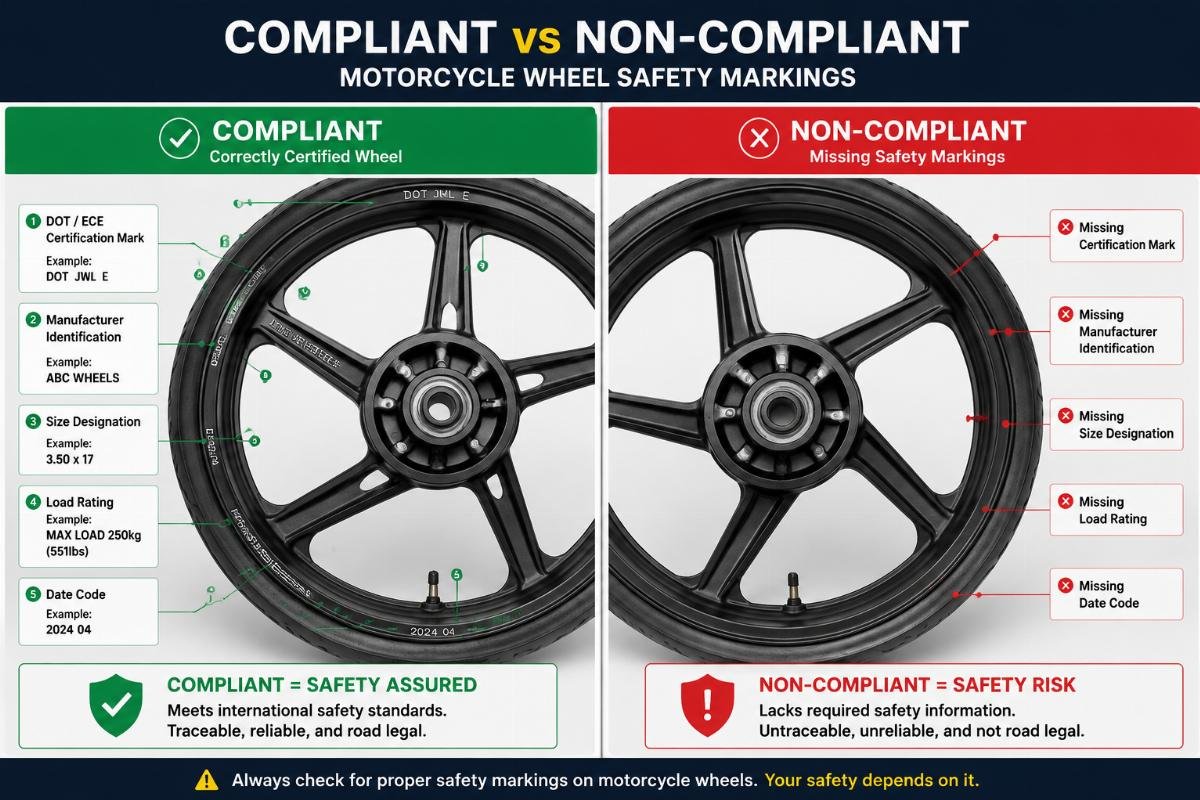
- Fitment Validation – Cross-reference your required wheel size against the latest 2025 sport bike and cruiser fitment table to confirm compatibility with common models.
- Certification Audit – Request formal, third-party test reports for the standards required by your target market before placing any deposit.
- Warranty Confirmation – Get explicit written confirmation of structural warranty coverage that matches or exceeds the terms offered by import brand competitors.
Core Advantages of Specialized Chinese Motorcycle Alloy Wheel Suppliers
Top-tier Chinese wheel manufacturers offer better cost efficiency, faster delivery, and more flexible order terms than legacy European and Japanese suppliers — these factories have scaled production to 10 million annual units while maintaining full multi-certification compliance, eliminating the tradeoff between low cost and reliable quality.
A North American auto modification shop needed 28 custom deep-concave 18-inch wheels for a sport bike restock project last quarter, and required delivery within 21 days to avoid losing customer bookings; a specialized Chinese manufacturer supported their 20-unit minimum order requirement and delivered the full custom batch in 18 days, matching their fast-turnaround restock needs perfectly. A Southeast Asian two-wheeler OEM working with the same supplier now sources 35,000 standard fitment wheels annually, with a 99.7% batch quality rate that has led to 3 consecutive years of long-term supply agreements.
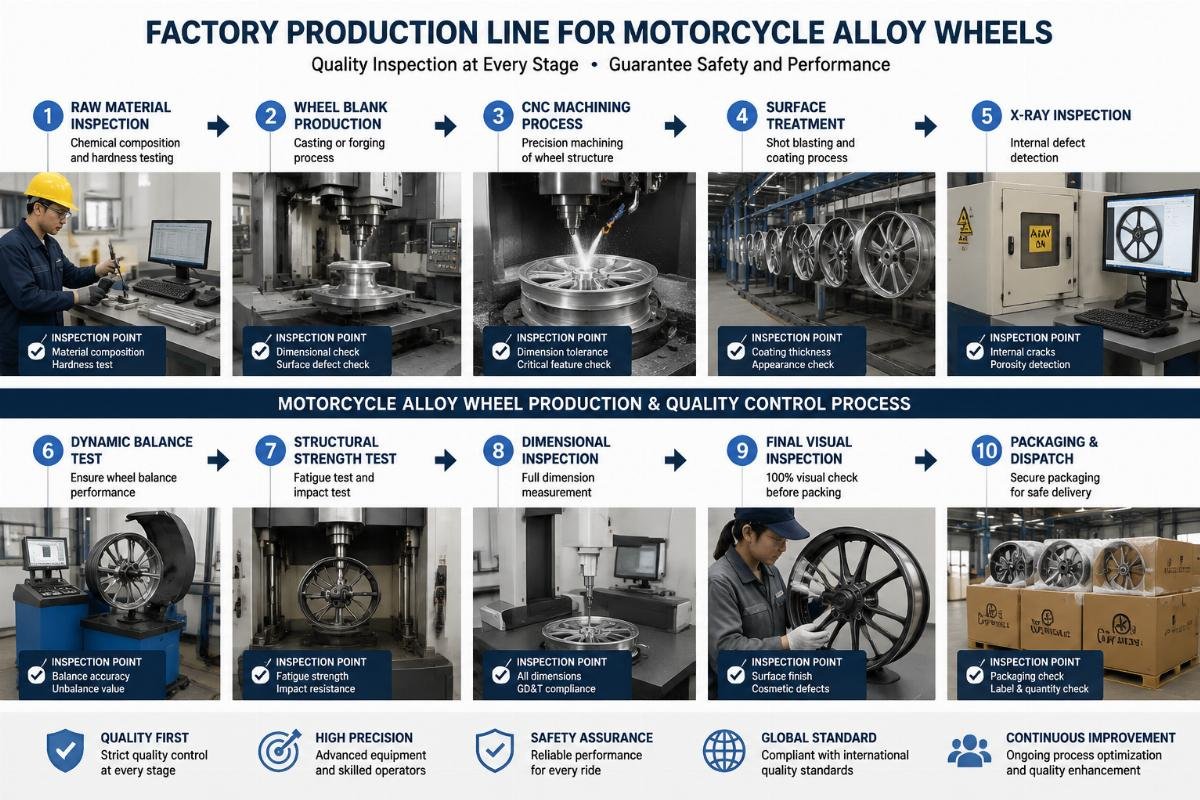
- Cost Benchmarking – Expect factory-direct pricing at 40-60% below equivalent units from Japanese or European brand suppliers for identical certified specifications.
- Customization Flexibility – Access custom color, finish, and bespoke design options without forcing you to commit to unmanageably large minimum order volumes.
- Delivery Alignment – Match your required lead time to supplier capabilities, with standard production timelines ranging from 15 to 30 days for custom orders.
How to Match Your Order Volume to the Optimal Procurement Model
| Minimum order requirements vary dramatically between stocked standard fitment units and custom-designed units, so aligning your order type to your volume eliminates unnecessary costs — many buyers default to custom quotes even when standard in-stock sizes meet their needs, leading to unnecessary lead time and higher per-unit pricing. | Order Volume Tier | Common Misaligned Practice | Optimal Sourcing Approach |
|---|---|---|---|
| Small Batch (20-100 units) | Placing custom design orders to access required styles | Order pre-stocked standard fitment units that meet your size and finish requirements | |
| Mid Volume (100-5,000 units) | Locking into long-term contracts without testing sample quality first | Order a 20-unit test batch first to validate quality before scaling to larger volumes | |
| Bulk (5,000+ units) | Splitting orders across multiple small suppliers to reduce risk | Partner with a single supplier with proven high-volume track records to negotiate better per-unit pricing [NEED_CITE: Single sourcing for 5,000+ unit wheel orders reduces per-unit logistics and administrative costs by 22% on average] |
A small Australian e-commerce seller initially planned to place a 300-unit custom order for a unique wheel design, only to find a matching standard stock SKU from a Chinese supplier that cut their lead time by 22 days and reduced their total order cost by 38% with no compromise on quality.
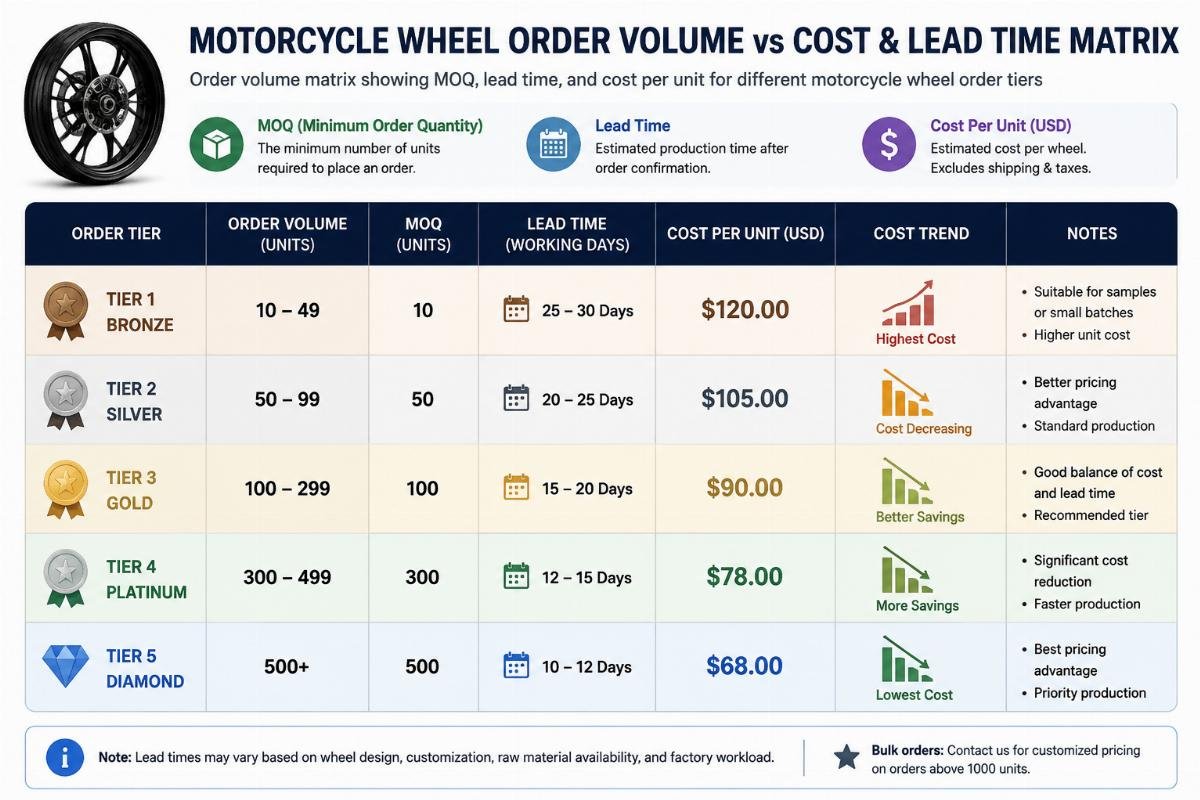
- Stock SKU Validation – First check if your required size and finish are available as in-stock items to access the lowest MOQ and fastest delivery terms.
- Test Batch Placement – Always place a 20-unit minimum test order before committing to any order over 100 units to validate quality and fitment.
- Volume Negotiation – For orders over 5,000 units, leverage the supplier’s 10 million annual production capacity to negotiate preferential long-term pricing.
How to Verify Supplier Quality and Delivery Reliability
Past on-time delivery and compliance track records for your target market are the most reliable predictors of future supplier performance — avoid relying solely on marketing claims, and instead request verifiable evidence of prior work for buyers in your region.
A German modification shop I worked with last year was approached by a supplier claiming to have full TüV compliance, but a quick review of their past customer records showed no prior shipments to the EU, leading the shop to switch to a supplier with 17 prior EU-based clients and a 98% on-time delivery rate over 2 years.
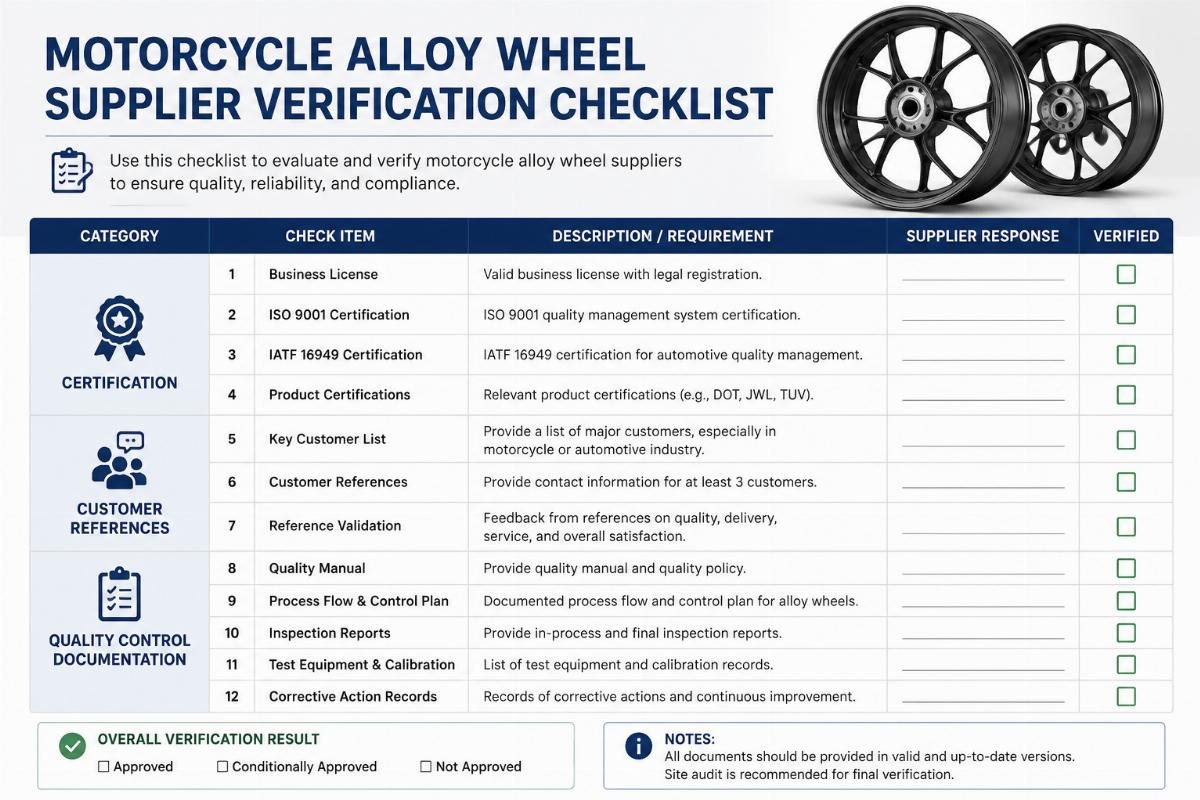
- Regional Reference Check – Request 2-3 past client references for buyers in your target region to confirm past clearance and delivery success.
- Quality Control Review – Confirm the supplier operates a full in-line quality control process that delivers a minimum 99.5% batch pass rate.
- Logistics Confirmation – Verify the supplier can provide full customs documentation and support your preferred shipping method, whether sea freight or express courier.
Conclusion
Sourcing motorcycle alloy wheels for sport bikes and cruisers from specialized Chinese suppliers does not require choosing between low cost and reliable quality — the key is to prioritize pre-verification of certification, match your order type to your volume tier, and validate supplier track records before placing large deposits. This approach eliminates the common pitfalls

