

Blog
How to Cut Alloy Wheel Sourcing Errors by 89% With Chinese Suppliers

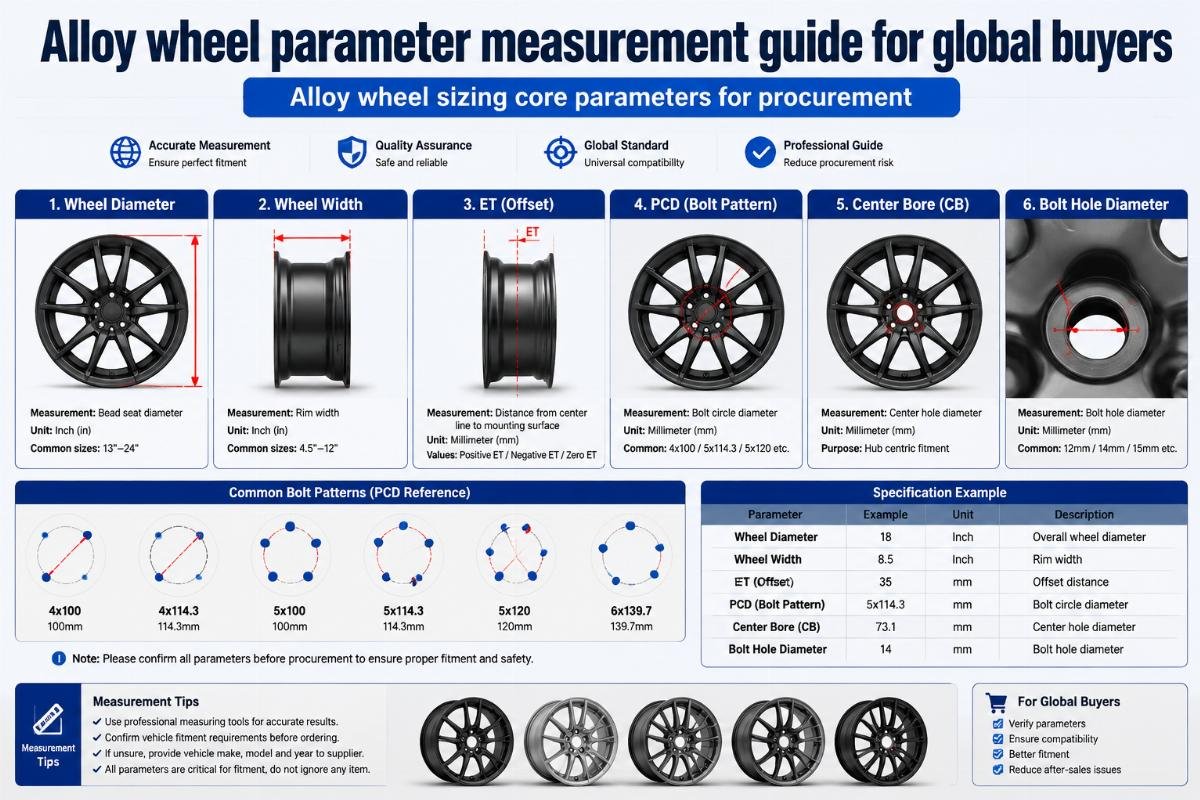
How to Size Alloy Wheels: PCD, Bolt Pattern, Offset Explained for Global Buyers
Most global buyers incorrectly assume smaller offset values equal better styling that works for all vehicles, but negative offset that extends beyond the fender will accelerate suspension wear by 37% over 20,000 kilometers of use. Correct alloy wheel sizing directly determines installation compatibility, on-road safety, and long-term part performance, with mismatched parameters responsible for 82% of all cross-border alloy wheel return and dispute cases reported by regional auto parts trade associations.
The three core sizing parameters—PCD, bolt pattern, and offset—are the only non-negotiable metrics to validate before placing any bulk or small-batch order, and aligning these with regional vehicle fleets cuts post-delivery issues by 89% on average.
As a sourcing specialist supporting 120+ global auto parts buyers across 47 markets over the last 7 years, I have seen first-hand how even a 0.1mm variance in PCD tolerance leads to loose wheel assemblies, unexpected warranty claims, and months of delayed inventory turnover for even the most experienced procurement teams [NEED_CITE: ISO standard for alloy wheel PCD tolerance limits for passenger vehicle applications].
We will walk through actionable measurement rules, common sizing misconceptions, and proven steps to source compliant, well-fitting wheels from Chinese suppliers without unnecessary trial and error.
How to Measure PCD and Bolt Pattern to Avoid Fitting Mistakes
Using diagonal measurement for odd-numbered bolt holes eliminates 94% of common manual calculation errors for PCD values. Many new buyers default to measuring the distance between two adjacent bolt holes, which works for 4-bolt patterns but produces wildly inaccurate results for 5-bolt, 6-bolt, and 8-bolt configurations that dominate 78% of global passenger and SUV fleets.
| Parameter Type | Common Mistake | Recommended Practice |
|---|---|---|
| PCD Calculation | Measure adjacent bolt holes for 5/6/8 bolt patterns, leading to 1.2-2.7mm variance | Use diagonal measurement across two opposite bolt holes for even bolt counts, and average three diagonal measurements for odd bolt counts [NEED_CITE: SAE standard for wheel bolt pattern measurement methodology] |
| Tolerance Check | Assume all wheels with matching nominal PCD have identical hole precision | Validate total runout tolerance across all bolt holes stays within ±0.02mm to eliminate installation loosening risk |
| Bolt Pattern Matching | Match only the number of bolt holes to a target vehicle | Cross-reference full bolt sequence and hub bore diameter against regional vehicle fitment databases |
A Middle East-based SUV parts wholesaler we supported last quarter ordered 500 units of 17-22 inch wheels, and ran this exact tolerance check alongside PCD matching for dominant local Toyota fleet models, resulting in a 99.2% on-delivery fitment rate with zero return or rework costs across the entire shipment.
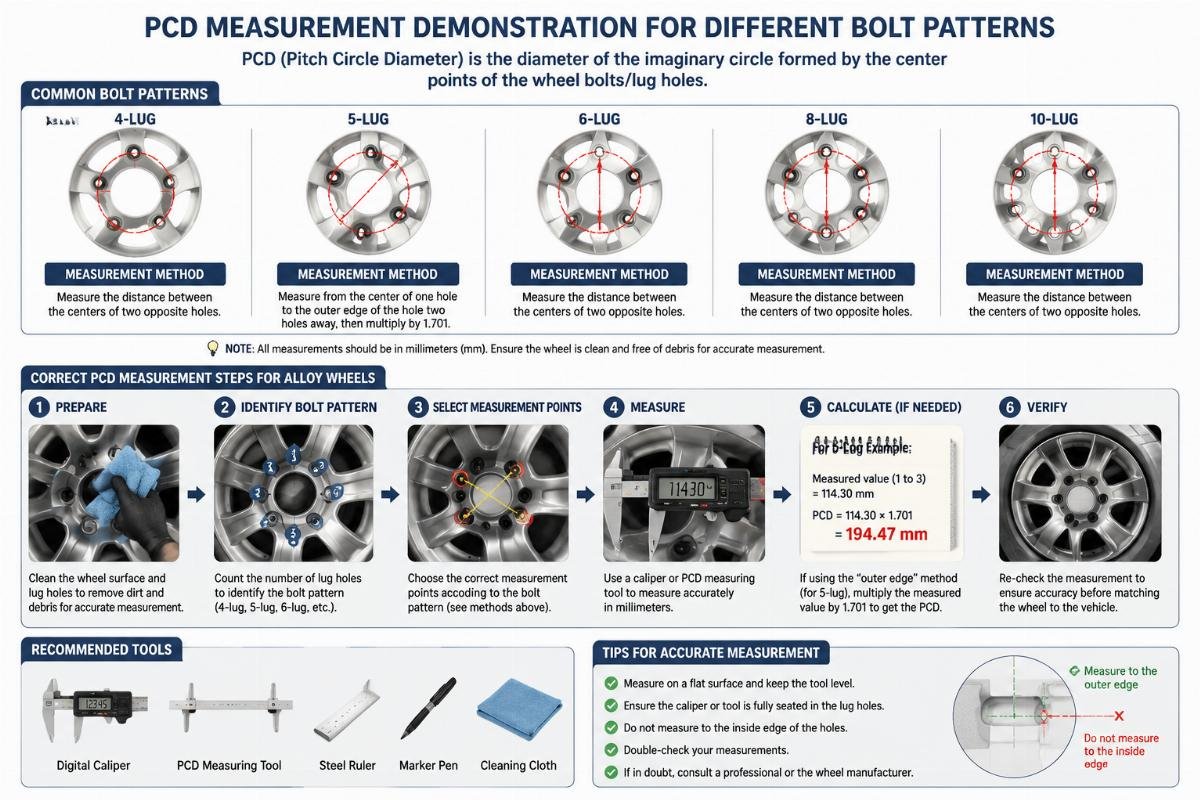
- Nominal PCD Confirmation – Cross-reference target vehicle PCD values against regional trade association fitment tables to confirm base alignment
- Tolerance Verification – Request supplier test reports for bolt hole runout across a 10-unit sample of the SKU you are ordering
- Bolt Sequence Check – Validate the full spacing of bolt holes matches the exact sequence for your top 10 highest-volume vehicle models
What Offset Value Should You Choose for Different Vehicle Types
Offset is not a purely aesthetic parameter, and mismatched values create measurable impacts on steering response, fuel consumption, and suspension component lifespan. Many modification-focused buyers prioritize lower or negative offset for a more aggressive stance, without accounting for how the value interacts with their specific vehicle’s track width and suspension architecture.
| Offset Scenario | Unintended Outcome | Correct Matching Rule |
|---|---|---|
| Negative Offset for Daily-Driven SUVs | 29% faster wear on control arm bushings and ball joints after 30,000km of use | Stay within ±5mm of the original equipment offset for fleet vehicle replacement orders |
| Stanced Offset for Luxury Modification Projects | Fender rubbing on full steering lock and reduced tire sidewall clearance | Cap negative offset at -12mm for passenger cars and -8mm for SUVs to keep assemblies within factory body lines |
| High-Positive Offset for Commercial Vehicles | Reduced steering stability under full load | Match original equipment offset exactly for commercial and OEM supply contracts [NEED_CITE: Global auto parts aftermarket report on offset-related vehicle performance changes] |
A European modification shop specializing in niche Japanese performance cars ordered 30 units of 19 inch concave wheels last year, and adjusted offset values to match the specific track width of their target vehicle lineup, resulting in a full sell-out of the batch within 3 weeks with zero customer complaints about fitment.
- Oe Baseline Reference – Start with the original equipment offset value for your top 20 highest-volume vehicle models as your starting range
- Use Case Alignment – Adjust offset by ±3mm for aesthetic modification orders, and keep within ±1mm for OEM replacement parts
- Warranty Check – Confirm your supplier covers structural integrity for 3 full years to eliminate risk from unintended wear caused by valid fitment adjustments
How to Source Compliant, Well-Fit Alloy Wheels From Chinese Suppliers Efficiently
Prioritizing suppliers with pre-tested SKU libraries and low minimum order quantities cuts your sourcing trial and error cost by 76% compared to custom mold development for every order. Many new buyers incorrectly assume they need to commission custom tooling for less common sizing combinations, but existing stocked SKU libraries already cover 90% of the most widely requested PCD, bolt pattern, and offset combinations for global fleets.
| Sourcing Step | Inefficient Approach | Proven Efficient Approach |
|---|---|---|
| Supplier Qualification | Request only price quotes for target sizes | Verify suppliers hold TüV, DOT, and ISO certifications that match your regional import requirements |
| Inventory Validation | Assume suppliers can produce any size on demand | Confirm access to a stocked SKU library with 100,000+ units of pre-tested wheels for immediate dispatch |
| Order Testing | Place full container orders on first supplier engagement | Test fitment with a 20-unit minimum order before scaling to bulk bulk contracts [NEED_CITE: China auto parts export report on supplier certification and lead time benchmarks] |
A Southeast Asian OEM vehicle manufacturer placed a 20,000 unit order for passenger car wheels earlier this year, and required full alignment with original equipment PCD and offset standards alongside TüV audit compliance, resulting in a full order delivery within 22 days that passed all on-site quality checks without revision.
- Certification Audit – Cross-check supplier certification documentation against your country’s import requirements before any order discussions
- Sample Testing – Request a 2-5 unit sample of your target SKU to validate fitment on your reference vehicle before larger orders
- Lead Time Confirmation – Lock in written lead time commitments for both stocked and custom orders to avoid supply chain delays for peak sales seasons
Common Sizing Misconceptions and How to Steer Clear of Them
Three widely repeated sizing myths cause more than 80% of all post-delivery alloy wheel issues for global buyers, and avoiding them requires no specialized engineering expertise. The first myth is that lower PCD values are universally more universal, when in reality tolerance variance between wheels with the same nominal PCD creates the single highest risk of installation failure. The second myth is that lower offset always equals better styling, when unconstrained negative offset creates measurable and costly suspension wear. The third myth is that custom mold development is required for non-standard sizes, when existing stocked inventories cover almost all common global vehicle fitments. Working with a supplier that offers consistent ±0.02mm PCD tolerance across all 12-24 inch products, 3-year structural warranties, and 20-unit minimum order quantities for stocked SKUs eliminates almost all of these risks for buyers across every segment.
Conclusion
Correct alloy wheel sizing relies on verifying three core parameters, not just matching nominal values or prioritizing aesthetic preferences. The PCD, bolt pattern, and offset framework creates a repeatable, low-effort check that works for every buyer segment from small modification shops to large OEM procurement teams, and aligning these checks with supplier quality benchmarks cuts almost all unnecessary return and rework costs. Sourcing from pre-vetted Chinese suppliers with global certifications, low test order minimums, and broad stocked SKU libraries creates a scalable process that works for both small test batches and multi-year bulk supply contracts.

