Cómo obtener llantas premium de estilo JDM de plato profundo y cóncavas agresivas de un fabricante chino
No necesita obtener llantas de estilo JDM de proveedores japoneses para conseguir productos auténticos y de alta calidad. Durante décadas, la industria global de modificación de automóviles ha operado bajo el supuesto tácito de que el origen determina la calidad y la precisión del estilo de las piezas JDM, pero esta narrativa ya no es válida para la adquisición moderna de ruedas de aleación.
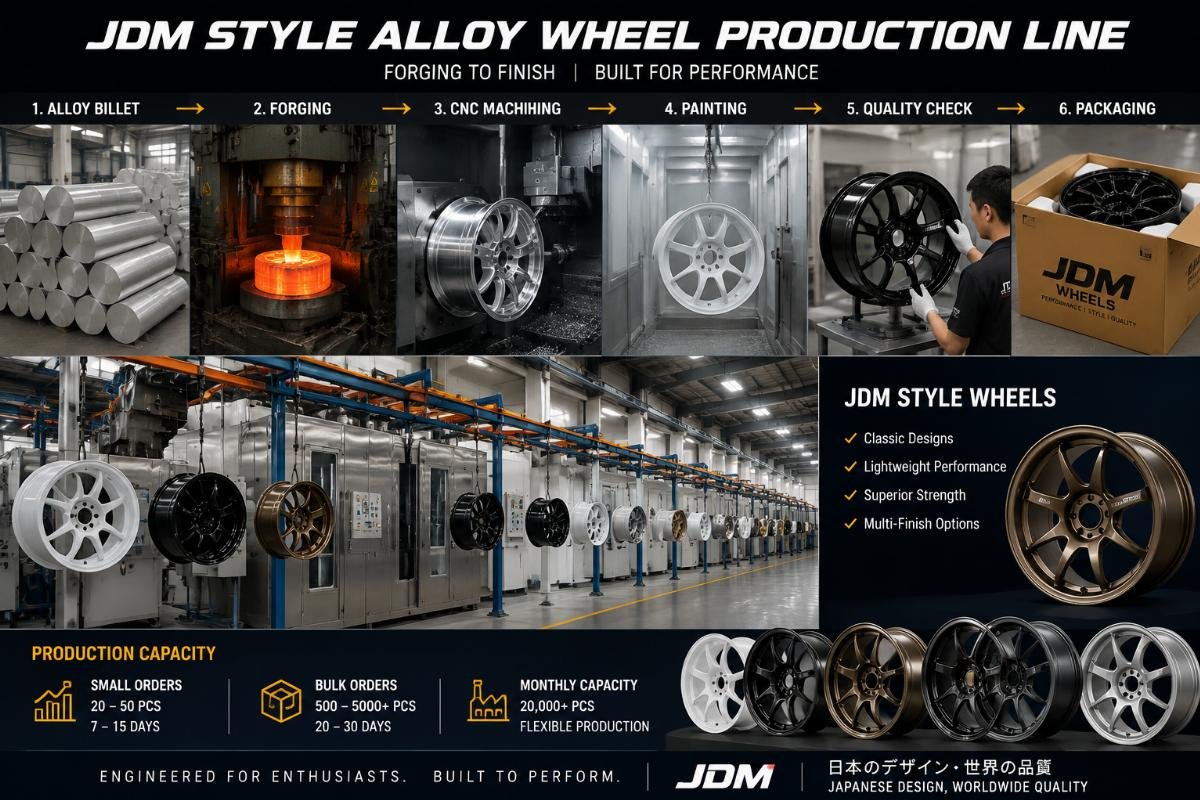
Usted puede obtener ruedas de aleación de alta calidad estilo JDM, de cazoleta profunda y cóncavas agresivas, que cumplen con los estándares de certificación globales, con costos un 40-60% más bajos que las marcas japonesas y europeas, con flexible {{ZKF_4}} y soporte completo de personalización para todos los modelos de negocio de un proveedor chino especializado integral.
Como alguien que ha apoyado a cientos de compradores de ruedas en 27 países en la navegación de cadenas de suministro transfronterizas de piezas de automóviles durante los últimos 8 años, he visto tanto a pequeños talleres de tuning como a grandes distribuidores regionales reducir sus costos de inventario mientras aumentan sus márgenes brutos al cambiar su base de abastecimiento. [NECESITA_CITA: Los fabricantes chinos especializados en llantas de aleación tienen décadas de experiencia en producción OEM para las principales marcas de automóviles globales]
La siguiente guía desglosa los criterios exactos que necesitas evaluar, los errores comunes que evitar y las acciones paso a paso para asegurar un proveedor confiable que se ajuste a la escala de tu negocio.
¿Qué estándares clave deberías verificar al buscar ruedas de perfil profundo estilo JDM?
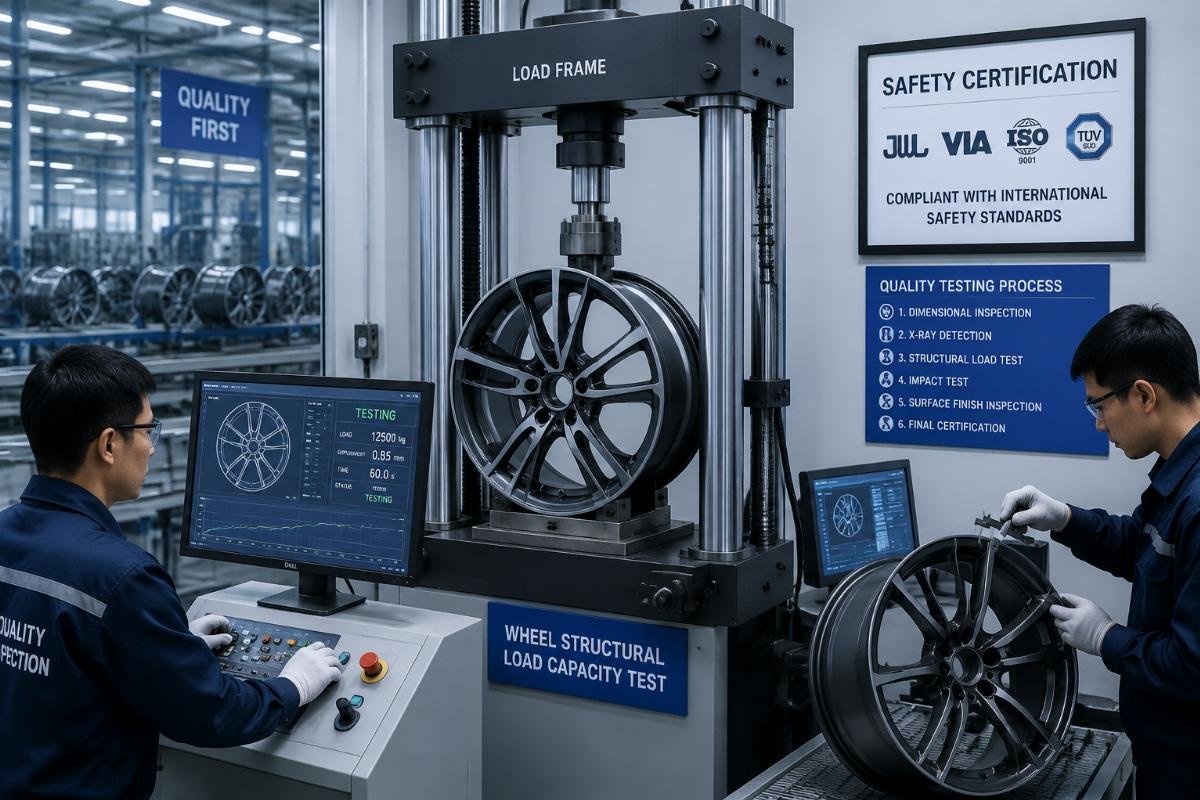
Omitir la verificación de certificación es el error más común que provoca retrasos aduaneros y reclamaciones de calidad. Muchos compradores solo se centran en el estilo y el precio durante el contacto inicial, solo para descubrir que sus envíos son retenidos en la frontera o que el producto falla en las pruebas de carga durante la instalación, lo que puede costar 2-3 veces el valor del pedido original en pérdidas.
Factor de evaluación
Práctica Común Ineficiente
Estándar de verificación recomendado
Certificación de Seguridad
Solo confirme las afirmaciones verbales de fábrica de "cumplir con los estándares"
Requerir copias oficiales de las certificaciones ISO, VIA, TüV, DOT, JWL que coincidan con su mercado objetivo [NEED_CITE: Los proveedores formales chinos de llantas de aleación poseen certificaciones de seguridad globales completas que coinciden con los estándares de capacidad de carga de las marcas japonesas]
Documentación Aduanera
Assume standard paperwork will be provided
Request a full package of customs declaration documents, fitment data and material test reports upfront
Load Rating Validation
Trust listed load ratings on product pages
Cross-check load rating values against third-party test reports for the exact wheel SKU you are ordering
A tuning shop based in Germany recently ordered 30 pieces of 19-inch deep concave JDM wheels in custom bronze finish, and received the full order in 18 days without any customs hold, achieving a 22% higher gross margin than their previous European brand wheel stock. [NEED_CITE: Custom JDM wheel orders from qualified Chinese suppliers can fulfill in 15-30 days for small batch quantities]
Certification Verification – Cross-check all provided certification documents against issuing body public databases to confirm they are valid and not expired.
Fitment Confirmation – Share your target vehicle model list to confirm the supplier has matching PCD, offset and center bore specifications for your core customer base.
Sample Testing – Order 1-2 sample units first for physical load and finish testing before placing a full batch order.
Why do many professional tuning shops now source JDM style wheels from Chinese suppliers?
Cost is not the only advantage that drives professional buyers to switch their sourcing base. While the 40-60% factory direct pricing advantage over European and Japanese brands is immediately noticeable, the flexibility to match small-batch demand and fast inventory turnover cycles is what keeps long-term partners.
Business Need
Traditional Supplier Model
Chinese Specialized Supplier Model
Order Volume Requirement
MOQ of 100+ pieces for custom designs, leading to tied up inventory
MOQ as low as 20 pieces for stocked models, supporting small trial orders [NEED_CITE: Flexible MOQ structures from Chinese suppliers support small business order demands that traditional JDM suppliers cannot meet]
Customization Lead Time
60+ day lead time for custom finishes and designs
15-30 day lead time for full custom color and finish adjustments
Inventory Turnover Support
Limited SKU stock, require pre-order for all niche styles
Pre-made stock for 80% of popular JDM deep dish and concave wheel styles for immediate shipment
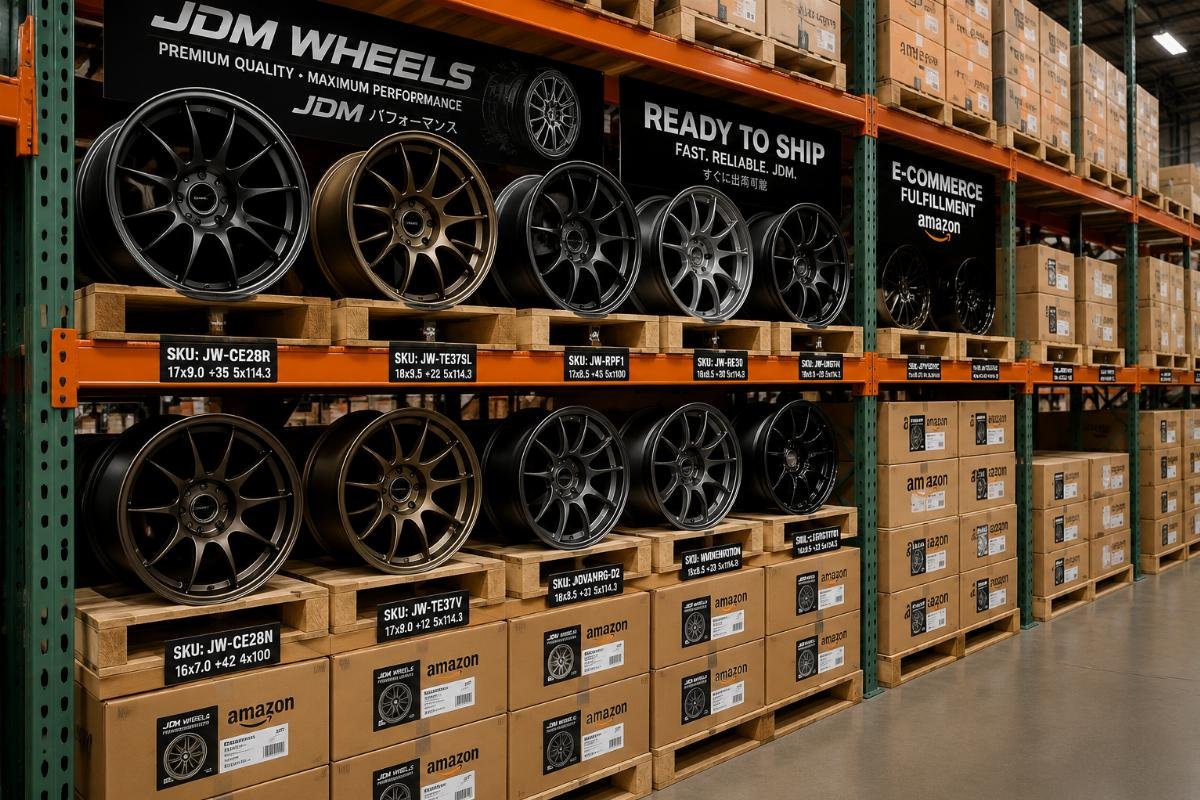
An Amazon e-commerce seller based in the US tested 20 pieces of stocked aggressive concave JDM wheel SKUs last year, with the supplier providing standardized Amazon-ready packaging and complete fitment data for all listed vehicle models, and followed up with a 3x larger restock order just 2 months later after the SKU hit top 10 in its category.
Style Alignment Check – Confirm the supplier has existing production records for the exact JDM design lines you need, rather than requiring full custom tooling from scratch.
Lead Time Alignment – Match the supplier’s stated lead time to your own sales cycle to avoid stockouts or overstock delays.
Packaging Adaptation – Confirm the supplier can provide market-specific packaging that meets your sales platform’s requirements.
What common misconceptions should you avoid when purchasing aggressive concave JDM wheels?
Three widely held myths directly lead to unnecessary extra costs and limited supply options for buyers. Most industry participants have carried these assumptions over from 10+ years ago, and fail to update their sourcing logic as Chinese manufacturing capabilities have evolved.
Common Misconception
Actual Industry Reality
JDM style wheels must come from Japanese suppliers to be authentic
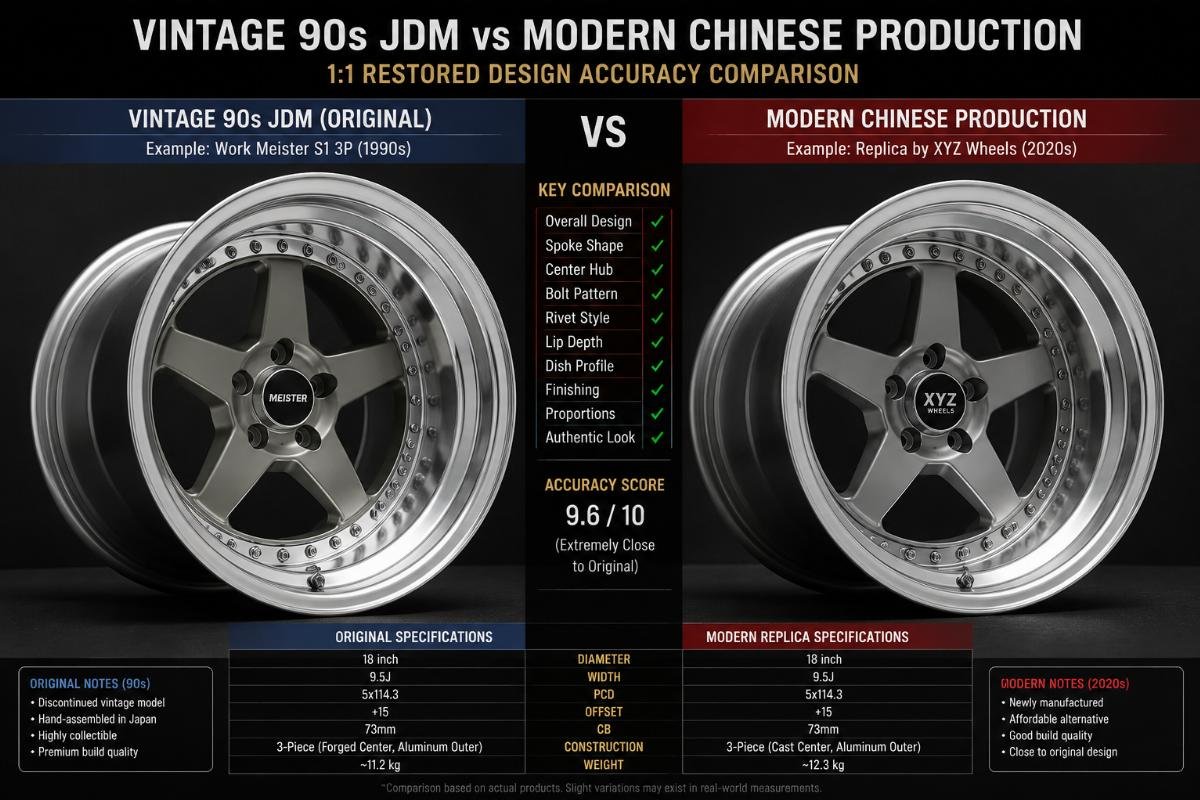
Chinese manufacturers have decades of OEM experience for global auto brands, and can produce 1:1 restored vintage JDM designs with more flexible custom options
Low-cost Chinese alloy wheels have unqualified safety performance
Formal suppliers’ structural integrity meets the exact same load rating standards as Japanese brand equivalent products
Custom JDM wheels require hundreds of pieces as minimum order quantity
Regular specialized suppliers set MOQ as low as 20 pieces for stocked models, suitable for small tuning shop and e-commerce trial orders
A regional distributor based in the Middle East placed a full container bulk order of 12,000 pieces of 18-20 inch deep dish JDM wheels last quarter, secured exclusive regional distribution rights, and received a 3-year structural warranty coverage for the entire order line. [NEED_CITE: Chinese suppliers offer exclusive regional distribution rights and long warranty terms for bulk container order clients]
Origin Bias Elimination – Evaluate suppliers purely on their production records and certification, rather than filtering out non-Japanese suppliers from the start.
MOQ Negotiation – Ask for explicit MOQ terms for both stocked and custom designs, rather than assuming a universal 100+ piece minimum applies.
Warranty Confirmation – Negotiate written warranty terms before signing any order contract rather than relying on verbal promises.
How to choose a JDM style wheel supplier that fits your business scale?
Matching the supplier’s core service scope to your order volume and business model is the core of efficient, low-risk procurement. A supplier that works perfectly for bulk container distributors will be a poor fit for small tuning shops, and vice versa, so you need to filter based on your own operational parameters first.
For bulk distributor orders, prioritize suppliers with production capacity above 1 million units per year, who can offer exclusive regional rights, private label branding support and consistent batch-to-batch quality. For small batch tuning shop and e-commerce trial orders, prioritize suppliers with existing stocked SKUs, low MOQ thresholds and pre-prepared packaging and fitment data. Jinan Yoker Auto Parts is a one-stop supplier with full range of JDM style deep dish and concave wheel products, matching different order demands from small batches to bulk container orders.
Order Volume Matching – Confirm the supplier regularly handles orders in your typical order size range, rather than only taking orders much larger or smaller than your needs.
Service Scope Check – Verify the supplier can provide all supporting services you need, from custom labeling to shipping logistics support.
Long Term Cooperation Terms – Discuss bulk order discount structures and priority production slots once you confirm consistent order volume.
Conclusion
Sourcing JDM style wheels from qualified Chinese suppliers is no longer a compromise option, it is now the standard for professional auto parts buyers. The outdated assumptions about origin quality
About author
Editor covering global sourcing, supplier verification, and industrial product knowledge. Content is compiled from manufacturer specifications, industry standards, and hands-on experience with international B2B buyers. Every article is fact-checked before publishing to help procurement professionals make informed decisions.