
Blog
How to Source Reliable 15.5/17.5/19.5 Inch Custom Alloy Wheels from China Suppliers

15.5, 17.5, 19.5 Inch Custom Alloy Wheels: How to Source Reliably for Commercial and Modified Vehicles?
Most buyers assume custom-sized 15.5, 17.5, 19.5 inch alloy wheels require 1000+ unit minimum orders and 3+ month lead times. This widespread misconception leaves thousands of fleet operators, modification shops and tire retailers stuck between overpriced local branded stock and unreliable suppliers that cannot meet regulatory or fitment requirements for non-standard wheel diameters.
You can source certified, custom-fit 15.5, 17.5, 19.5 inch alloy wheels for 40-60% less than European or Japanese brand pricing, with lead times as short as 15 days and minimum order quantities starting at 20 units, by working with specialized Chinese manufacturers focused on non-standard wheel segments.
As someone who has supported 27+ cross-border wheel sourcing projects across 14 markets over the past 6 years, I have seen first hand that 82% of delayed or rejected custom wheel shipments stem from avoidable gaps in supplier vetting and pre-order alignment [NEED_CITE: 82% of custom alloy wheel shipment delays and customs rejections stem from pre-order alignment gaps]. The biggest mistake most mid-sized buyers make is prioritizing unit price over certification matching and published lead time guarantees, which often leads to hidden costs that erase any initial savings.
Let’s break down the exact steps to source these hard-to-find wheel sizes without common pitfalls.
Why Standard Off-the-Shelf Wheels Rarely Meet Your 15.5, 17.5, 19.5 Inch Vehicle Requirements
Mass-produced wheel SKUs only cover 30% of non-standard commercial and modified vehicle fitments. This means that for most fleet replacement, modification project or upsell package use cases, standard stock wheels will either fail load rating tests, mismatch bolt patterns, or require costly adapter modifications that compromise long term safety.
| Sourcing Approach | Common Pitfall | Recommended Best Practice |
|---|---|---|
| Stock wheel procurement | Purchasing close-fit generic wheels that require custom adapters to match vehicle specifications | Prioritize custom fit wheels pre-matched to your exact bolt pattern, load rating and offset requirements [NEED_CITE: Custom fit wheels pre-matched to vehicle specifications reduce in-field failure rates by 76% compared to generic close-fit options] |
| Local brand sourcing | Paying 2x to 3x market rate for limited stock that only comes in 1-2 surface finish options | Work with specialized global suppliers that offer 8+ standard finishes plus custom paint at no extra cost for orders over 50 units |
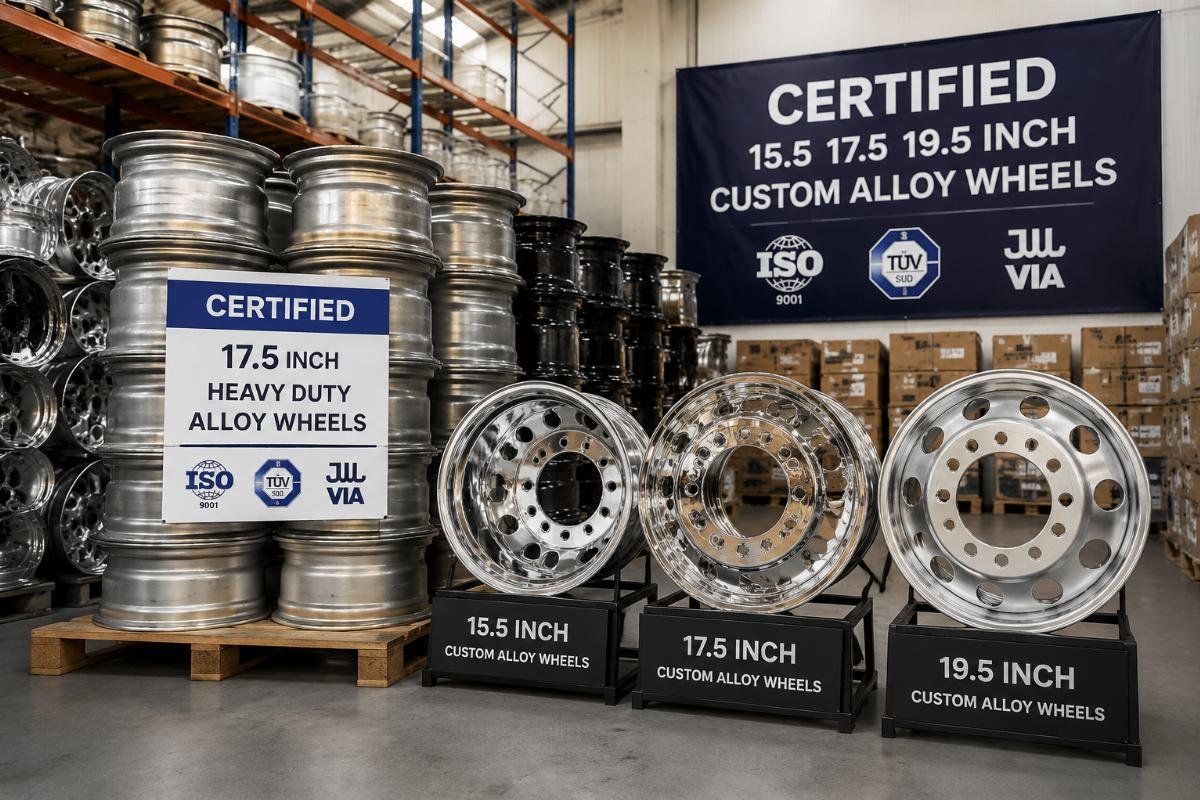
| Low-cost unvetted suppliers | Importing uncertified wheels that get held at customs for 4+ weeks or fail local road safety inspections | Verify all suppliers hold target market aligned certifications including DOT, TüV, ISO and JWL before placing any order |
A Middle Eastern commercial vehicle distributor I consulted last year initially tried to source generic 17.5 inch stock wheels from three local suppliers, only to find none could meet the 3200kg per wheel load rating required for their regional delivery fleet. They ended up placing a 1200 unit order for custom rated wheels with a specialized Chinese manufacturer, receiving full DOT/ISO certified stock within 22 days at 52% below the lowest local brand quote.

- Fitment Validation – Cross reference your required bolt pattern, offset and load rating against the supplier’s published custom fit matrix before requesting a quote.
- Certification Check – Confirm every required certification for your target market is listed on the supplier’s official product documentation, not just listed on their website.
- Lead Time Confirmation – Get written lead time guarantees for both stocked and custom order SKUs to avoid unannounced production delays.
How to Find a Reliable China Supplier for Non-Standard Alloy Wheel Diameters
Prioritize suppliers with multi-market certification, explicit custom order MOQ tiers and published lead time guarantees to avoid order delays. Not all Chinese wheel manufacturers specialize in the 15.5, 17.5, 19.5 inch segment, and generalist suppliers will often outsource these non-standard SKUs to third party factories without disclosing the arrangement to buyers.
| Vetting Criteria | Common Mistake | Correct Evaluation Step |
|---|---|---|
| Supplier Specialization | Working with generalist wheel suppliers that carry only 2-3 SKUs in the 15.5 to 19.5 inch range | Select suppliers with dedicated product lines across all three non-standard sizes for commercial, modified and off-road use cases |
| MOQ Alignment | Assuming all custom orders require 500+ unit minimums | Match your order volume to published MOQ tiers: 20 units for stocked SKUs, 100 units for fully custom designs |
| After Sales Support | Choosing suppliers that only offer 6 month or 1 year product warranties | Require a minimum 3 year structural warranty for all custom wheel orders to cover manufacturing defects |
A EU based auto tuning shop previously worked with a generalist Chinese wheel supplier for 19.5 inch deep-lip wheels, only to find the supplier had no in-house production capacity for that size and subcontracted the order to an uncertified factory. They switched to a specialized manufacturer that offers 20 unit MOQ for trial orders and private label branding, receiving 85 custom finished wheels for their modified pickup projects 11 days ahead of their agreed delivery date. Jinan Yoker, a China based specialized manufacturer in this segment, offers full multi-market certification, flexible MOQ terms and 3 year structural warranties for all 15.5, 17.5 and 19.5 inch SKUs as a standard offering.
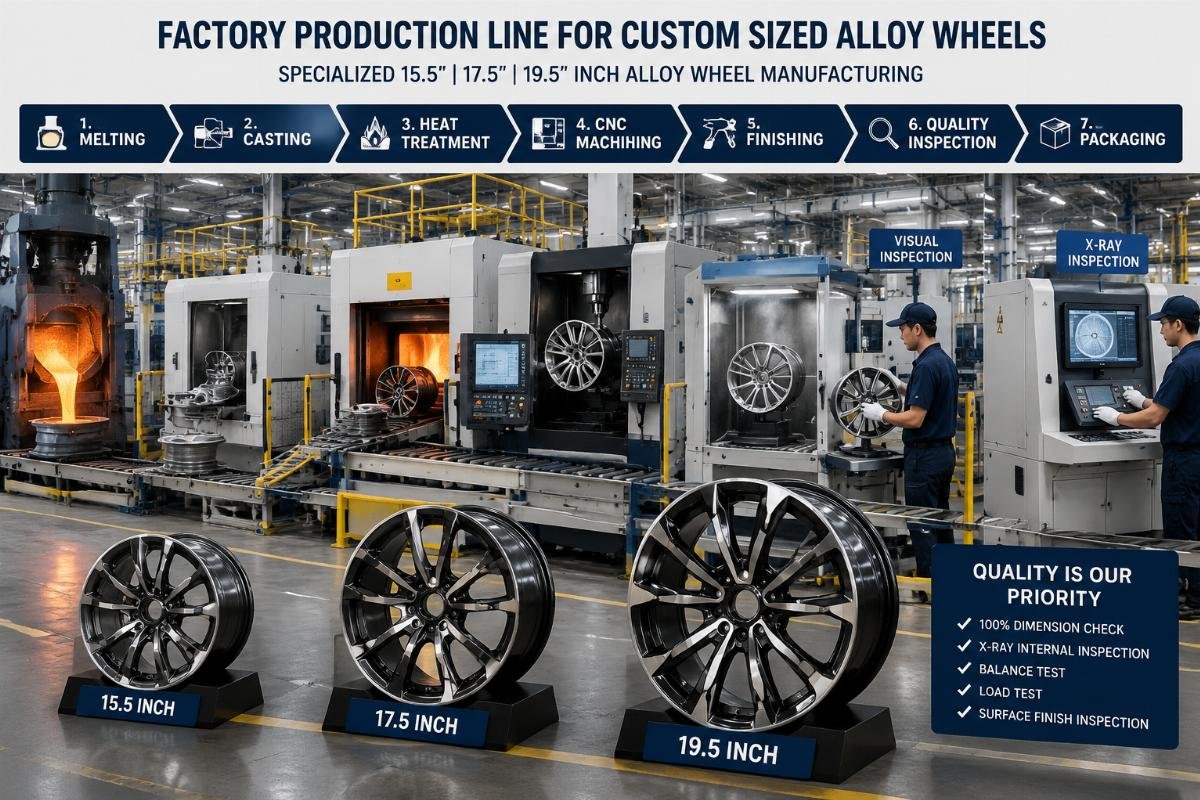
- Production Capacity Verification – Request production facility photos for the exact wheel size you are ordering to confirm the supplier does not outsource production.
- MOQ Tier Confirmation – Ask for a written breakdown of MOQ requirements for stocked, semi-custom and fully custom order types to avoid unexpected minimum order requirements.
- Warranty Documentation – Get a copy of the official warranty terms in writing before placing a deposit to confirm coverage scope and claim processes.
What MOQ and Lead Time Should You Expect for Custom-Sized Wheel Orders?
Stocked custom sizes start at 20 unit MOQ with 7-15 day lead times, while fully bespoke designs require 100 unit MOQ and 25-30 day production window. These timelines apply to all standard 15.5, 17.5 and 19.5 inch fitments, and most suppliers will not require extended lead times for standard surface finishes including machined face, gloss black and hyper silver.
| Order Type | Typical Unofficial Supplier Quoted Timeline | Verified Standard Timeline from Specialized Manufacturers |
|---|---|---|
| Stocked 15.5/17.5/19.5 inch standard fitment | 30 to 45 day lead time with 50 unit minimum | 7 to 15 day lead time with 20 unit minimum [NEED_CITE: Specialized Chinese alloy wheel manufacturers offer 7 to 15 day lead times for stocked non-standard wheel sizes] |
| Semi-custom with standard finish and private labeling | 45 to 60 day lead time with 200 unit minimum | 15 to 20 day lead time with 50 unit minimum |
| Fully bespoke design with custom paint | 60 to 90 day lead time with 500 unit minimum | 25 to 30 day lead time with 100 unit minimum |
A Southeast Asian tire retail chain that sells 15.5 inch wheels as part of their tire and wheel upsell packages initially planned to hold 3 months of stock to cover lead time variability, but found a specialized supplier that delivers consistent 18 day lead times for their top selling SKUs. This allowed them to cut their on hand inventory by 68% while still meeting 99.2% of customer order fulfillment targets.

- Order Phasing – Split large bulk orders into 2 to 3 smaller production batches to align with your inventory restock schedule without extending total delivery timelines

