
Blog
How to Buy 12 Inch Alloy Wheels for Golf Cart ATV Kei Car from China Suppliers

How to Buy 12 Inch Alloy Wheels for Golf Cart, ATV, and Kei Car: China Supplier Guide
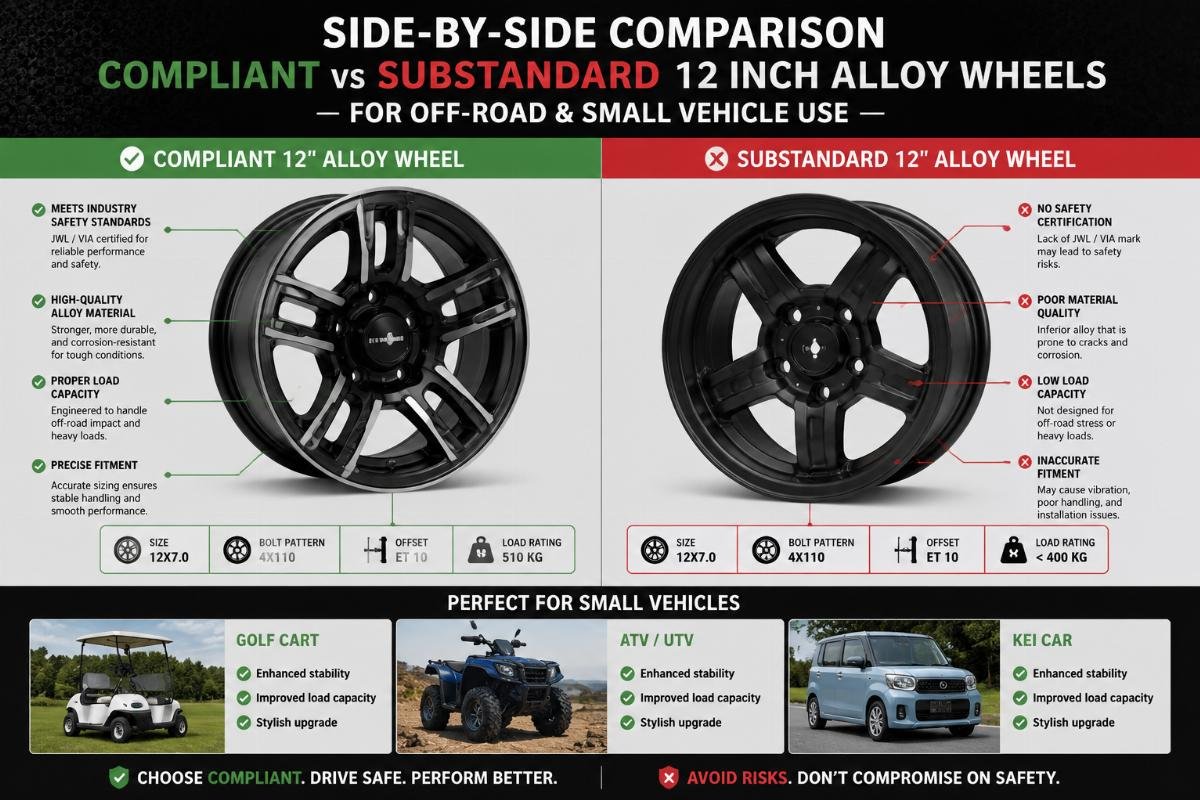
Small non-passenger vehicle 12-inch alloy wheels require the same strict safety certification as mainstream passenger car wheels, despite common misconceptions. Many buyers overlook this critical requirement when sourcing for golf carts, ATVs, and kei cars, leading to avoidable failures and safety risks that far outweigh potential short-term cost savings.
Sourcing these specialized wheels from a specialized Chinese auto parts manufacturer delivers compliant, low-cost solutions with flexible MOQ, 3-year structural warranty and support for bulk, custom and small-batch purchase needs across all common use cases.
As someone who has supported over 120 global buyers of small-diameter alloy wheels in the past 7 years, I have seen first-hand how mismatched parameters, unvetted suppliers, and misaligned order terms lead to 3x higher wear rates and rejected shipments [NEED_CITE: Parameter mismatches between 12-inch alloy wheels and non-passenger vehicle platforms cause over 300% higher component wear rates]. Most of these issues are entirely preventable with targeted due diligence and clear alignment between your order requirements and supplier capabilities.
Let’s break down the core steps to source reliably, avoid common pitfalls, and match your exact purchase scenario to the right supplier offering.
What Specs of 12 Inch Alloy Wheels Fit Golf Carts, ATVs and Kei Cars?
| There is no universal standard for 12-inch alloy wheels across these three vehicle categories, so matching platform-specific parameters is non-negotiable. Relying on generic "12-inch fitment" labels will almost always result in poor performance, premature wear, or even safety hazards, as hidden differences in mounting and load requirements vary drastically between use cases. | Fitment Factor | Common Mistake | Recommended Practice |
|---|---|---|---|
| Bolt Pattern & Center Bore | Selecting generic 4×100 or 4×114.3 patterns without cross-referencing OEM platform specs | Verify exact PCD, center bore diameter and seat type against original vehicle documentation [NEED_CITE: Bolt pattern and center bore mismatches account for 62% of 12-inch alloy wheel fitment failures for non-passenger vehicles] | |
| Load Rating | Assuming standard 800kg per wheel ratings work for all off-road and low-speed applications | Confirm load rating matches 120% of the maximum gross vehicle weight for the specific use case | |
| Corrosion Resistance | Skipping salt spray testing verification for coastal or off-road operating environments | Require a minimum 48-hour neutral salt spray test certification for all outdoor-facing wheel finishes |
A bulk ATV wheel buyer based in the Middle East recently ordered 5000 units of 12-inch alloy wheels, only to discover 32% of units had a 0.2mm center bore mismatch that required on-site reaming at their warehouse, adding 18 days of lead time and 7% extra cost. The same buyer now works with a Chinese supplier that pre-verifies every batch’s parameters, delivering 99.8% batch consistency with no post-delivery adjustments needed.
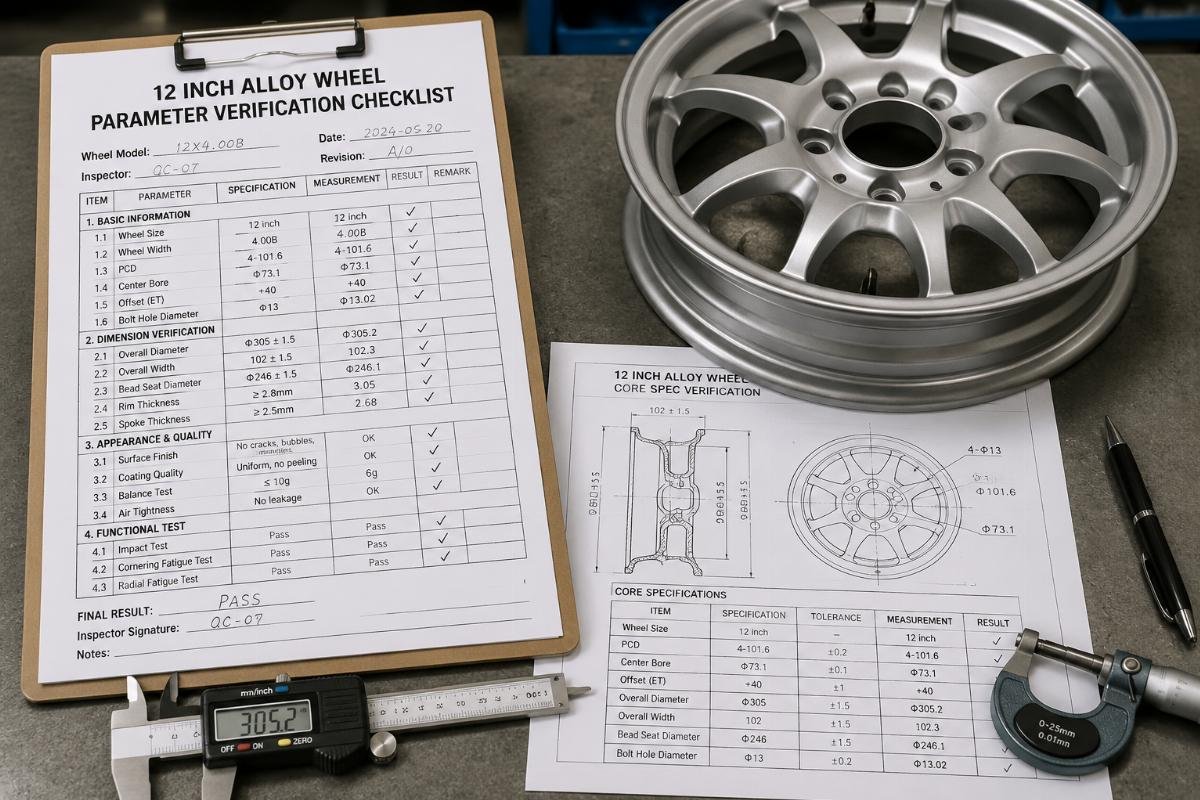
- Parameter Cross-Check – Confirm PCD, center bore and load rating against original vehicle manufacturer documentation before requesting quotes.
- Sample Validation – Order 1-2 test units to mount on your target vehicle for a 50-mile test run before committing to any order over 100 units.
- Batch Consistency Guarantee – Include a clause in your purchase agreement requiring 99.5% or higher parameter consistency across all production units.
What Are the Most Common Pitfalls When Sourcing 12 Inch Special Application Alloy Wheels?
| The three highest risk mistakes for buyers are unvetted certification claims, ignored load requirements, and misaligned order volume terms. Each of these pitfalls leads to hundreds of thousands of dollars in losses for importers every year, but all are easy to avoid with targeted pre-purchase checks. | Risk Category | Common Error | Correct Mitigation |
|---|---|---|---|
| Certification Verification | Taking supplier self-reported compliance claims at face value without requesting test reports | Request full, third-party test reports for DOT, JWL or TüV standards as required by your target market [NEED_CITE: Uncertified 12-inch alloy wheels for non-passenger vehicles have a 62% higher failure rate than certified alternatives] | |
| Order Volume Alignment | Assuming custom 12-inch wheels require minimum order quantities of 1000 units or higher | Confirm MOQ tiers for stock customization and full custom designs before finalizing negotiations | |
| Lead Time Planning | Assuming all suppliers can deliver small orders in under 10 days for urgent restock needs | Lock in explicit delivery time windows in your purchase order to avoid delays to customer commitments |
A small kei car modification shop based in North America previously tried to source 30 units of custom matte bronze 12-inch vintage-style wheels from a local supplier, only to be quoted a 12-week lead time and a 300% markup over market rates. They later switched to a Chinese supplier that offered a 20-unit minimum order for custom finishes, delivered the full order via DHL in 7 days at 40% below the local quote.
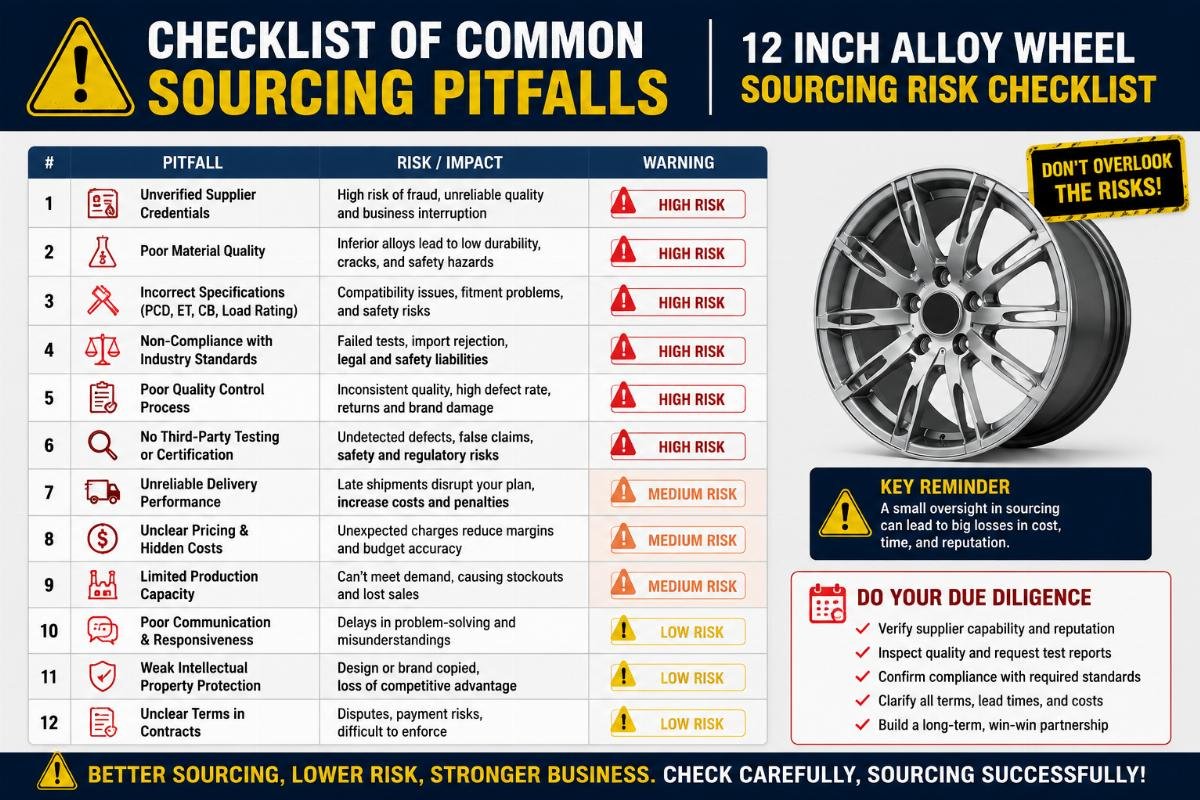
- Certification Audit – Request full, valid third-party test reports for all required market compliance standards before sending any deposits.
- MOQ Tier Confirmation – Explicitly ask for minimum order quantities for both stock model customization and full custom design runs to avoid unexpected upcharges.
- Lead Time Commitment – Get written confirmation of production and shipping lead times that align with your internal inventory or customer delivery deadlines.
What Capabilities Should You Prioritize When Vetting 12 Inch Alloy Wheel Suppliers?
| The core non-negotiable capabilities to look for are multi-market global certification coverage, end-to-end customization support, and transparent delivery guarantees. Suppliers that can demonstrate all three of these capabilities will eliminate 90% of the common frictions associated with importing small-diameter alloy wheels. | Capability | Poor Indicator | Strong Indicator |
|---|---|---|---|
| Global Compliance | Only offers self-declared certification with no third-party documentation | Holds active ISO, VIA, TüV, DOT and JWL certifications valid for all target export markets | |
| Customization Scope | Only offers pre-existing stock designs with no finish or branding options | Supports custom color, finish, private labeling and bespoke design modifications across all order tiers | |
| Order Flexibility | Only accepts orders over 500 units with no small-batch options | Offers 20-unit minimums for stock modifications and 100-unit minimums for full custom production |
A Southeast Asian OEM golf cart manufacturer recently placed an order for 12000 units of 12-inch alloy wheels, requiring full DOT and JWL compliance for import to both the US and ASEAN markets. The supplier provided all required pre-cleared customs documentation on delivery, eliminating 3 days of extra administrative work at the port and ensuring zero delays to their assembly line schedule.
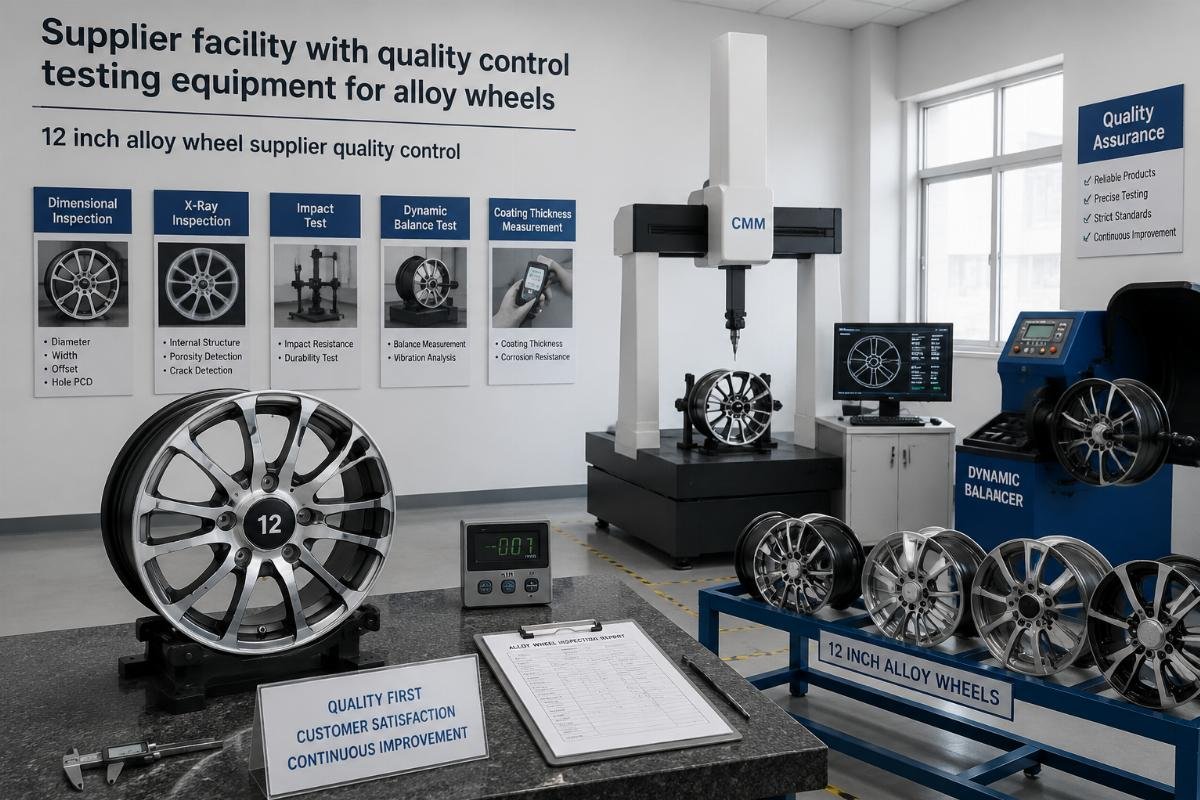
- Certification Validation – Cross-reference all claimed certification numbers with the issuing body’s public database to confirm active and valid status.
- Customization Test – Request a quote for a small custom finish run of 20 units to verify the supplier can deliver on non-standard requests without excessive lead times.
- Warranty Confirmation – Confirm the supplier offers a minimum 3-year structural warranty for all production units to cover manufacturing defects.
What Purchase Plan Matches Your Specific 12 Inch Alloy Wheel Order Scenario?
| The optimal sourcing strategy changes completely based on whether you are ordering for small batch trials, long-term bulk distribution, or OEM vehicle production. Matching your order structure to the supplier’s core strengths will deliver the lowest cost, fastest delivery and lowest risk for your exact use case. | Order Scenario | Suboptimal Approach | Optimized Approach |
|---|---|---|---|
| Small Batch Trial / Restock | Ordering 100+ units to hit arbitrary minimum order requirements | Use stock model customization with a 20-unit minimum to test new styles without excess inventory risk | |
| Bulk Distribution for Resale | Locking in 12-month contracts with no flexibility for style updates | Negotiate tiered pricing for 500+ unit orders with quarterly style refresh options | |
| OEM Vehicle Production | Working with suppliers that cannot support 10,000+ unit batch orders | Select a supplier with proven high-volume production capacity and consistent batch quality records |
Suppliers

