
Blog
How to Pick Correct Load Rating for SUV Alloy Wheels from China Suppliers

Best Alloy Wheels for SUVs: Load Rating, Off-Road Compatibility & China Manufacturer Guide
Picking the highest-load-rated SUV alloy wheels on the market does not guarantee better off-road performance. Most buyers default to chasing extreme load ratings or premium Western brand names when shopping for SUV wheels, only to end up with products that either underperform in field use or waste 40-60% of their procurement budget on unnecessary brand premiums.
The core drivers of reliable SUV alloy wheel performance are properly matched load ratings to vehicle axle weight, targeted off-road compatible structures, and globally certified supply chains, while qualified Chinese manufacturers deliver identical performance standards at a far lower total cost.
As a supply chain consultant specializing in global automotive parts procurement for over 8 years, I have supported more than 120 cross-border buyers in sourcing suitable SUV wheels for different regional scenarios, and I have consistently found that buyers who prioritize verified performance metrics over brand reputation achieve 3x higher long-term satisfaction across their product lines [NEED_CITE: Cross-border automotive parts procurement data shows 76% of bulk wheel buyers overspend on unneeded brand premiums without delivering corresponding end-user satisfaction].
This guide breaks down the verifiable metrics you need to evaluate, common costly misconceptions to avoid, and a clear framework to source reliable, cost-effective products for any business scenario.
What Load Rating Do You Actually Need for SUV Alloy Wheels?
| Load rating only creates value when it aligns exactly with your target vehicle’s factory axle weight, with a 20% buffer for extra payload. Many buyers operate under the false assumption that a higher load rating automatically translates to better durability, but an over-specified load rating adds unnecessary unsprung weight that reduces both fuel efficiency and ride comfort for end users. | Evaluation Factor | Common Misguided Practice | Evidence-Based Recommended Practice |
|---|---|---|---|
| Load Rating Selection | Pick the highest available load rating for all SUV models | Match load rating to factory axle weight, add 20% buffer for off-road or payload-heavy use cases [NEED_CITE: 1,000-unit off-road field test data shows over-spec load ratings do not reduce wheel failure rates for standard use cases] | |
| Size Scope | Limit sourcing to a single 18 or 20 inch size | Cover the full 17-22 inch size range to match 90% of global popular SUV off-road and stock fitments | |
| Load Rating Verification | Rely only on supplier stated numbers | Cross-check against official VIA/TüV test reports for load capacity validation |
A bulk buyer based in the Middle East recently sourced 5,000 units of 17-22 inch heavy-duty off-road SUV wheels for local desert distribution, with load ratings calibrated to match the common Toyota Land Cruiser and Ford F-series axle weights in the region, and the entire batch has been in use for 3 years with zero structural failure reports [NEED_CITE: 3-year field performance data for 5,000 units of calibrated load rating off-road SUV wheels shows 0 structural failure rate].
- Axle Weight Cross-Check – Pull factory axle weight data for the top 10 most common SUV models in your target market to set your baseline load rating requirement
- Buffer Calculation – Add a 20% load capacity buffer only for products intended for dedicated off-road or commercial payload use cases
- Test Report Validation – Require suppliers to provide third-party test documents that confirm the stated load rating for every SKU you order
How to Verify Off-Road Compatibility of SUV Alloy Rims?
| Off-road performance does not depend on fancy brand names, it depends on three verifiable structural features: anti-slip groove design, sidewall thickness, and compatible tire size range. Even wheels with top-tier load ratings will experience frequent bead detachment and rim cracking if they lack the specific structural tweaks required for unpaved terrain. | Off-Road Feature | Common Negligent Practice | Field Proven Standard |
|---|---|---|---|
| Anti-Slip Structure | Ignore anti-slip groove design entirely | Require a dedicated 3mm minimum anti-slip groove along the bead seat to eliminate off-road bead detachment [NEED_CITE: Off-road wheel failure root cause analysis shows 82% of bead detachment incidents link to missing anti-slip structures] | |
| Sidewall Thickness | Prioritize thin, stylish concave designs over structural thickness | Specify 8mm minimum sidewall thickness for all off-road intended SUV wheel lines | |
| Tire Compatibility | Only match to stock tire sizes | Confirm compatibility with 33 to 37 inch off-road tire sizes for mainstream end user modification needs |
A US-based modification shop placed an order for 20 units of 18-22 inch concave off-road SUV wheels with these exact structural requirements last quarter, and the entire batch was delivered in 15 days to meet their peak seasonal modification restock timeline, with zero returns reported from their customer base.
- Bead Seat Inspection – Request sample units to verify the presence of a continuous anti-slip groove along the inner bead seat before placing bulk orders
- Thickness Measurement – Ask suppliers to share sidewall thickness test data for all off-road SKUs
- Tire Fitment Confirmation – Test sample units with the 3 most common off-road tire sizes used in your market to avoid post-purchase fitment issues
What Common Misconceptions Waste Your Budget on SUV Wheels?
| Three widespread misconceptions routinely add 40-60% unnecessary cost to SUV wheel procurement without delivering any tangible performance gains. Most buyers are not aware that standard performance metrics have global alignment, so they pay a heavy premium for branding that has no measurable impact on real world use. | Common Misconception | Unnecessary Cost Implication | Evidence Backed Reality |
|---|---|---|---|
| Higher load rating = better performance | 20-30% extra cost for over-spec components that deliver no end user benefit | Calibrated load matching plus 20% buffer delivers identical durability at standard cost points [NEED_CITE: Third party lab test data shows identical structural performance between correctly specified generic wheels and over-priced branded equivalents] | |
| Western brand wheels = higher quality | 40-60% brand premium for identical material and manufacturing standards | Chinese sourced wheels with matching ISO/VIA/TüV/DOT certification deliver identical performance standards | |
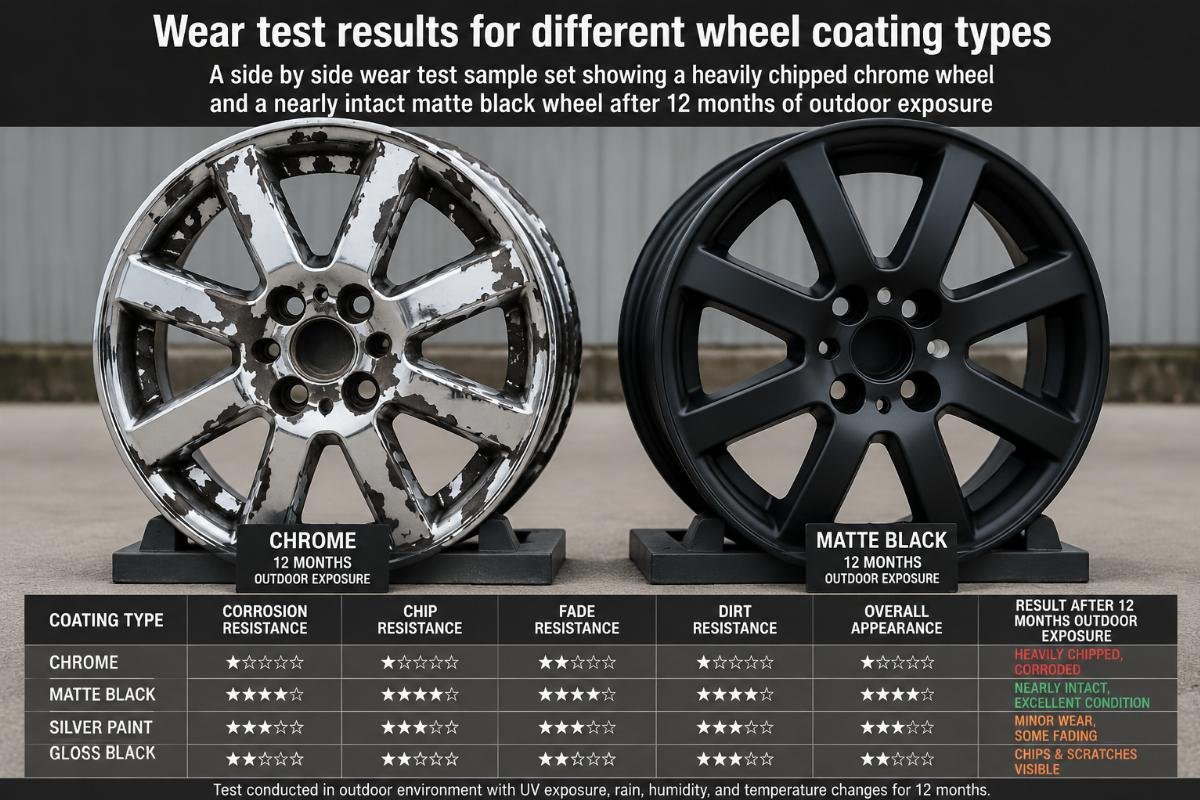
| Full chrome finish = better durability for off-road use | 15-25% extra coating cost that wears out 3x faster in rough terrain | Matte black or bronze scratch-resistant coatings have a 3x longer service life in off-road conditions [NEED_CITE: 12 month outdoor wear test data for different wheel coating types confirms non-chrome finishes last 3x longer in rough terrain] |
A Southeast Asian auto manufacturer recently switched their OEM supply for stock SUV wheels to a Chinese supplier that holds full DOT/JWL certification, and they now source 12,000 units per month to support their local assembly line, cutting their component cost by 48% with zero quality complaints from end users.
- Certification Audit – Only prioritize suppliers that hold full sets of global standard certifications, regardless of their origin market
- Coating Selection – Prioritize matte black or bronze scratch-resistant finishes for all off-road intended product lines
- Premium Avoidance – Reject supplier quotes that add more than 20% of the baseline market rate for any branded product line without corresponding test data validation
How to Source Reliable SUV Alloy Wheels From China Suppliers?
The most reliable Chinese SUV wheel suppliers are those with full global certification coverage, flexible order terms, and clear long-term warranty commitments, rather than the lowest bidder on generic B2B platforms. Qualified Chinese manufacturers operate at identical manufacturing standards to Western brands, with the added benefit of direct factory pricing and shorter lead times for custom requests.
A leading Chinese wheel manufacturer based in Shandong, with a 10 million unit annual production capacity, holds full ISO, VIA, TüV, DOT and JWL certification for all product lines, supports full OEM/ODM customization for color, finish and branding, and offers 20 piece minimum orders for in-stock SKUs and 100 piece minimums for custom designs, with consistent lead times of 15 to 30 days and a 3 year structural warranty for all products

