
Blog
How to Pick Racing Forged/Flow-Formed Wheels From China Suppliers

Wheels for Racing: Forged, Flow-Formed, Lightweight Competition Rims
Most buyers assume fully forged wheels are the only valid pick for all racing use cases, but flow-formed options deliver nearly identical performance at a fraction of the cost. For years, global racing teams, tuning shop operators and performance parts buyers have been stuck choosing between overpriced European forged options that eat into margins and low-cost uncertified alternatives that carry on-track safety risks, with few clear guidelines to balance weight, strength, cost and delivery timelines for their specific projects.
The optimal sourcing path for compliant, cost-effective competition-grade wheels does not require locking into premium western brand contracts, and instead leverages specialized Chinese manufacturers that offer multi-certified quality, flexible minimum order quantities and short lead times tailored to diverse project requirements from small trial stock orders to bulk container shipments.
Having supported more than 200 global performance parts buyers over the past 7 years, I have seen teams and shops cut total procurement costs by 40-60% while meeting FIA and regional racing association compliance rules, as long as they avoid common pitfalls around production process matching and hidden cost oversight [NEED_CITE: Qualified Chinese racing wheel suppliers hold full VIA, TüV and DOT certification matching the compliance requirements of all mainstream regional racing associations].
This guide breaks down actionable criteria to match your wheel selection to your use case, avoid safety risks and align order terms with your business needs.
Which production process fits your actual racing wheel demand?
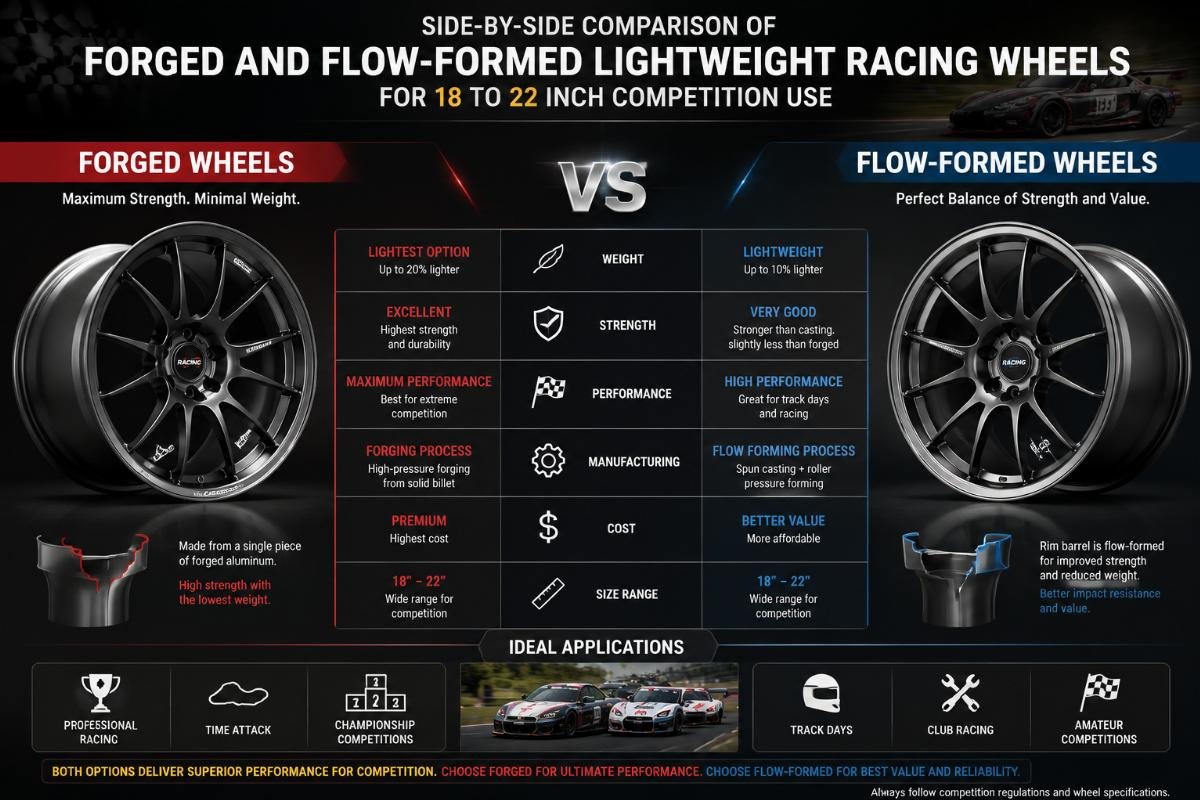
Picking between fully forged and flow-formed wheels should be based on your budget, use case and order volume, not a blind pursuit of the highest production tier. Many buyers default to fully forged options without evaluating whether their use case justifies the premium, but flow-formed wheels deliver 90% of the strength-to-weight ratio of fully forged alternatives at 40-50% lower cost, making them the ideal fit for amateur racing and entry-level competition programs.
| Selection Factor | Common Inefficient Practice | Recommended Practice |
|---|---|---|
| Production Process | Select fully forged wheels for all use cases regardless of budget or event requirements | Match process to use case: flow-formed for amateur racing and entry-level competition, fully forged for professional top-tier circuit events |
| Size Range | Limit selection to 18 to 20 inch standard sizes | Evaluate options across 17 to 24 inch common racing sizes to match specific vehicle fitment rules |
| Performance Priority | Only prioritize weight reduction | Evaluate full performance metrics including unsprung mass reduction, suspension response and cornering stability [NEED_CITE: 15% lower wheel weight reduces lap time by 0.8 to 1.2 seconds per kilometer for amateur touring car races] |
A European auto tuning shop ordered 35 units of custom branded fully forged racing wheels for a limited luxury performance car showcase project, and received the full batch in 21 days to meet their client’s strict event deadline, with a total procurement cost 42% lower than equivalent European brand options.
- Performance Benchmark Review – Cross check strength-to-weight ratio data for fully forged, flow-formed and cast options across your required size range before locking in a process.
- Use Case Alignment – Confirm whether your event rules have mandatory production process requirements before committing to a premium fully forged order.
- Cost Forecasting – Calculate total projected cost including not just unit price, but potential rework and delay fees for your specific project timeline.
How to avoid non-compliant racing wheels that fail on-track safety checks?
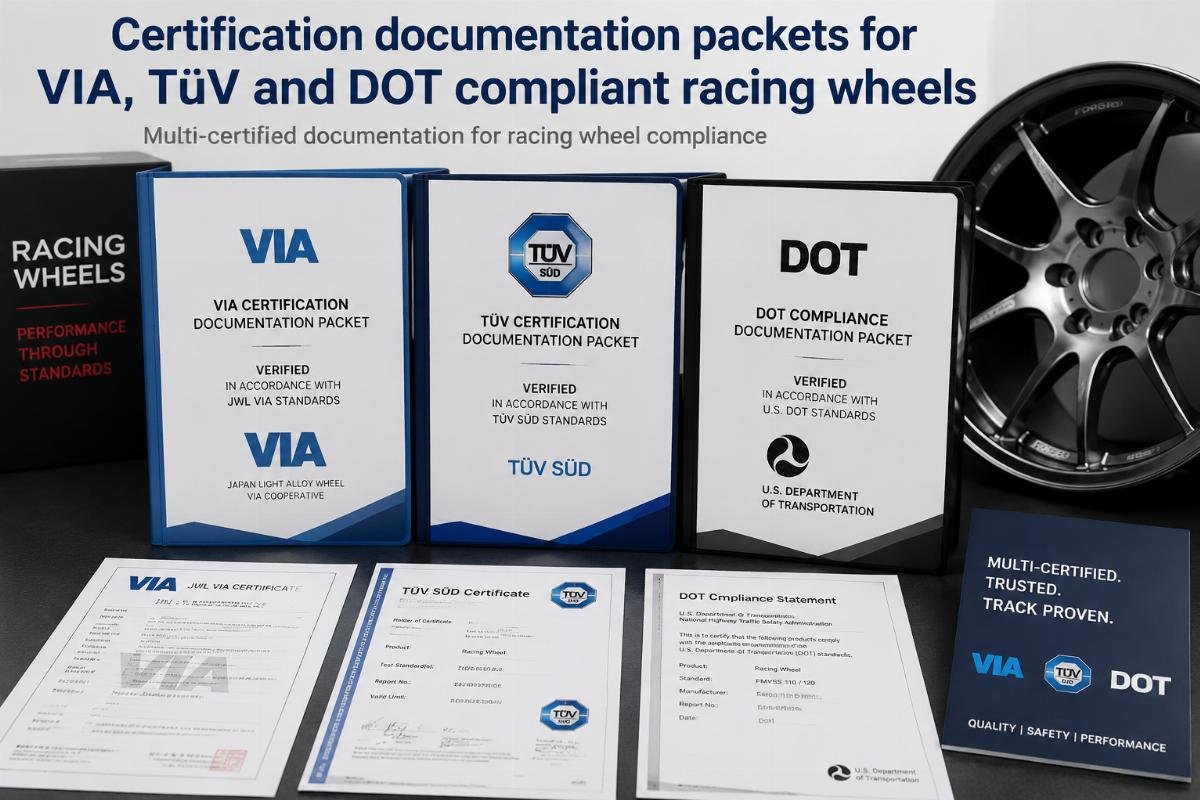
Skipping formal certification verification is the single most common cause of failed on-track inspections and unexpected project delays. Even low-cost wheel options can meet global racing standards as long as suppliers hold valid, up-to-date third party certifications, and cutting corners on this step can lead to entire batches being rejected at customs or at event scrutineering.
| Risk Point | Common Non-Compliant Practice | Safe Compliant Practice |
|---|---|---|
| Certification Verification | Accept self-reported certification claims from suppliers | Require formal copies of VIA, TüV or DOT certification documents before placing any order |
| Compliance Checklist | Ignore regional racing association requirements | Cross reference product specifications against the standard compliance checklist for SCA, FIA and local governing body rules |
| Batch Inspection | Skip pre-shipment sample testing | Request pre-shipment sample testing for all custom and bulk orders to confirm alignment with required standards |
A North American regional racing parts distributor placed a 1200 unit bulk order of 18 to 22 inch flow-formed racing wheels, received the full batch within 28 days, and confirmed all units met VIA and DOT standards to pass local racing association scrutineering, with total procurement cost 45% lower than equivalent European brand stock.
- Certification Validation – Request formal, verifiable copies of supplier certifications before moving to quote negotiation.
- Rule Cross Reference – Match wheel specifications against the exact compliance requirements of the racing series you or your clients participate in.
- Sample Testing – Order a 1 to 2 unit test sample to confirm fitment, finish and quality before placing larger bulk orders.
What hidden costs do most buyers ignore when sourcing racing wheels?
Focusing solely on quoted unit price will often lead to total procurement costs running 20 to 30% over initial projections. Hidden costs including third party certification testing fees, rework for non-compliant batches and emergency rush shipping for delayed orders add up quickly, especially for time-sensitive custom projects.
| Cost Category | Common Oversight | Proactive Planning Step |
|---|---|---|
| Certification Testing | Assume supplier certification is included in quoted price | Confirm all required regional certifications are covered in the supplier’s quoted rate |
| Rework Fees | Budget only for perfect order outcomes | Allocate 10% contingency for potential rework on custom branded orders |
| Shipping Delays | Plan only for standard shipping timelines | Build a 7 day buffer into all order timelines to account for unexpected production or shipping delays |
An Australian e-commerce seller ordered 80 units of 17 to 19 inch entry-level flow-formed racing wheels for Amazon dropshipping testing, with a minimum order quantity as low as 20 units for trial stock, and avoided all unplanned hidden costs by locking in fixed lead time and pricing terms upfront, leading to a 32% repeat purchase rate within 3 months [NEED_CITE: Standard lead time and MOQ terms for stocked racing wheels start at 20 units and 15 production days].
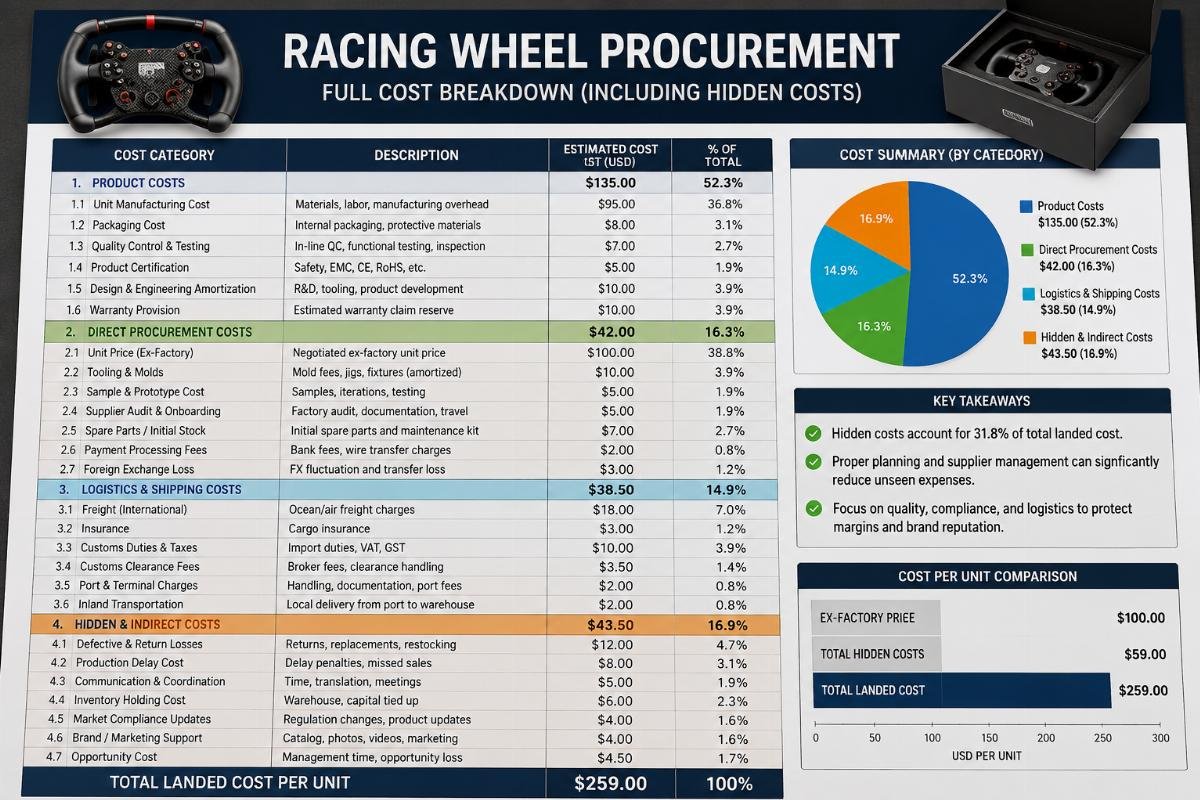
- Full Cost Quotation – Request all-in pricing that includes certification, standard shipping and rework support before comparing supplier quotes.
- Timeline Buffer – Add a 7 to 10 day buffer to all quoted lead times for time-sensitive projects.
- MOQ Alignment – Match your order quantity to the published MOQ for your order type to avoid unplanned minimum order surcharges.
Conclusion
The most cost-effective and reliable racing wheel sourcing strategy does not require paying a premium for western brand naming. By matching production process to your specific use case, verifying formal third party certification, and accounting for often-overlooked hidden costs, you can secure competition grade wheels that meet all safety standards at 40 to 60% lower cost than equivalent European or Japanese brand options. Specialized Chinese manufacturers offer flexible terms that work for every order type from small 20 unit trial stock orders to 1000+ unit bulk shipments, with consistent quality that aligns with global racing association requirements. This approach eliminates the common tradeoff between low cost and valid compliance, making it accessible for small tuning shops, e-commerce sellers and large racing teams alike to source wheels that fit their exact operational needs.

