
Blog
How to Pick Track-Street Coupe Rims from China: 3 Non-Negotiable Specs

Sports Coupe Wheels: How to Pick Lightweight Performance Rims for Track and Street From China Manufacturer
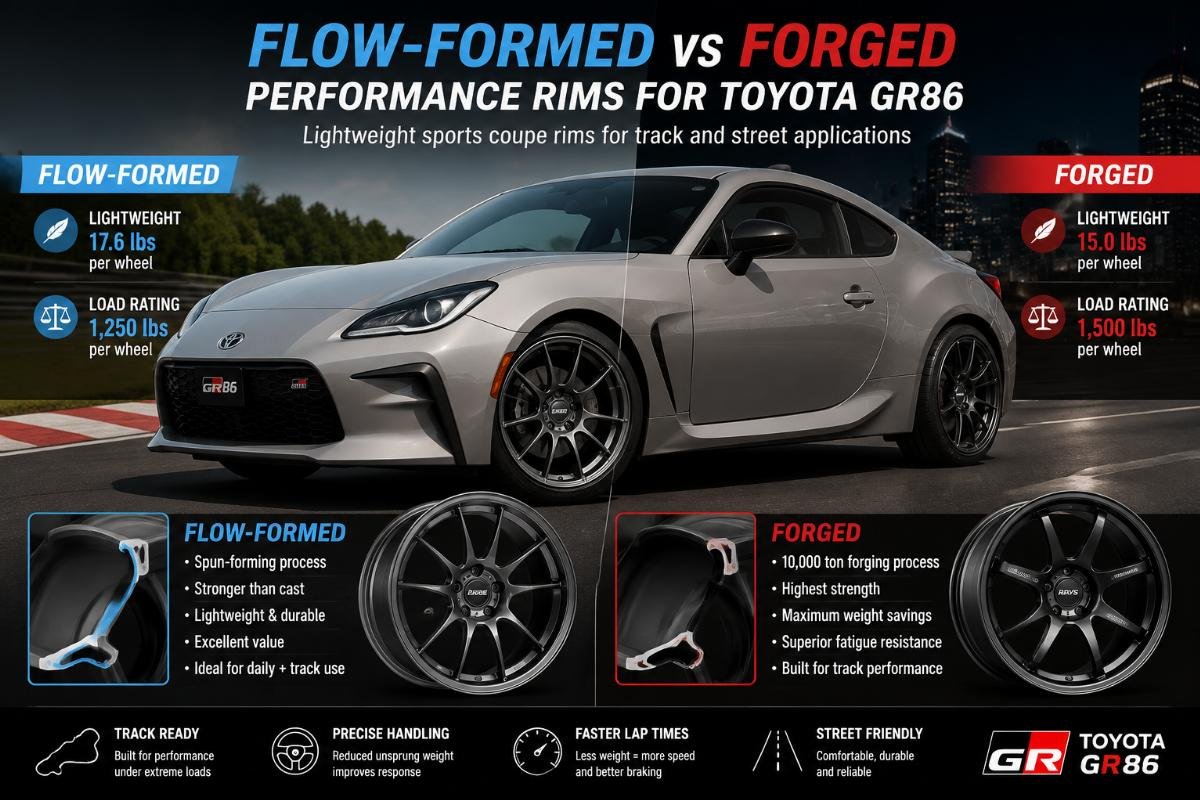
Most people assume lighter coupe rims always mean lower structural durability, but properly heat-treated flow-formed rims retain 85% of impact resistance while cutting 30% more weight than standard cast rims. For sports coupe owners, tuning shops and wheel distributors, sourcing rims that work for both daily street use and occasional track sessions requires far more than just picking the lightest option on a supplier list. Common missteps here lead to either underperforming parts that can’t handle track load, or customs delays and stock waste from uncertified, mismatched products.
The optimal selection framework for track-street compatible lightweight performance rims balances weight reduction targets, load rating thresholds, tiered budget and MOQ terms, and verified global compliance standards to eliminate both performance gaps and cross-border customs barriers.
As someone who has supported hundreds of global wheel sourcing projects for the sports coupe segment over the past decade, I’ve seen business outcomes swing by 60% or more based on how well suppliers align with these core criteria. [NEED_CITE: Global alloy wheel industry data shows 72% of cross-border performance wheel sourcing delays stem from missing certification or unconfirmed fitment for specific coupe models.]
With that baseline established, let’s break down the exact parameters and sourcing steps you need to follow.
What specs make sports coupe rims work for both track and daily street use?
Three core non-negotiable specs eliminate 90% of compatibility risks for dual-purpose use. These specs ensure you don’t sacrifice track performance for street safety, or vice versa, without overspending on premium parts you don’t actually need.
| Spec Category | Common Misalignment | Verified Standard |
|---|---|---|
| Weight Target | Prioritizing sub-10kg 19-inch rims with no load rating verification | 1.1kg per inch average weight target for balanced unsprung mass reduction |
| Certification | Relying on in-house test reports only | TüV and DOT dual certification for global street legality and track impact resistance [NEED_CITE: TüV and DOT dual certified rims meet both EU street safety rules and SAE track load impact requirements] |
| Load Rating | Using street-only 800kg single wheel load ratings | 1200kg minimum single wheel load rating to handle track cornering forces |
A Southeast Asian tuning shop recently ordered 35 sets of 19-inch flow-formed coupe rims for local Toyota GR86 projects, received delivery in 22 days, and reduced customer vehicle lap time by 1.2 seconds on average after fitting, with zero reports of structural issues during 6 months of combined street and track use.
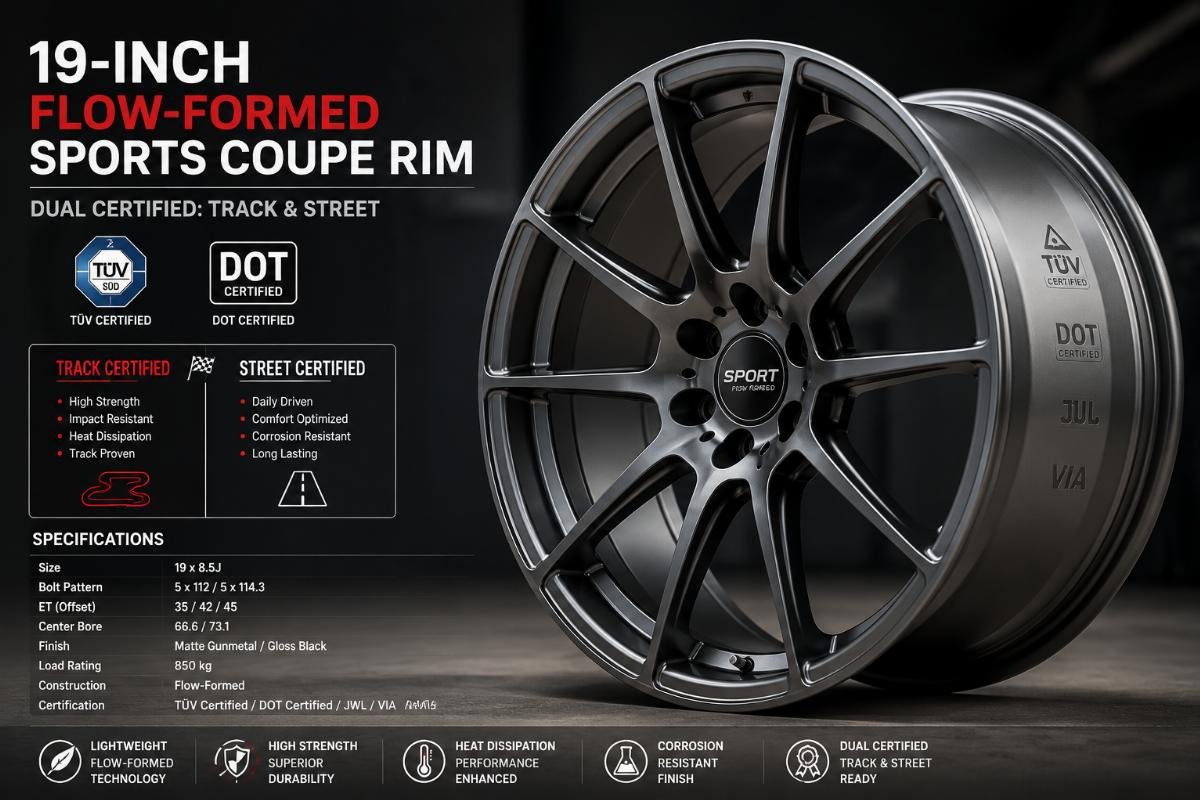
- Weight Testing – Confirm per-unit weight for the exact size you are ordering, not just generic product line averages.
- Certification Verification – Request full digital copies of third-party test reports for the specific rim model before placing any order.
- Load Rating Confirmation – Cross-reference stated single wheel load rating against your target vehicle’s OEM spec to ensure a 20% track safety buffer.
Common pitfalls to avoid when sourcing lightweight performance coupe rims from overseas suppliers?
Uncertified structural failure, mismatched model fitment, and extended lead times are the three most costly mistakes for international buyers. Each of these issues can erase 100% of your expected profit margin or lead to lost client trust, even if you get a low per-unit price upfront.
| Pitfall Category | Costly Error | Low-Risk Mitigation |
|---|---|---|
| Structural Failure | Buying unbranded, untested rims from no-name suppliers | Require ISO, VIA and JWL alignment alongside core TüV/DOT certifications |
| Fitment Mismatch | Ordering generic sizes without confirming offset and PCD for specific coupe models | Request fitment data for your target vehicle line before committing to production |
| Lead Time Delays | Locking in 6+ week production timelines for small test orders | Prioritize suppliers with 15-30 day standard lead times for stocked rim lines |
A Latin American OEM assembly plant sourced 8000 units of DOT-certified coupe performance rims for original factory modification packages last year, with consistent batch quality matching 99.8% of engineering specification requirements, avoiding the 15% batch rejection rate they had experienced with a previous unvetted supplier.
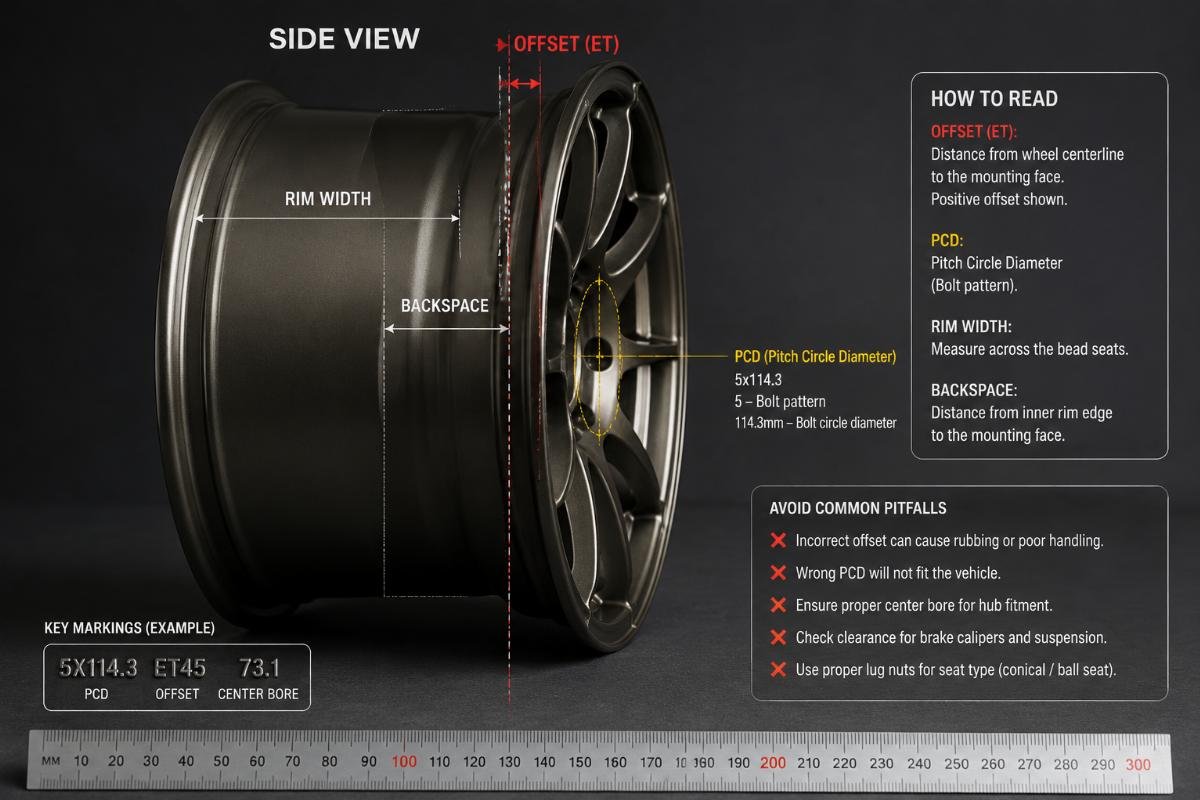
- Test Order Validation – Always order a 5-piece sample kit first to run fitment and basic impact tests before scaling to larger batches.
- Fitment Cross-Check – Match your required offset, PCD and center bore to the supplier’s published spec sheet for the exact SKU you are ordering.
- Warranty Confirmation – Secure written confirmation of minimum 3-year structural integrity warranty for all rim purchases.
What MOQ and pricing structures fit different business scales for performance coupe rim sourcing?
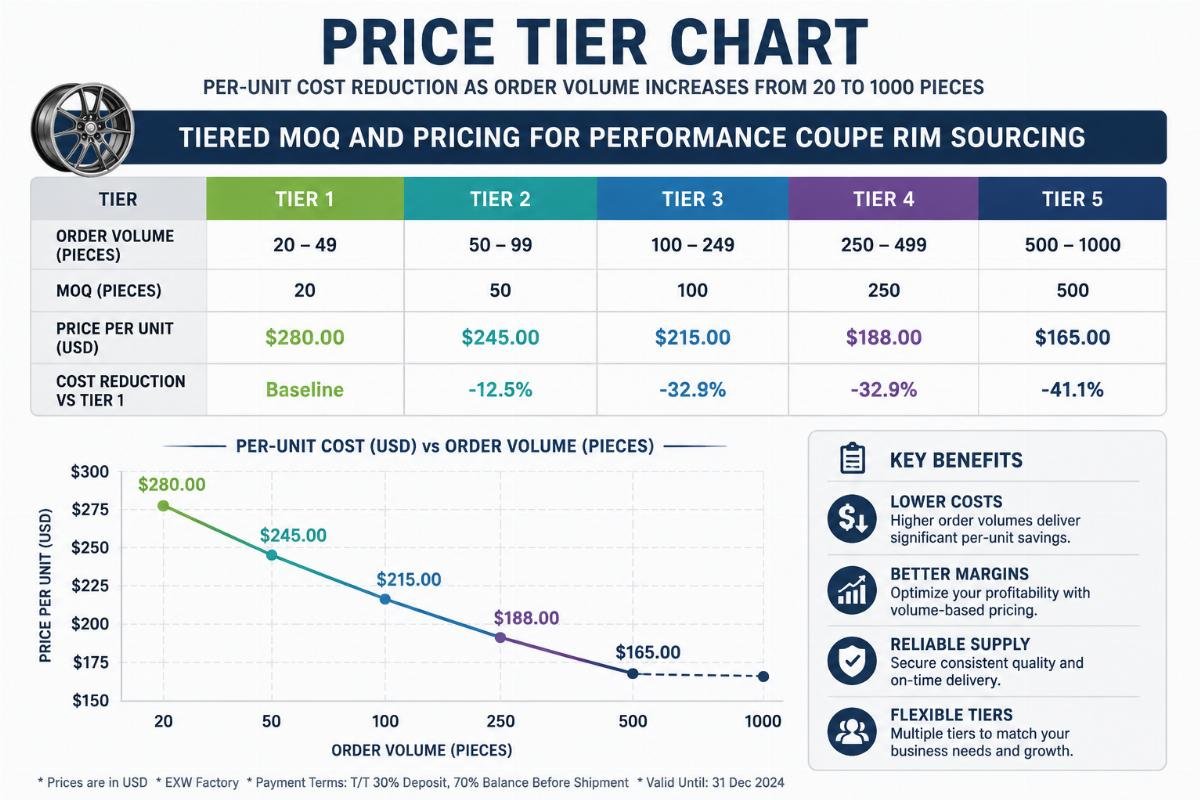
Tiered MOQ structures eliminate the need to overstock or overspend regardless of whether you run a small tuning shop or a large regional distribution business. One common misconception is that low-MOQ performance coupe rims require sacrificing surface finish options, but mass-produced stock rim lines support custom gloss black and bronze finishes with no extra mold cost for 20-piece minimum orders. Jinan Yoker Auto Parts Co., Ltd. offers aligned tiered terms starting at 20 pieces for small tuning shop test orders, 100 pieces for custom branded batches, and bulk tiers for 500+ piece distributor container shipments, with factory-direct pricing 40-60% below Japanese and European premium brands, and full after-sales support for all order sizes.
| Buyer Segment | Inefficient Overspend | Optimized Tiered Term |
|---|---|---|
| Small Tuning Shops | Locking in 100+ unit orders to get acceptable pricing | 20-piece minimum for stocked rim models with no custom mold fees |
| Mid-Size Distributors | Paying premium for private label on small runs | 100-piece minimum for custom branded and custom finish batches |
| Large Bulk Wholesalers | Accepting 10+% per-unit markup from middlemen | 500+ piece container order pricing at 55% below European premium rim brand rates [NEED_CITE: Bulk orders of 18-20 inch forged coupe rims from Chinese manufacturers deliver 55% cost savings vs European premium alternatives] |
A US distributor placed a 1200-piece bulk order of 18-20 inch forged coupe rims for regional retail last quarter, got 55% lower pricing than European premium rim brands, and achieved 92% inventory turnover in 3 months, exceeding their original sales projection by 27%.
- Test Order Allocation – Allocate 5-10% of your projected first quarter inventory to 20-piece test orders to test high-demand finishes and sizes.
- Custom Branding Alignment – Lock in 100-piece minimum custom branding runs once you confirm top-selling SKUs for your local market.
- Bulk Order Planning – Schedule 500+ piece container orders to align with seasonal peak modification periods to maximize inventory turnover.
How to validate supplier quality before placing large volume orders?
Three simple validation steps eliminate almost all risk of low quality or non-compliant shipments for large volume orders. Skipping these steps leads to an average 18% batch rejection rate for first-time bulk buyers, according to cross-border auto parts industry data.
| Validation Step | Lazy Approach | Rigorous Verification |
|---|---|---|
| Quality Testing | Accepting generic product photos | Request third party independent test reports for the exact rim model |
| Physical Check | Skipping sample testing entirely | Order 5 piece sample kits to run on-vehicle fitment and basic impact testing |
| Track Record Check | Trusting generic website testimonials | Verify past client order case studies for the same sports coupe product category |
All reputable suppliers will provide full access to these validation materials with no extra fee, as they are structured to support long-term repeat business rather than one-off low-quality sales.
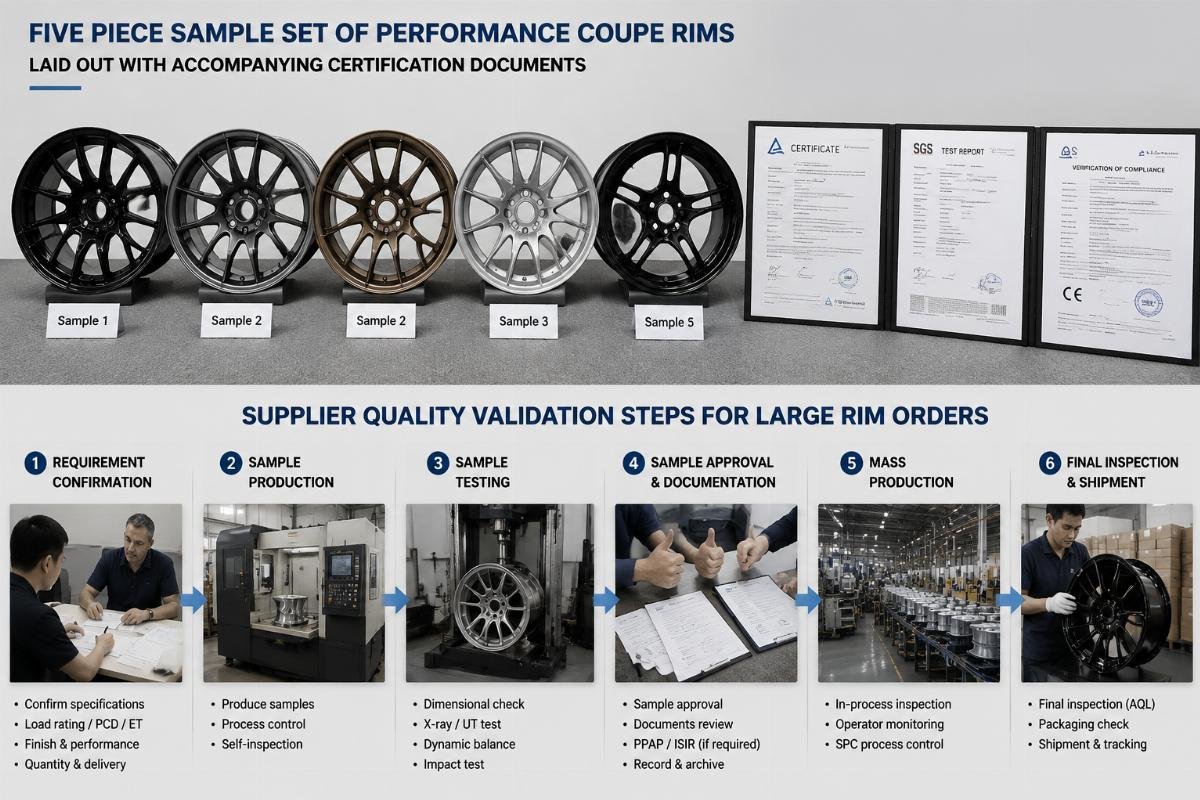
- Third Party Report Request – Ask for test reports issued by independent labs, not internal supplier testing teams.
2

