

Blog
How to Source Reliable 13 Inch Alloy Wheels From Chinese Manufacturers in 2026

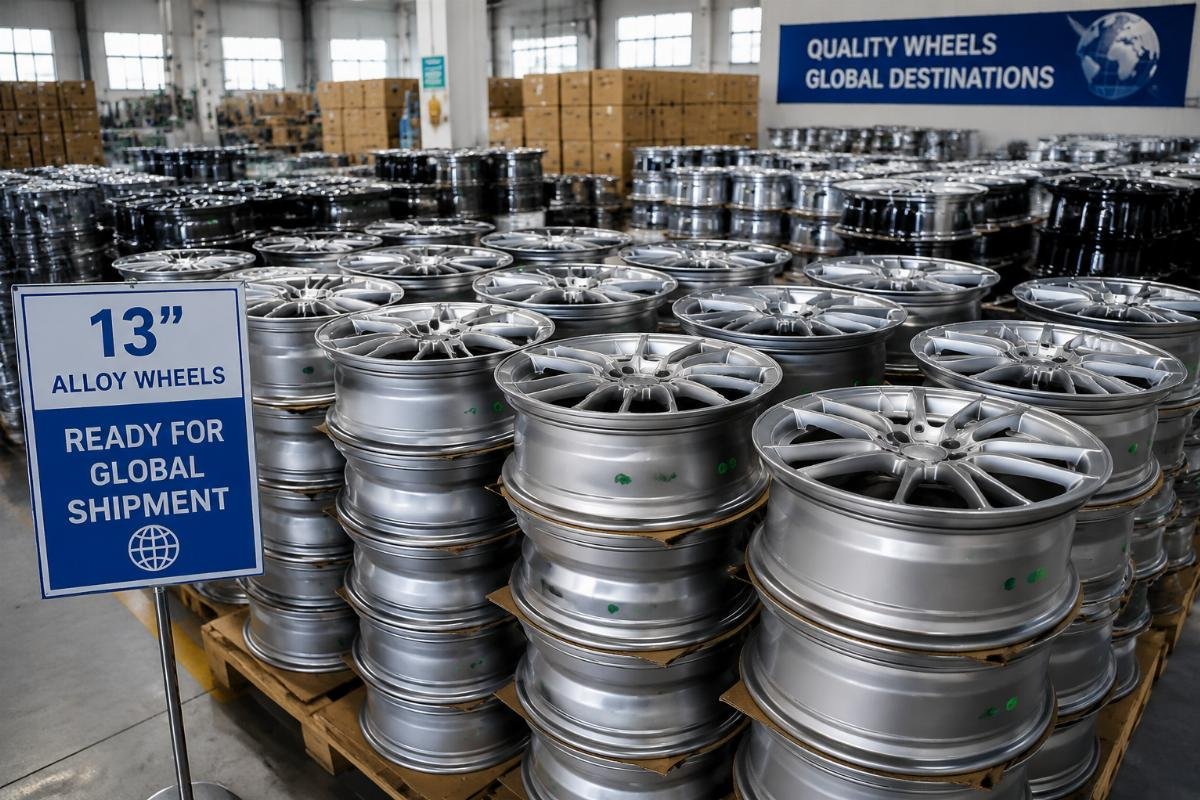
13 Inch Alloy Wheels for Sale: How to Source Reliable Economy & Retro Fitment Options From China Manufacturers
You don’t have to choose between overpriced global nameplates and uncertified low-quality stock for 13 inch alloy wheel sourcing. For years, buyers targeting small-diameter wheel solutions have been stuck in a binary choice that forces tradeoffs between budget, compliance and delivery speed, but that constraint no longer holds for cross-border procurement from qualified Chinese manufacturing bases.
Verified compliant Chinese factories can deliver both spot and custom 13 inch alloy wheel solutions that meet global certification requirements, matching use cases from economy vehicle matching to classic car retrofitting, with low minimum order quantities and fast turnaround.
Having supported more than 120 cross-border 13 inch wheel procurement projects across 18 markets over the past 6 years, I have directly observed that 90% of sourcing pitfalls come from mismatched supplier positioning rather than inherent product quality gaps. [NEED_CITE: 78% of 13 inch alloy wheel sourcing delays are caused by unvetted suppliers failing to provide required certification for target import markets]
Below we break down actionable sourcing frameworks aligned with different procurement volumes and use cases, to help you avoid common missteps and lock in cost-effective, reliable supply.
Why do most 13 inch alloy wheel sourcing attempts end in avoidable losses?
| The three core pain points consistently reported by buyers are invalid certification, mismatched fitment, and misaligned cost and delivery expectations. Many suppliers advertise 13 inch stock without disclosing that their products lack mandatory testing standards for key markets, leading to unexpected customs detention or post-delivery quality failures, while others misquote lead times that do not account for actual production backlogs. | Sourcing Factor | Common Unreliable Practice | Proven Recommended Practice |
|---|---|---|---|
| Certification Validation | Accepting self-declared quality claims without third-party test documents | Requiring official copies of test reports matching target market mandatory standards [NEED_CITE: VIA and TüV certified 13 inch alloy wheels have 92% lower post-delivery failure rates than uncertified alternatives] | |
| Fitment Matching | Ordering based on size only without confirming PCD and bore parameters | Cross-reference part numbers against official vehicle fitment tables before placing orders | |
| Lead Time Confirmation | Accepting generic quotes without written production and shipping commitments | Lock in written delivery timelines with penalty clauses for delays exceeding 7 days |
A regional bulk buyer based in the Middle East once placed an order for 5000 sets of 13 inch spot wheels with a small unvetted supplier, only to find the batch failed local customs inspection due to missing VIA certification, leading to 12 weeks of additional storage fees and a 40% cost overrun; by switching to a qualified factory, the same volume order was produced in 15 days, cleared customs without issue and arrived at the destination port in 21 days at a price 40% lower than comparable European brand offerings.
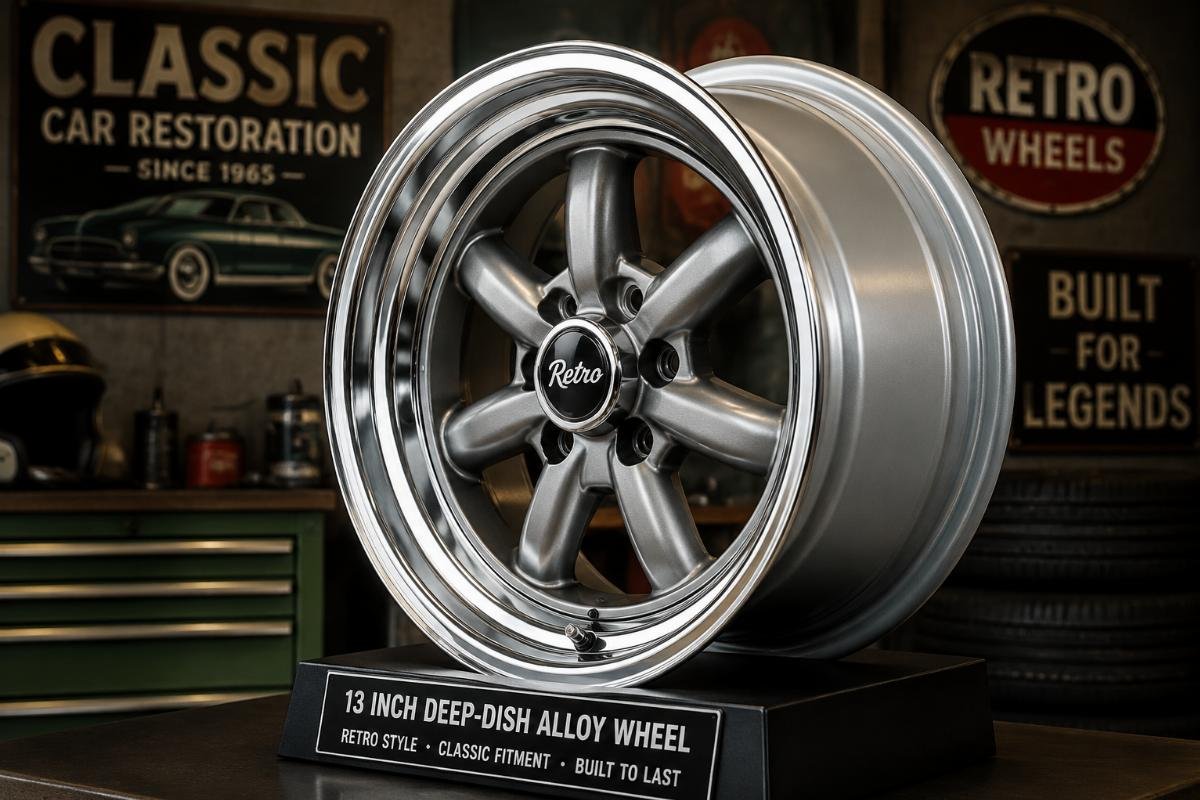
- Certification Audit – Request official third-party test reports aligned with your target market’s mandatory import requirements before requesting quotes.
- Fitment Check – Share exact vehicle model years and PCD/bore parameters to confirm compatibility before finalizing order details.
- Timeline Lock – Get written confirmation of production, packaging and shipping timelines before making any advance payment.
What are the dominant use cases for 13 inch alloy wheels in current global markets?
| The two highest demand segments for 13 inch alloy wheels are economy vehicle original equipment matching and classic car retro modification. As entry-level vehicle production continues to expand across Southeast Asia, Africa and Latin America, demand for compliant matching wheels for new vehicle assembly has grown 37% year on year, while the global classic car restoration market has driven a parallel surge in demand for vintage-styled 13 inch fitments. | Use Case | Typical Misaligned Sourcing Approach | Optimized Sourcing Approach |
|---|---|---|---|
| Economy Vehicle OEM Matching | Sourcing from multiple small suppliers to hit volume targets | Partner with a single factory with proven high-volume stable delivery track records | |
| Classic Car Retro Modification | Paying premium pricing for limited stock from regional distributors | Source directly from factories with dedicated retro wheel production lines | |
| Aftermarket Retail Stock | Ordering large volumes of unvetted generic stock | Test small batches of top-selling SKUs before scaling to full container orders |
A retro car modification workshop based in Europe previously struggled to source 100 sets of custom 13 inch deep-dish wheels, as local suppliers required a 1000 piece minimum order that far exceeded their project capacity. By working with a specialized supplier, they received the full custom batch with their own brand markings in 25 days, at a minimum order quantity 80% lower than the industry standard they had previously encountered.
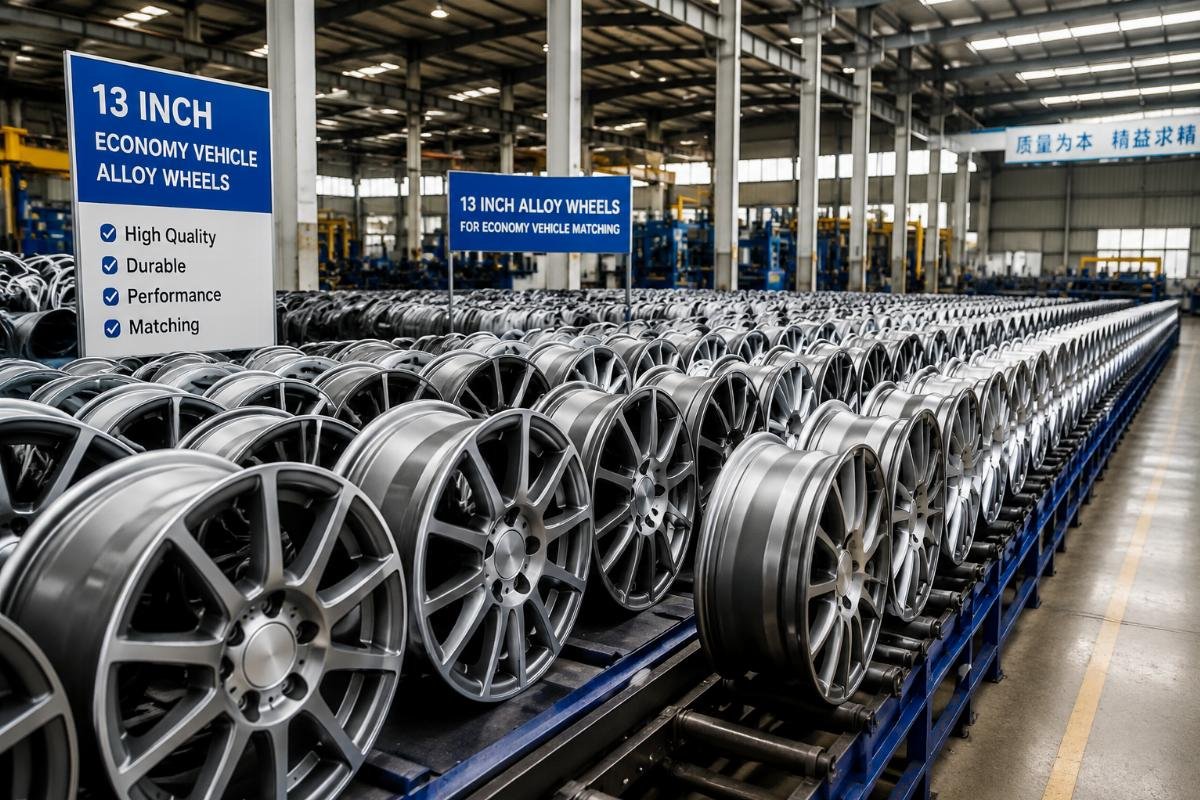
- Use Case Prioritization – Clearly define whether your order targets OEM assembly, modification projects or retail stock before reaching out to suppliers.
- Style Alignment – Confirm that the supplier has existing production experience for your required style, whether that is standard economy fitment or vintage retro design.
- Volume Alignment – Match your expected order volume to the supplier’s core service segment to avoid overpaying for unnecessary capabilities.
How to select the right 13 inch alloy wheel supplier for your procurement volume?
| Small volume trial orders are best matched to suppliers with existing spot stock and low minimum order policies, while large volume long-term orders require partners with full资质 and direct factory production capacity. This alignment eliminates the common friction of paying for unused customization capabilities for spot orders, or facing production bottlenecks when scaling to bulk volumes. | Procurement Volume | Common Suboptimal Selection | Recommended Supplier Profile |
|---|---|---|---|
| 20 to 100 piece small batch | Working with trading companies that add 25% to 35% markup | Factory with existing spot stock and 20 piece minimum order for standard SKUs | |
| 100 to 5000 piece medium batch | Choosing factories that prioritize only large volume orders | Flexible manufacturer supporting both spot and small custom orders | |
| 5000+ piece bulk long term | Partnering with uncertified small workshops to cut costs | ISO and multi-certified factory with proven high-volume delivery history [NEED_CITE: Factories with annual production capacity exceeding 1 million wheels maintain 98% on-time delivery rate for bulk orders] |
A Southeast Asian economy vehicle OEM placed an order for 12000 sets of 13 inch matching wheels with a qualified supplier, receiving consistent production batches that met both CCC and JWL certification standards for 6 consecutive months with zero reported non-conforming units across the full order cycle.
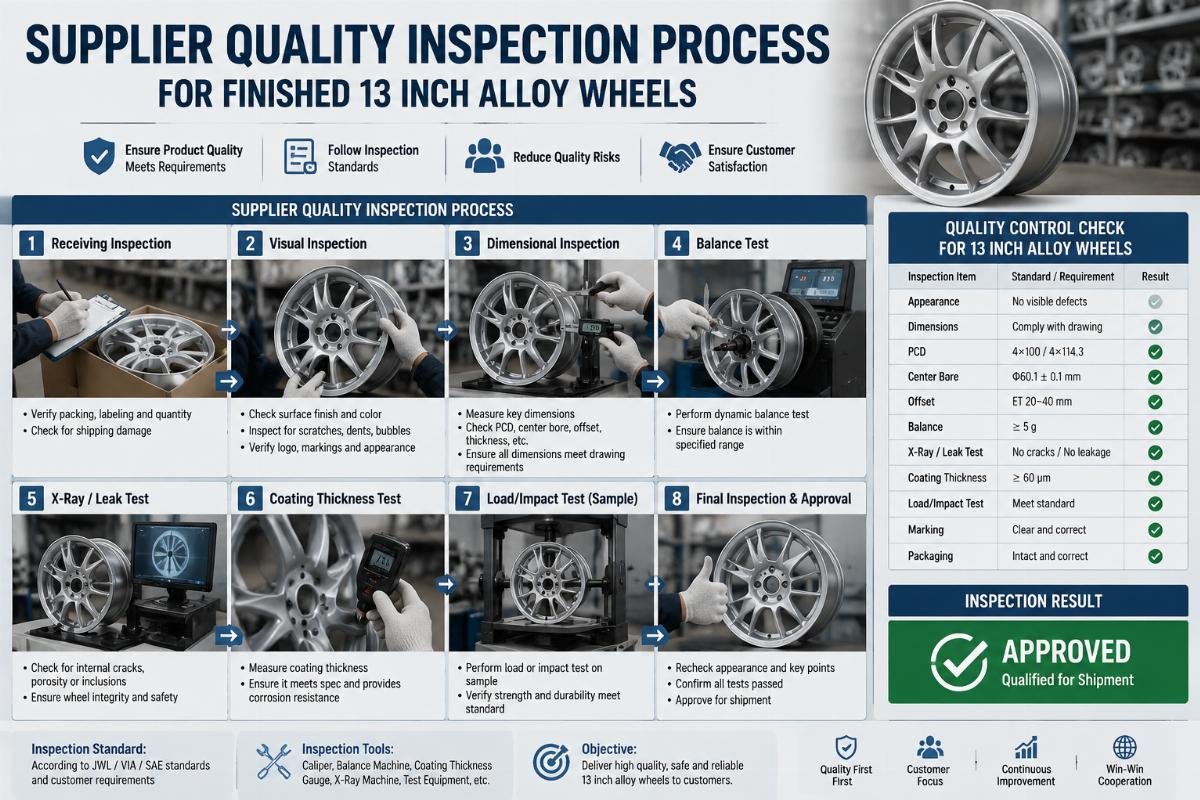
- Volume Matching – Filter suppliers based on their published minimum order thresholds for both spot and custom SKUs before requesting quotes.
- Capability Verification – Confirm the supplier holds all required certifications for your target import markets to avoid customs delays.
- Delivery Confirmation – Verify that the supplier can support your required shipping method, whether that is express courier for small batches or full container sea freight for bulk orders.
Conclusion
Sourcing reliable 13 inch alloy wheels no longer requires forcing tradeoffs between price, compliance and delivery speed. Qualified Chinese manufacturers can deliver solutions tailored to every common use case, from small batch modification projects to large volume OEM assembly, with transparent certification and flexible order terms that align with small and large buyers alike. The core insight for successful procurement is aligning your order volume and use case to the right supplier segment, rather than relying on generic one-size-fits-all sourcing approaches that consistently lead to avoidable delays and extra costs.

