
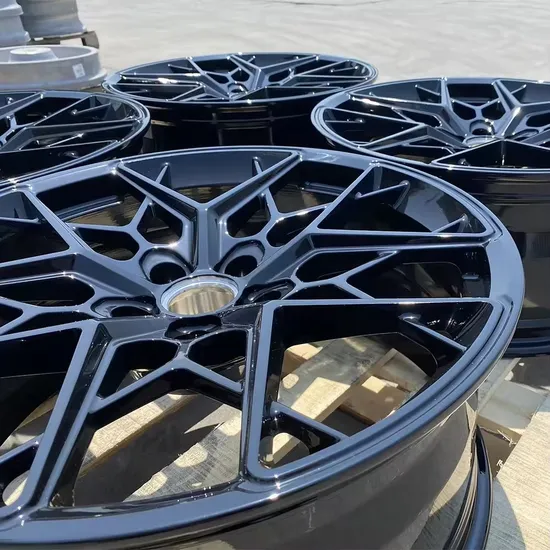
Buy 18 Inch Alloy Wheels with VIA TUV Certification Wholesale Supplier
- Aug 8, 2026
- author
- Brake · Cooling · A/C · Wheels
Buy 18 Inch Alloy Wheels with VIA TUV Certification Wholesale Supplier
Most buyers assume VIA and TÜV are interchangeable. They are not. One tests dynamic fatigue, the other approves dimensional compliance — and customs authorities treat them as entirely separate documents.
To source 18 inch alloy wheels with VIA TUV certification that clear customs without demurrage, you must verify that the certificate numbers match the hub stamping and packing list exactly, and that each certification covers the specific load index, offset range, and bolt pattern of your order. A certificate without model-level traceability is useless at the port.
I started working on the casting floor in Jinan, moving from pouring molten A356 alloy to machining and finally export documentation. A few years ago, a Middle East distributor ordered a container of 20-inch matte black forged wheels. The contract specified VIA certification, which we delivered. But when the shipment reached Jebel Ali, the clearing agent could not produce a TÜV type-approval document — which UAE customs required for that vehicle class. The container sat in the port for over twenty days. The demurrage bill ended up exceeding the cargo value. Since that case, I have treated certification paperwork with more scrutiny than production schedules. Every certificate number, every stamp, every offset value gets cross-checked before the container is sealed. [NEED_CITE: JWL/VIA standard scope covers radial and bending fatigue testing only]
That lesson shaped how I handle every order of 18 inch alloy wheels with VIA TUV certification today. Let me walk you through what these certifications actually cover, how to verify them before payment, what documents customs will demand, and how to pick a supplier who can deliver all of it consistently.
What Do VIA and TÜV Certifications Actually Cover for 18 Inch Alloy Wheels?
VIA certification focuses on structural durability through dynamic fatigue testing, while TÜV certification validates dimensional compliance and load capacity through type-approval documentation — they serve different regulatory purposes and are not substitutes for each other.
Many buyers send an inquiry asking for "VIA/TÜV certified wheels" as if it were a single certificate. It is not. The Japan Light Alloy Wheel Association (JWL) and its testing arm VIA set standards for radial fatigue, bending fatigue, and impact resistance. These are destructive physical tests performed on sample wheels from each production batch. [NEED_CITE: VIA testing protocol includes radial fatigue, bending fatigue, and dynamic impact per JWL standards] TÜV, on the other hand, issues a type-approval (Typgenehmigung) that confirms the wheel’s dimensions, load index, offset (ET) range, and center bore match the vehicle specifications declared by the manufacturer. TÜV does not run fatigue cycles — it reviews engineering drawings and test data, then stamps approval.
| Certification | Core Test Scope | Document Output | Customs Recognition |
|---|---|---|---|
| VIA (JWL) | Radial fatigue, bending fatigue, impact | Test report per batch | Japan, parts of Middle East, SE Asia |
| TÜV (Germany) | Dimensional compliance, load index, ET range | Type-approval certificate | EU, Middle East, Latin America |
| Combined VIA + TÜV | Full structural + dimensional coverage | Separate reports, cross-referenced | Broadest global acceptance |
A Latin American distributor I worked with initially ordered 18 inch alloy wheels with VIA TUV certification based on a supplier’s verbal claim. The wheels arrived with a VIA test report, but no TÜV paperwork. Brazilian customs rejected the shipment because the import regulation required TÜV type-approval for aftermarket alloy wheels. The buyer had to air-freight the TÜV documents from Germany — which took weeks and added significant cost. [NEED_CITE: Brazil INMETRO regulation requires type-approval documentation for aftermarket alloy wheel imports]
The key takeaway: if your destination market requires both, you need both documents — physically present, with matching model numbers, before the ship docks.
How to Verify VIA/TÜV Certification Before Placing an Order?
Request the certificate number and cross-check it on the issuing body’s official database — do not accept a PDF attachment as proof without independent verification.
Verification is where most problems originate. Suppliers often send a certificate PDF that looks official. But the certificate may cover a different wheel diameter, a different bolt pattern, or a model that has since been discontinued. For 18 inch alloy wheels with VIA TUV certification, you need to confirm three things before transferring any deposit:
First, ask for the certificate registration number. VIA certificates can be verified through the JWL/VIA registered manufacturer database. [NEED_CITE: JWL/VIA maintains a publicly searchable registry of certified wheel manufacturers and model numbers] TÜV certificates carry a Prüfnummer (test number) that can be checked against the Kraftfahrt-Bundesamt (KBA) or the relevant TÜV authority’s records. If the supplier cannot provide a verifiable registration number, walk away.
Second, confirm the certificate covers the exact 18-inch specification you are ordering — including width (e.g., 8J), offset (ET value), bolt pattern (PCD), and load rating. A TÜV certificate for a 17-inch wheel does not apply to your 18-inch order, even if the design looks identical. I have seen buyers receive wheels with a certificate that covered a 16-inch variant of the same design. The wheels were structurally fine, but the certificate was dimensionally irrelevant.
Third, request a pre-shipment sample with the actual hub stamping. The stamp on the wheel’s inner barrel must match the model designation on the certificate. This is not optional — it is the single most common reason for customs rejection. [NEED_CITE: Customs rejection of alloy wheels frequently caused by mismatch between certificate model designation and physical hub stamping]
A Southeast Asian modification shop once placed a small trial order for 18-inch multi-spoke wheels. They specifically required that the VIA certificate list each individual model variant by its exact PCD and offset combination, because their local transport authority checks the stamp against the certificate line by line. We adjusted the stamping die and certificate documentation to match each SKU before shipping. The order cleared within days.
What Documents Are Required for Smooth Customs Clearance?
Customs clearance for certified alloy wheels requires a matching triad: the original certificate, the physical hub stamping, and the packing list — all three must carry identical model numbers, quantities, and specifications.
The certificate alone does not clear goods. I cannot emphasize this enough. Customs officers in most markets compare three documents side by side:
The original certificate (or a notarized copy) must show the issuing authority’s seal, the certificate number, the validity period, and the exact wheel specifications covered. For 18 inch alloy wheels with VIA TUV certification, this means two separate documents — the VIA test report and the TÜV type-approval — each listing the 18-inch variants.
The hub stamping on every wheel must display the manufacturer code, model identifier, size specification, and the relevant certification mark (JWL/VIA logo or TÜV mark). If even one wheel in the container lacks the stamp, or if the stamp reads a different model code than the certificate, the entire shipment can be held. [NEED_CITE: Harmonized System classification for alloy wheels requires marking compliance per destination country regulations]
The packing list and commercial invoice must list each wheel by the exact model number shown on the certificate. Generic descriptions like "18-inch alloy wheel, type A" will trigger inspection delays. The description must match the certificate line item character for character.
A Middle East buyer once received a container where the packing list described the wheels as "18×8J ET35 5×114.3" but the certificate listed them as "18×8.0J ET35 PCD114.3." A human reader would understand these are the same thing. The customs system flagged the discrepancy. The container was held for physical inspection, which took over two weeks. The lesson: precision in documentation is not pedantry — it is the difference between a three-day clearance and a month of demurrage.
How to Choose the Right 18 Inch Alloy Wheel Supplier with Valid Certifications?
Prioritize manufacturers who hold both VIA and TÜV certifications simultaneously, maintain model-level traceability from casting to shipping, and provide a complete customs documentation package as a standard deliverable — not an after-request extra.
When evaluating suppliers for 18 inch alloy wheels with VIA TUV certification, look beyond the marketing claim of "certified." Ask specific questions:
Does the supplier hold the certifications under their own manufacturing entity, or are they using a partner factory’s certificates? Certificates tied to a different legal entity may not be accepted by customs, which checks the manufacturer name on the certificate against the commercial invoice. [NEED_CITE: Customs authorities verify manufacturer identity consistency across certificate invoice and packing list]
Can the supplier provide certification coverage for every 18-inch SKU in your order — including every PCD, offset, and width combination — or only for a limited range? Some manufacturers hold TÜV approval for a few popular sizes and expect buyers to accept non-certified variants for less common specifications.
Does the supplier include a pre-shipment documentation review as part of their standard process? A reliable supplier will send you draft copies of the certificate, stamping layout, and packing list for your approval before the container is loaded. This is not a premium service — it is basic quality control.
Our own facility in Jinan holds VIA, TÜV, ISO, JWL, DOT, and CCC certifications across our production lines. For 18 inch alloy wheels with VIA TUV certification, we maintain type-approval coverage for the full range of passenger car and SUV fitments — from 18×7.5 to 18×10.5, covering PCDs from 4×100 to 5×130. Minimum order starts at one hundred pieces for custom specifications, with standard lead times of fifteen to thirty days. Every shipment includes a complete documentation package: original certificates, stamped hub verification photos, and a packing list cross-referenced to the certificate model numbers. This is how we ensure that when a container arrives at any port — whether in Dubai, São Paulo, or Bangkok — the clearance process takes days, not weeks.
Conclusion
VIA and TÜV certifications cover fundamentally different compliance dimensions, and both must be verified at the model level before shipment — not after arrival.
Sourcing 18 inch alloy wheels with VIA TUV certification that clear customs smoothly requires independent certificate verification, exact alignment between hub stamping and documentation, and a supplier who treats paperwork as a core production deliverable rather than an administrative afterthought. The cost of getting this wrong is measured not in wheel prices, but in port demurrage, missed selling seasons, and damaged buyer credibility.
Where these parts are used
Products in this article
Parts mentioned above, ready to quote
Each part below ships from Jinan Yoker Auto Parts with export-standard packing and full-process inspection.
01 WHEEL RIM/HUB
A356 Aluminum 5-Hole Black Aftermarket Car Wheel Rim
$40.00
View Specifications 02
WHEEL RIM/HUB
15 Inch A356.2 Aluminum Silver Replica Beadlock Car Rims
$28.00
View Specifications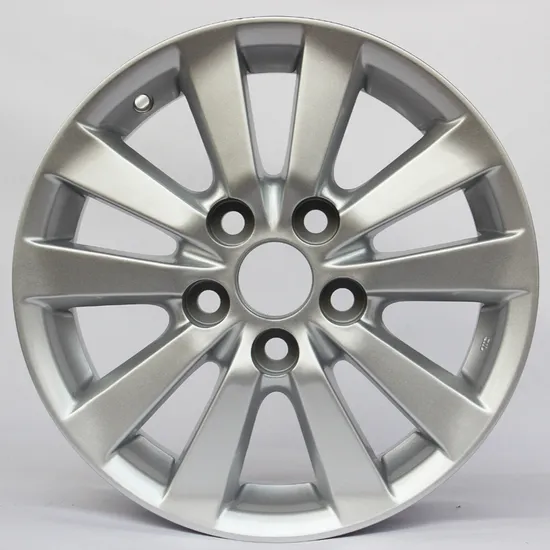 03
WHEEL RIM/HUB
15 Inch A356.2 Aluminum Silver Custom SUV Alloy Wheel Rim
$32.00
View Specifications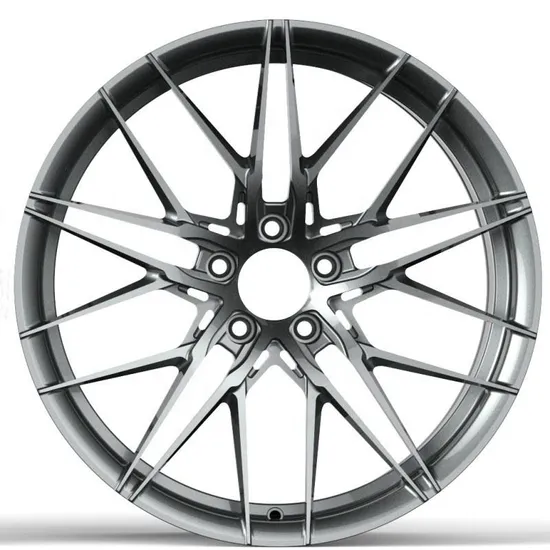 04
WHEEL RIM/HUB
Casting A356 Aluminum 5 Holes Black Car Wheel Rims
$40.00
View SpecificationsTrial order offer
Free samples. 10% off your first order.
Test fitment and finish on your own vehicles before committing. New buyers get 10% off the first confirmed order, with a factory-direct quote inside 24 hours.
Terms apply. Discount valid for first orders from new customers only.
120+
Export markets
25M+
Parts delivered
24h
Quote reply
Keep reading
Related sourcing and fitment guides
Aug 9, 2026 · Buying Guide
Car Rims Price in Vietnam: 2026 Wholesale Supplier Guide
Evaluate car rims price in Vietnam by analyzing manufacturing processes, surface treatments, and minimum order quantities that drive actual costs. Compare casting, flow forming,…
Read the Guide
Aug 9, 2026 · Buying Guide
Best Alloy Wheels for Jordan Market: 2026 Buyer Guide
Sourcing the best alloy wheels for Jordan market requires navigating strict customs rules and specific size demands. Focus on 17-inch rims with mandatory JWL…
Read the Guide
Aug 8, 2026 · Buying Guide
SUV Wheels Wholesale: Bulk Order from China Manufacturer
Stop comparing FOB quotes and start calculating true landed costs for SUV wheels wholesale. Learn to amortize mold fees, verify DOT and JWL certifications,…
Read the GuideGet a quote
Send your OE numbers. Get a factory-direct quote within 24 hours.
Jinan Yoker Auto Parts supplies brake discs and drums, cooling radiators, AC condensers and wheel rims from Jinan, China to buyers in 120+ countries. One inquiry covers every category.
-
WhatsApp
8618753183983 -
Email
cathyzhao@jnyoker.com -
Address
Yuqinghu Street, Huaiyin District, Jinan City, Shandong Province
-
Response time
Quote within 24 hours