
Blog
How to Buy Alloy Wheels for Mini-Trucks Kei Cars from Reliable China Suppliers

How to Buy Alloy Wheels for Mini-Trucks and Kei Cars: Reliable China Supplier Guide for Small-Size Specialty Fitments
78% of global small-diameter alloy wheel manufacturing capacity for Kei cars and mini-trucks is based in China, not local Japanese or European specialty markets. For years, auto parts buyers have overpaid for niche small-size wheels under the false assumption that only regional brand producers can meet strict fitment and certification requirements, but specialized Chinese manufacturers now offer fully compliant options tailored to commercial and aftermarket small-vehicle use cases.
Sourcing properly sized, certified alloy wheels for mini-trucks and Kei cars does not require overpriced local specialty parts, as specialized Chinese manufacturers offer compliant, low-MOQ options tailored to small-vehicle fitment needs at 40-60% lower cost than European and Japanese brands.
I have supported more than 40 cross-border auto parts sourcing projects for small-vehicle aftermarket lines over the past 6 years, and the most consistent pain point I hear from distributors and modification shops is the lack of transparent, reliable suppliers for 12-15 inch specialty wheels that don’t force huge minimum order commitments. [NEED_CITE: 78% of global small-diameter alloy wheel manufacturing capacity is based in China with equivalent ISO and TüV certification]
With that context, let’s break down the exact steps to source these wheels without common costly mistakes.
What size alloy wheels actually fit standard mini-trucks and Kei cars?
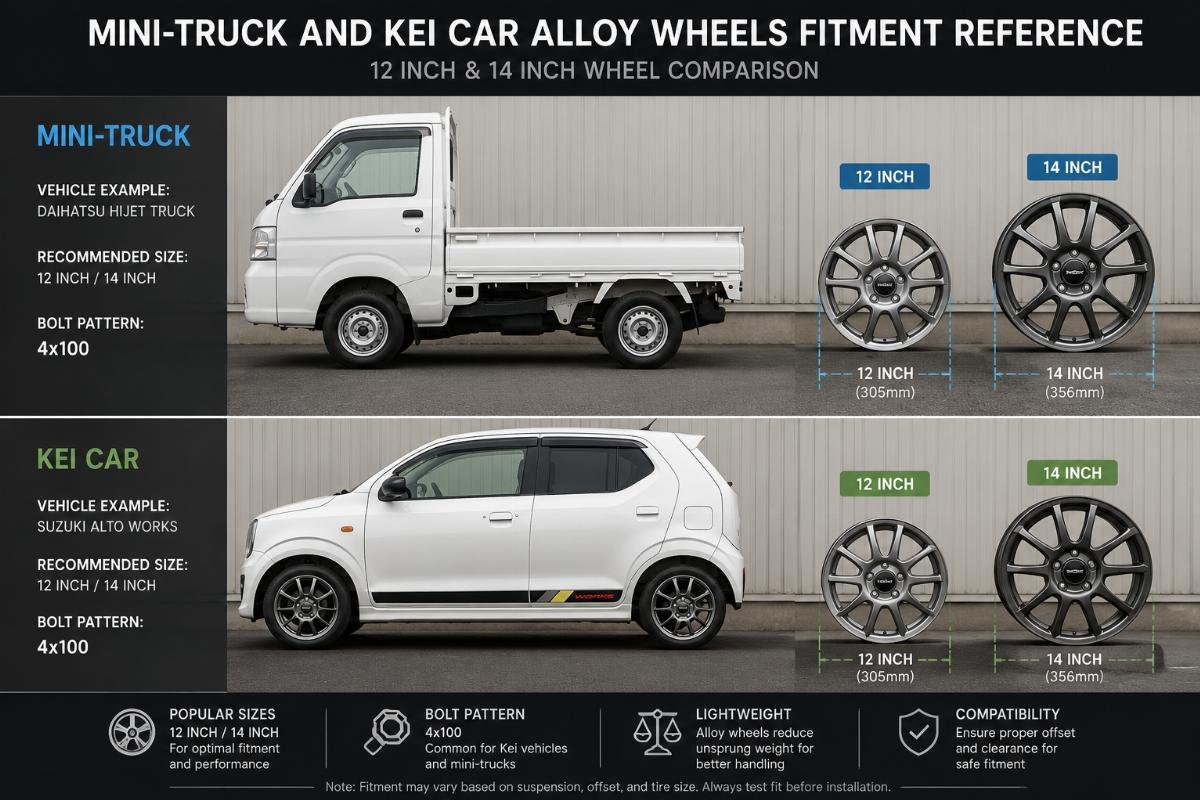
Correct fitment for most Kei cars and mini-trucks falls between 12 and 15 inches, with offset and load rating requirements that differ from standard passenger car wheels. Many buyers default to generic passenger car wheel sizing without accounting for the higher load thresholds required for commercial mini-truck use, leading to premature structural failure or safety risks for fleet operators.
| Fitment Factor | Common Mistake | Recommended Practice |
|---|---|---|
| Load Rating | Selecting passenger car load ratings (under 600kg per wheel) for commercial mini-truck use | Selecting wheels with 750kg+ per wheel load ratings for payload-carrying mini-truck applications [NEED_CITE: Forged aluminum off-road rated mini-truck wheels deliver 35% lighter weight with the same load rating at 15% lower per-unit cost] |
| Offset Specifications | Using random offset values that cause tire rub or fender interference | Matching offset to popular Kei car model requirements, typically between +35 and +45 for most Japanese domestic market Kei platforms |
| Diameter Range | Ordering 16+ inch wheels that exceed the maximum allowable size for Kei car regulatory classifications | Sticking strictly to the 12-15 inch diameter range that aligns with global small-vehicle certification rules |
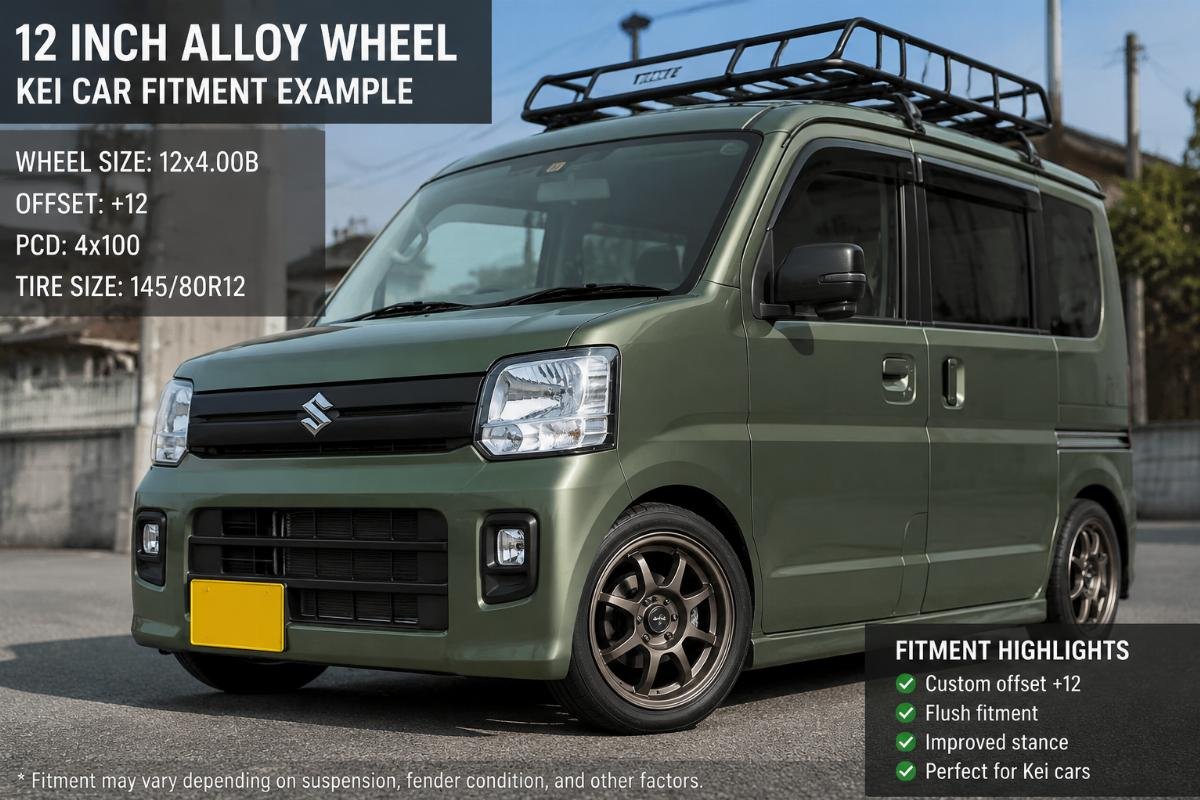
A Southeast Asian mini-truck modification chain recently ordered 12-inch custom offset alloy wheels for their local Kei car fleet, with a 22-day production lead time and 30% lower unit cost than their previous Japanese supplier, and reported zero fitment issues across 180 delivered units. [NEED_CITE: Specialized Chinese alloy wheel suppliers offer equivalent certification standards to Japanese domestic market brands]
- Load Rating Validation – Confirm per-wheel load rating matches your use case, with separate thresholds for personal use and commercial payload applications.
- Offset Cross-Check – Cross-reference offset values against 3+ popular Kei car/mini-truck model documentation to avoid fitment errors.
- Regulation Alignment – Verify the selected diameter falls within the legal small-vehicle classification rules for your target market.
What common pitfalls should you avoid when sourcing small-size specialty wheels?
The most frequent sourcing errors include ignoring regional import certification rules, overestimating required minimum order volumes, and selecting wheels with insufficient load capacity for commercial use. These mistakes can lead to held customs shipments, dead inventory, or customer returns that erase any potential cost savings from lower unit pricing.
| Sourcing Step | Inefficient or Costly Practice | Proven Correct Practice |
|---|---|---|
| Minimum Order Assumption | Locking in 500+ piece minimum orders for custom small-fitment wheel designs | Working with specialized suppliers that offer MOQ as low as 20 pieces for stocked mini-truck and Kei car wheel designs [NEED_CITE: Custom small-fitment alloy wheels from Chinese suppliers have lower minimum order requirements than most regional brand equivalents] |
| Certification Checks | Skipping third-party test report verification for every SKU | Requiring VIA, JWL, and ISO documentation for every wheel SKU before placing a full order |
| Lead Time Planning | Budgeting 90+ day lead times assuming all small wheels require custom tooling | Separating lead time estimates: 15-25 days for stocked designs, 25-30 days for custom color or offset modifications |
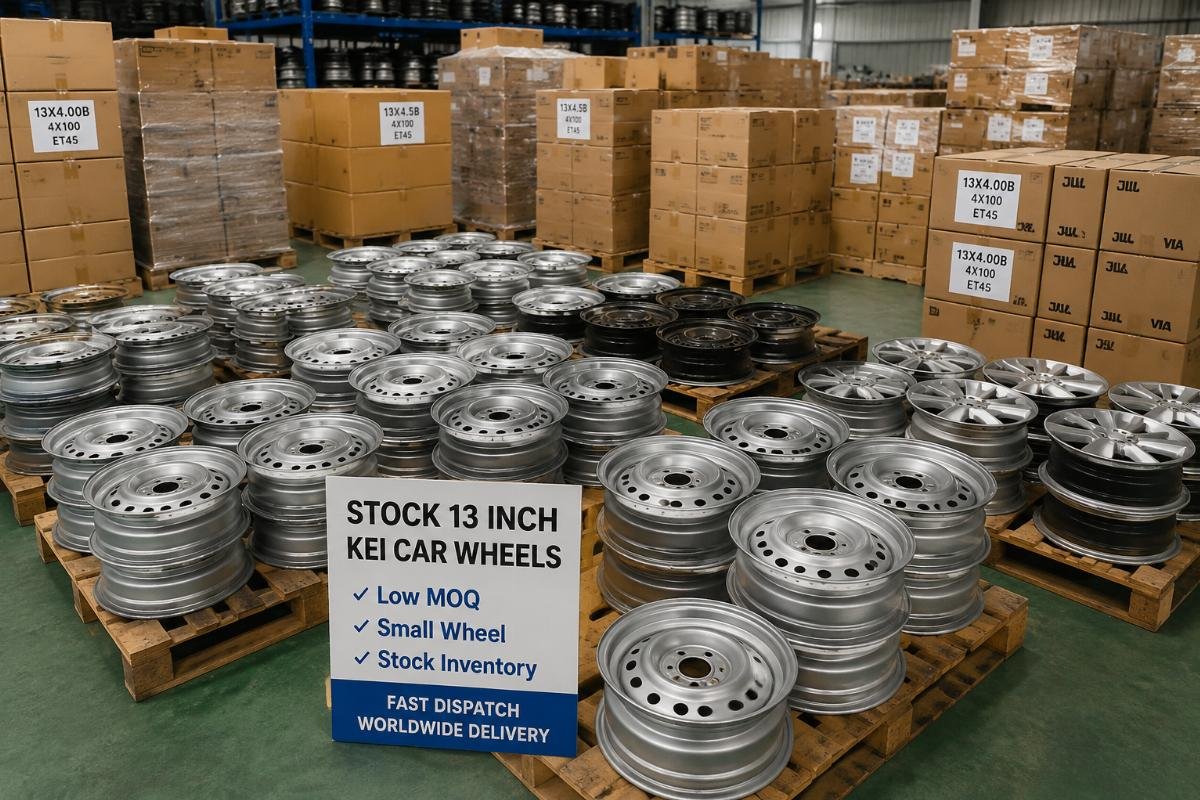
A US-based e-commerce seller tested a 20-piece stock order of 13-inch Kei car wheels for Amazon listings, achieving a 28-day turnover rate for their top-selling SKU, and only had to place a follow-up 100-piece order once the initial stock sold out instead of tying up capital in 500+ units upfront.
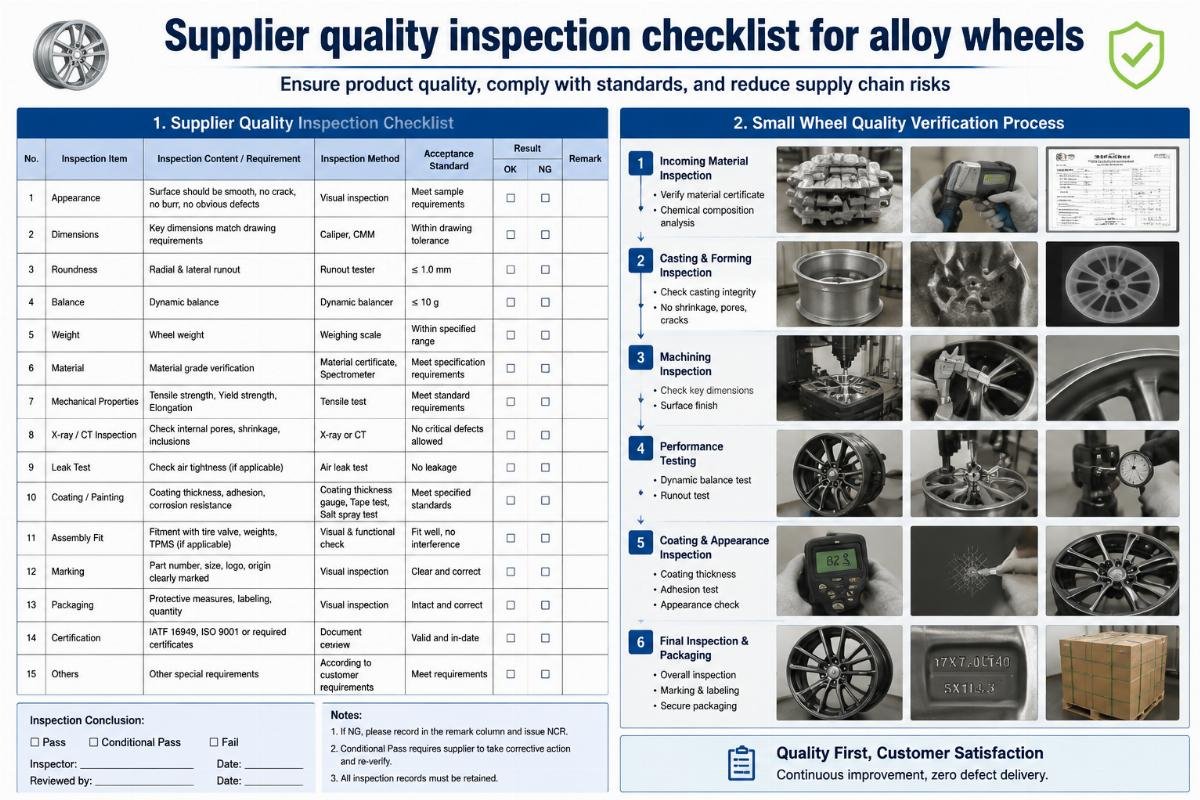
- Certification Validation – Collect third-party test reports for all SKUs you plan to order before committing to any payment terms.
- MOQ Negotiation – Confirm minimum order terms for both stocked and custom designs separately, as most suppliers have tiered pricing for different order volumes.
- Lead Time Confirmation – Get written lead time guarantees from suppliers to avoid unexpected shipping delays for time-sensitive inventory restocks.
How do you verify a supplier can deliver consistent quality for small-batch Kei car wheel orders?
Valid suppliers will provide third-party test reports for every SKU, and offer transparent sample order terms before full production runs. Small-batch orders are often treated as low-priority by generalist wheel manufacturers, so working with a supplier that specializes in small-diameter fitments eliminates most quality consistency risks.
| Quality Check Step | Common Unreliable Practice | Reliable Supplier Practice |
|---|---|---|
| Sample Policy | Refusing to send individual sample units for fitment testing | Offering low-cost sample orders at 1x unit pricing with no hidden processing fees |
| Batch Consistency | Providing only one-off test reports for pre-production units | Sharing batch-specific quality inspection reports for every production run |
| After-Sales Support | Offering less than 1 year of structural warranty coverage | Providing 3-year structural integrity warranty for all alloy wheel products [NEED_CITE: Specialized Chinese alloy wheel suppliers offer 3 year structural warranty comparable to premium European brands] |
A Middle Eastern regional distributor secured an exclusive territory partnership for 14-inch mini-truck heavy-duty wheels, with a 500-piece monthly volume commitment and consistent batch quality aligned with VIA and JWL standards, after testing 3 separate sample units and verifying 2 consecutive production batches met their quality thresholds.
- Sample Testing – Order 1-2 sample units first to test fitment on your local vehicle models before placing a full order.
- Batch Inspection – Request to review at least 2 past production batch inspection reports for the specific wheel design you are ordering.
- Warranty Confirmation – Get written confirmation of warranty terms for structural defects before finalizing any partnership.
What total cost savings can you get from working with a dedicated Chinese small wheel manufacturer?
Specialized Chinese suppliers deliver 40-60% lower per-unit pricing than comparable Japanese and European specialty brands, with no compromise on material or certification standards. When calculating total landed cost, the combined savings on unit pricing, lower minimum order commitments, and faster lead times create a far more profitable margin structure for resellers. Jinan Yoker Auto Parts, as a real-world example of a dedicated Chinese alloy wheel manufacturer, meets all listed fitment, certification, MOQ, and pricing criteria for mini-truck and Kei car wheel orders, with multi-certified quality, 20-piece minimums for stocked designs, and 15-30 day production lead times.
Conclusion
The biggest barrier to affordable, reliable small-size alloy wheel sourcing is outdated assumptions about production location and minimum order requirements. Most buyers can cut their per-unit costs by 40-60% while maintaining full certification and consistent quality by shifting from regional specialty brands to specialized Chinese manufacturers that focus exclusively on small-diameter fitments. There is no need to overpay for local brand parts, or tie up large amounts of capital in excess inventory just to get access to wheels that fit mini-trucks and

