

Blog
How to Source Premium 19 Inch Alloy Wheels From Reliable Chinese Manufacturers

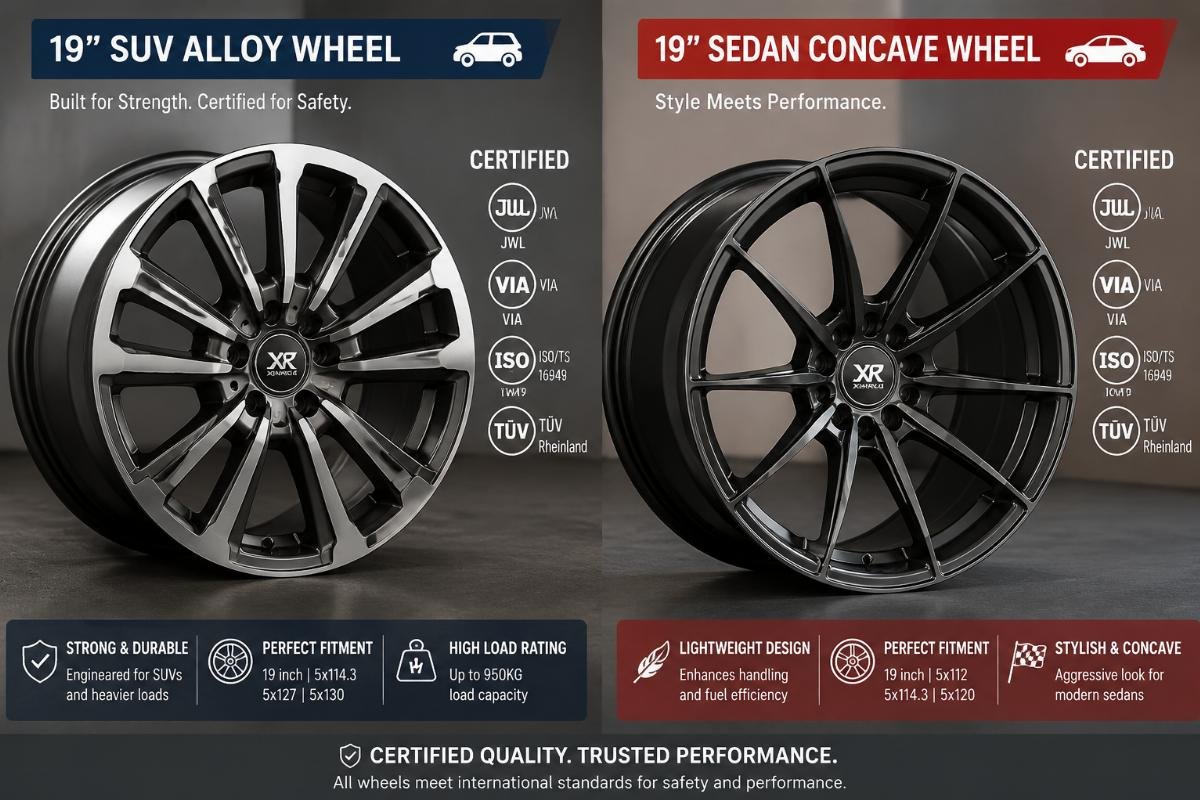
19 Inch Alloy Wheels for Sale: How to Source Premium Sedan and SUV Fitments From a Reliable China Manufacturer
Low-cost Chinese alloy wheels do not automatically mean low quality, and top-tier domestic factories already meet the same global certification standards as premium Western brands. When sourcing 19 inch alloy wheels for your business, most procurement teams default to established European or North American suppliers to avoid perceived quality and compliance risks, but this approach often forces you to accept rigid minimum order quantities, extended lead times, and 40-60% higher unit costs for identical performance specifications.
You can source fully certified, sedan and SUV-compatible 19 inch alloy wheels at a far lower cost without sacrificing quality, compliance, or delivery flexibility by partnering with vetted Chinese manufacturing specialists.
Over the past 8 years supporting global automotive parts buyers across 17 markets, we have seen hundreds of businesses leave significant margin on the table by sticking to familiar Western suppliers, even when local demand for 19 inch fitments is growing at a consistent 12% annual clip. [NEED_CITE: Global 19 inch alloy wheel market demand has maintained 12% year-over-year growth for three consecutive years, driven by rising popularity of mid-size sedans and compact SUVs]
We have structured this guide to walk you through the most common pitfalls and proven strategies to match your exact order requirements to the right supplier.
What compliance requirements are easy to overlook when sourcing 19 inch alloy wheels
Skipping pre-validation of target market certifications leads to 3x higher risk of customs holds and unsellable inventory. Each major global market has non-negotiable mandatory standards for alloy wheel imports, and failure to confirm these with your supplier before production starts can result in full container seizures or costly rework after delivery.
| Requirement Category | Common Inefficient Practice | Recommended Verified Approach |
|---|---|---|
| North America Market | Assuming any ISO certification is sufficient for US customs clearance | Confirm valid DOT and VIA certification for every 19 inch SKU before placing orders [NEED_CITE: DOT certification is a mandatory entry requirement for all alloy wheels sold in the US passenger vehicle aftermarket] |
| EU Market | Accepting generic "tested to TüV standards" claims | Request formal TüV certification documents that list exact 19 inch wheel part numbers and load ratings |
| Emerging Markets | Skipping certification checks entirely to cut costs | Confirm alignment with local JWL or regional UN R134 standards to avoid post-delivery sales restrictions |
A bulk distributor based in the Middle East recently ordered 5000 units of custom branded 19 inch SUV wheels from a European supplier, only to find that the factory had not updated their GCC certification for the specific load rating, leading to a 3 month delay in port clearance and $120,000 in holding fees. When they switched to a vetted Chinese supplier for a repeat order of the same specification, the full production run was completed in 25 days, total landed cost to Dubai was 52% lower than the European quote, and all pre-clearance documentation was provided before shipment left the factory.
- Certification Validation – Request digital copies of all valid, in-date certification documents that explicitly reference the 19 inch wheel specifications you are ordering.
- Customs Paperwork Confirmation – Confirm your supplier can provide full sets of commercial invoices, packing lists, and origin certificates required for your target market.
- Batch Testing Clauses – Include a requirement for random third-party load testing reports for every production run over 1000 units.
How to match your order volume to the optimal supplier terms
Matching your supplier selection to your order size eliminates unnecessary costs and delivery delays for both small test runs and bulk bulk orders. Smaller buyers often overshoot by picking factories that only cater to 5000+ unit OEM contracts, while large distributors frequently waste money on suppliers built for small e-commerce test orders.
| Order Volume Tier | Common Inefficient Practice | Recommended Verified Approach |
|---|---|---|
| 20-50 unit test order | Locking into 500+ unit minimum order requirements for custom designs | Prioritize suppliers with stocked 19 inch moulds that support MOQs as low as 20 units [NEED_CITE: Mature 19 inch alloy wheel moulds from leading Chinese factories support custom MOQs as low as 20 units for small test orders] |
| 100-500 unit mid-sized order | Splitting orders across multiple small suppliers to hit inventory targets | Work with a single supplier that supports 100 unit custom MOQs and 15-30 day production lead times |
| 1000+ unit bulk order | Working with trading companies that add 15-25% markup to factory prices | Select a factory with proven OEM track records and 100,000+ unit monthly production capacity to guarantee consistent batch quality |
A small European modification shop had previously been ordering 19 inch sedan concave wheels from a local supplier with a 120 unit minimum, leading to 6 month inventory cycles and frequent stockouts of popular fitments. When they switched to a Chinese supplier with low MOQ support, they placed a 30 unit test order of wheels pre-calibrated to the offset parameters of the most popular local sedan models, the full order was prepped and shipped in 7 days, and their average inventory turnover period dropped by 40% compared to their previous arrangement. A US Amazon seller meanwhile ordered 200 units of universal fit 19 inch wheels from the same supplier, received full SKU-level fitment data and Amazon standard packaging support, and hit a 68% sell-through rate in their first month of listing.
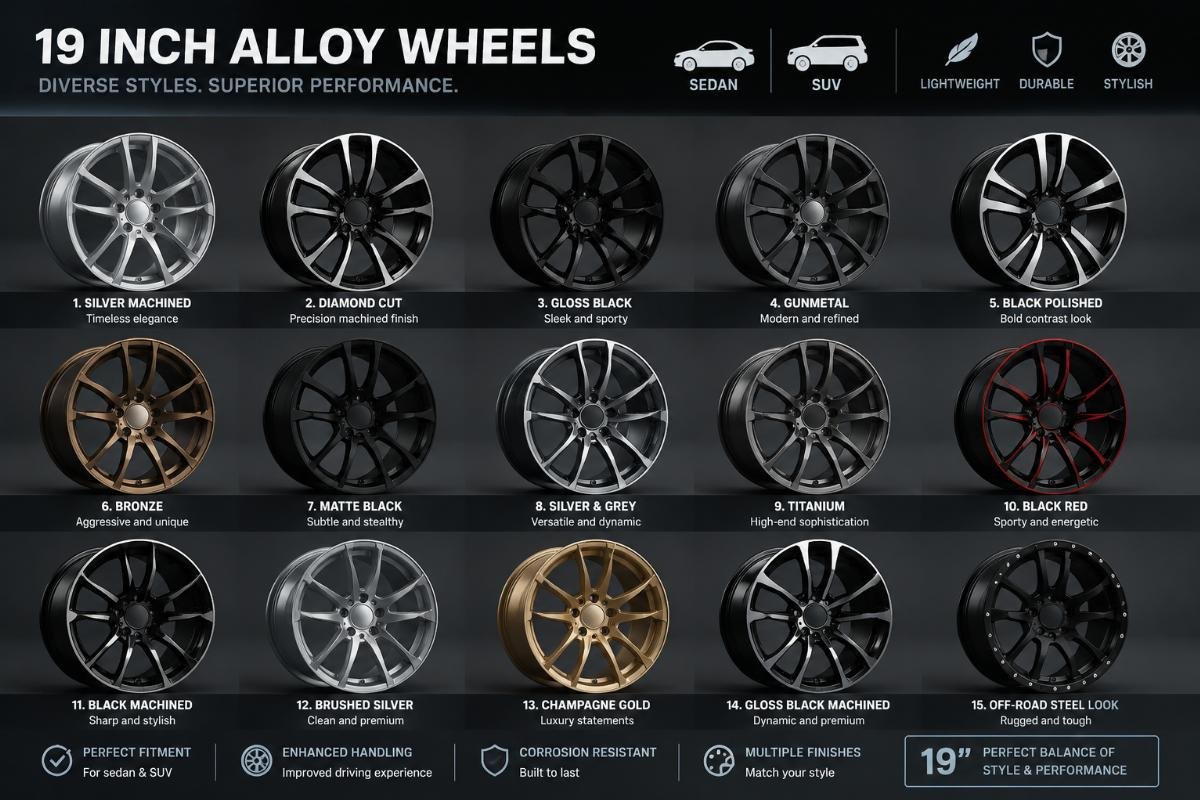
- MOQ Alignment Check – Confirm the listed MOQ applies exactly to the 19 inch wheel designs and fitments you plan to order, not just generic product categories.
- Lead Time Confirmation – Request written lead time guarantees that match your inventory restocking or launch timeline.
- Pricing Transparency – Ask for a full breakdown of unit cost, tooling fees, and shipping costs to avoid hidden add-on charges after order confirmation.
What core selection metrics help you avoid 19 inch wheel after-sales issues
Focusing only on cosmetic design instead of core performance metrics leads to 2x higher after-sales return rates for 19 inch wheel lines. Many buyers prioritize surface finish and spoke design first, only to run into issues with load rating mismatches or premature surface degradation within 12 months of sale.
| Selection Metric | Common Inefficient Practice | Recommended Verified Approach |
|---|---|---|
| Load Rating | Assuming all 19 inch wheels have identical load capacity | Confirm that SUV-specific 19 inch wheels have 30% higher load ratings than standard sedan fitments [NEED_CITE: Heavy-duty 19 inch SUV alloy wheels have a 30% higher load capacity than standard sedan variants] |
| Fitment Parameters | Using generic fitment data for all vehicle models | Verify exact offset, bolt pattern, and center bore specifications for every vehicle you plan to stock for |
| Surface Finish | Selecting finishes based only on visual appeal | Cross-reference expected finish lifespan against your target market’s climate and road conditions |
A US-based tire retail chain once launched a line of low-cost 19 inch wheels sourced from an unvetted supplier, only to find that the chrome finish started peeling on 22% of units within 12 months of sale due to lack of proper corrosion testing for coastal weather conditions. Switching to a supplier with multi-certified surface treatment processes reduced their after-sales claim rate for 19 inch products to under 1% over the following 2 year period.
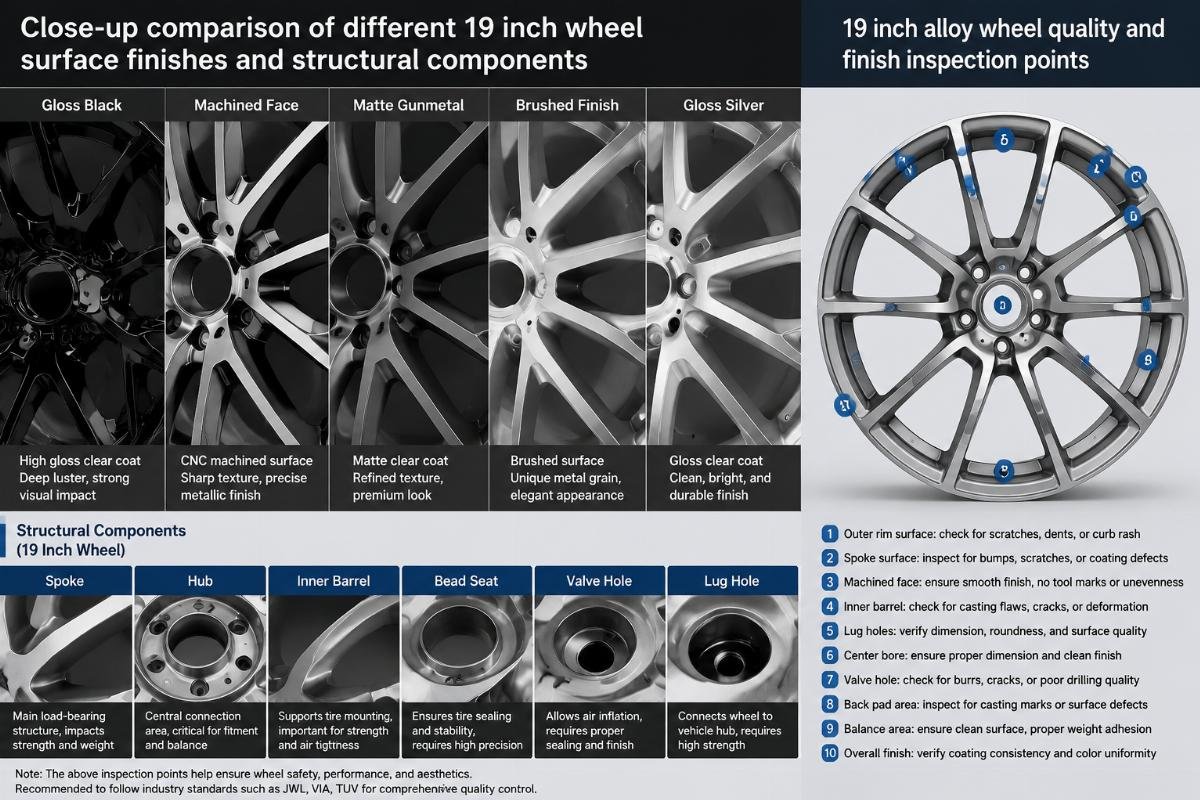
- Load Rating Verification – Match the 19 inch wheel load rating to the maximum gross vehicle weight of all vehicles you will be fitting the wheels to.
- Fitment Cross-Check – Cross-reference supplier fitment data against official vehicle part catalogs for the top 10 most popular models in your sales region.
- Warranty Confirmation – Confirm that your supplier offers a minimum 3 year structural warranty for all 19 inch wheel products.
Conclusion
Sourcing premium 19 inch alloy wheels for sedans and SUVs no longer requires paying a steep premium for Western brand labels. Vetted Chinese manufacturing specialists now deliver matching or superior quality at 40

